Monthly Observatory Report
                                          for
                                   December 1994
COSTAR:
There was no COSTAR activity during this reporting period. The instrument remained in HOLD mode and was stable.
WFPCII:
WFPCII continues to operate nominally throughout the month of December.
UV throughput was restored following the 6 hours CCD decontamination on day 351.
Science and Calibration observations continue to execute successfully.
FOC:
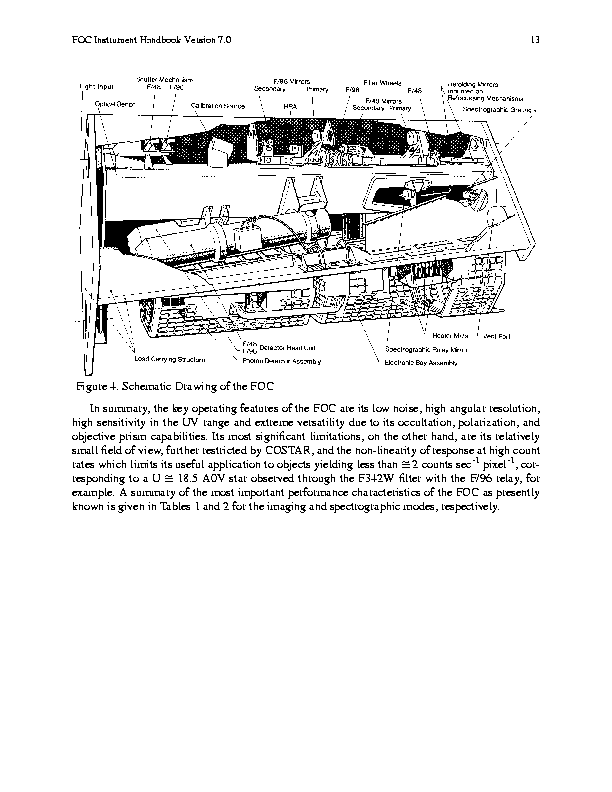
FOC is continuing the normal science program with GO and GTO cycle 4 proposals using the f/96 relay without problems. For a picture of the Faint Object Camera click here.
FOS:
The FOS continued to execute a variety of GO, GTO, and CAL proposals during the month of December.
GHRS:
Both side 1 and side 2 of the GHRS are running without problems.
1.2 Summary of major problems
COSTAR:
None.
FOC:
In general: No major problems with FOC operations during the reporting period. Electrical and thermal monitors of the Instrument continue to show nominal values after the Servicing Mission. Portion of one FOC observation lost due to problem in Science Data Tape Recorder
Management.
FOS:
1.2.1 On day 94.333 an FOS Binary acquisition failed due to an improper transformation of the proposal. The proposal requested the mirror and specified a central wavelength. The central wavelength is not selectable in the FOS commanding and Trans should have ignored this request. Instead, Trans processed this request which resulted in a data format that was not compatible with the instrument data processor. A Trans OPR has been opened. 1.2.2 The FOS was safed again on day 94.334 due to a violation of the overlite limit. The target viewed was NGC-4151 which is variable and was found to be brighter than expected.
GHRS:
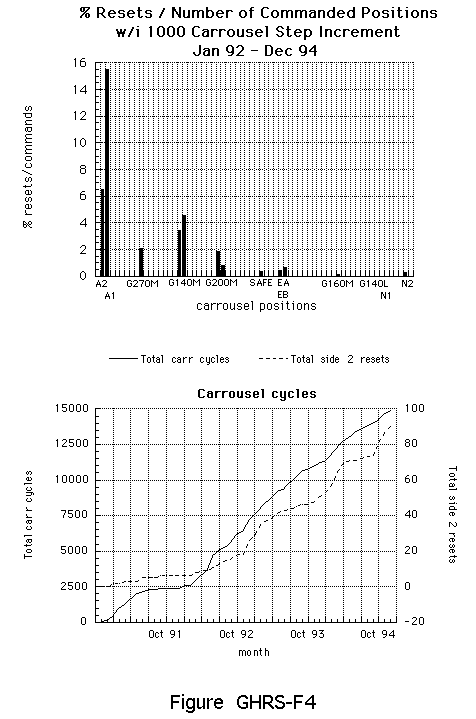
During the month of December there were three reset events for 215 commanded positions. Figure ghrs-f4 contains a plot which shows the accumulated number of times the carrousel is commanded to a new position and compares this rate to the accumulation of carrousel resets. The trend of both of these data sets is similar. Figure ghrs-f4 also includes a bar chart which associates reset activity to specific locations on the carrousel. This chart shows that the rate of reset events is higher at the lower region of the carrousel step scale. The rates shown in the region of the G140M grating are mis-leading since this is a little used optical element. A single reset in this region is rated higher than it would be in a more commonly used region. 1.2.2 Work on the GHRS flight software fix that will allow observation time-outs is continuing. Requirements for the software change have been distributed for review.
WFPCII:
A series of photometry observations were taken on 94346 which showed markedly reduced photon counts when compared to past results. The commanding,engineering telemetry, as well as the NSSC1 code for the WFPCII shutter application processor were checked. The following is a description of how AP17 works which explains why a decreased photon count rate was observed in the photometry for long wavelengths with short exposure times. At the initialization of an exposure the shutter application processor (AP17) clears words 5 through 16, 21, and 22 in the wfpc2 unique data area of the SHP, and logs in word 4 the time of the major frame pulse in which the exposure is to begin (32 bit lsb=125ms). If the AP17 is not used (bit 16=0 in ufcstat) then the processor exits and inhibits itself. The WFPCII microprocessor then counts real time interrupts and closes the shutter via the logic when the RTI counts is equal to the lower 8 bit exposure time code latched in the executable port. If AP17 is used with clocks OFF (bit 16=1 and bit 13=0 in ufcstat) the microprocessor opens the shutter and at the end of the exposure time AP17 sends a cancel command and closes the shutter. If AP17 is used with clocks ON (bit 16=1 and bit 13=1 in ufcstat) the application processor will determine which blade is open and then use this blade as the active TDF blade. This blade will also be used to end the exposure. The parity of the blade is determined by examining the internally subcommutated blade status which is done by an executive snap action for AP17. This procedure avoids the situation in which one blade will push against the other blade as was the case in WFPCI (verification of the shutter speed flags for all the exposures show normal open/close shutter speeds for both blades). With serial clocks ON, the application processor manually starts the exposure by sending both an open shutter A command and an open shutter B command in this respective order. The time of the major frame pulse when the shutter was opened is logged in word 5 for blade A and word 22 for blade B. If blade A was closed at the start of the exposure then the exposure time will begin when blade A is opened followed by blade B open (already opened). The exposure begins 0.125 seconds after the blade command from AP17. If blade B was closed then it will take an additional 0.125 seconds before the exposure begins, since A blade is always commanded first then B blade. In the observations taken on day 346, PC1 alternated with WF3. The observations began with blade B closed for PC1. This parity means that PC1 observations will be 0.250 seconds less than the commanded exposure time while WF3 will be 0.125 seconds less than the commanded exposure time. The expose command logged by AP17 into the SHP is not used by the application processor. AP17 uses a time code of integers only, since AP17 checks the processor interface table (PIT) for the TDF status every 0.5 seconds (mf). The command exposure of 1.4 seconds was therefore interrupted by AP17. From the results of the exposure times, AP17 will be recommended only for exposures greater than 180 seconds.
The following is a calculation of the expected percent drop in photon counts based on the 0.250 seconds (PC1) and 0.125 seconds (WF3) reduction from the commanded exposure times. The long bandpass shows a good correlation with the observed percent drop (compared to the November data). The short bandpass is dominated by the UV contamination degradation observed in UV contamination monitor plots. It should be noted that the November photometry data was taken a few days after a UV decontamination, while the December data was taken close to the next decontamination cycle.
        filter          exptime percent drop

PC1                                             -0.250s in cmd
exp

        F814W   3.00            -5.898%         -8.3%
        F675W   2.00            -12.743%        -12.5%
        F555W   1.60            -22.874%        -25%
        F439W   5.00            -5.202%         -5%
        F336W   8.00            -2.546%         -3.1%
        F255W   30.00           -2.904%         -0.83%
        F218W   30.00           -6.846%         -0.83%
        F170W   30.00           -9.385%         -0.83%
        F160BW  80.00           -19.832%        -0.31%

WF3                                             -0.125s in cmd
exp

        F814W   3.00            -5.463%         -4.14%
        F675W   2.00            -7.955%         -6.25%
        F555W   1.60            -15.355%        -12.5%
        F439W   5.00            -10.216%        -2.5%
        F336W   8.00            -14.336%        -1.5%
        F255W   30.00           -20.274%        -0.41%
        F218W   30.00           -23.792%        -0.41%
        F160BW  80.00           -22.232%        -0.41%
Four different pairs of guide stars were involved in the 12 cases of degraded mode.
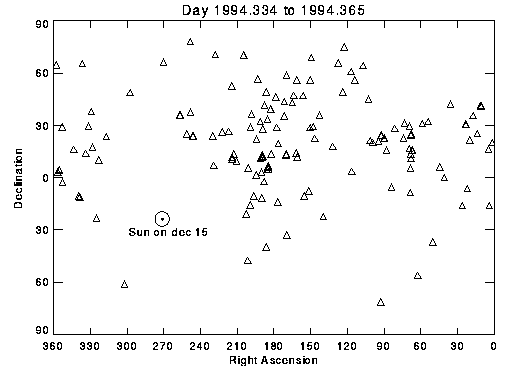
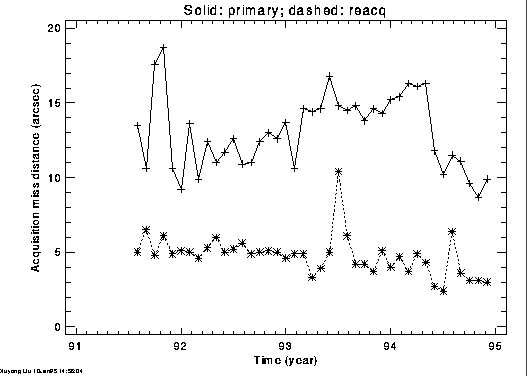
The sky distribution of pointings in this month is shown in Fig. 2.1. Fig. 2.2 shows the monthly average pointing miss for primary guide start acquisitions and reacquisitions. The pointing miss is measured from the location of the guide star found during search compared to the predicted position (start of the search). table 2.1 describes the statistics of guide star acquisitions. It takes into account both primary acquisitions and reacquisitions. "No lock" means that coarse track cannot be established or maintained. "Degraded mode" refers to the cases where the guiding mode falls back to coarse track when the commanded mode of the find lock cannot be established or maintained. "Search rad exc" refers to cases where the guide stars are not found.
The distribution of guiding modes by Science Instrument during scheduled exposures is given in table 2.2. for each scheduled exposure, the actual guiding mode is obtained from the engineering telemetry. The scheduled exposure time is subsequently summed up by guding mode for each SI to produce the distribution.
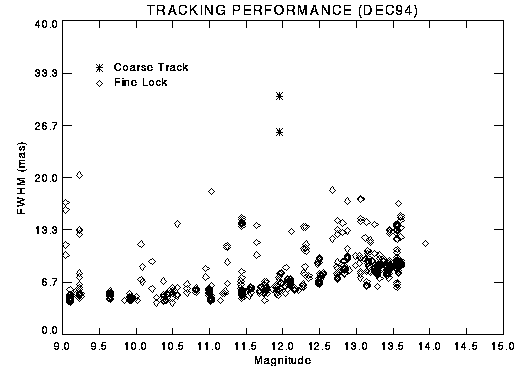
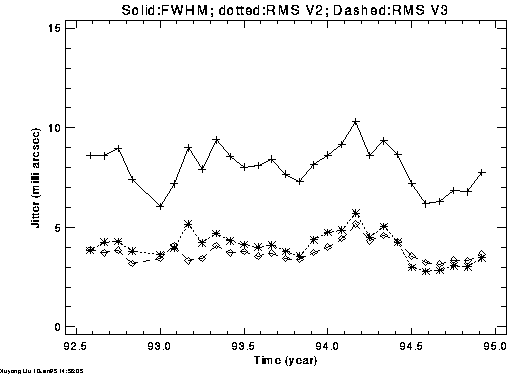
The full-width at half-max (FWHM) of jitter during observations are plotted as a function of the magnitude of the dominant guide stars in Fig. 2.4. the jitter is obtained from the motion of the dominant guide stars in the FGS. The rms of jitter along V2 and V3 axes is also calculated for each observation. The average of FWHM and rms of jitter over all observations in each month is given in Fig. 2.3 and shows no obvious trend.
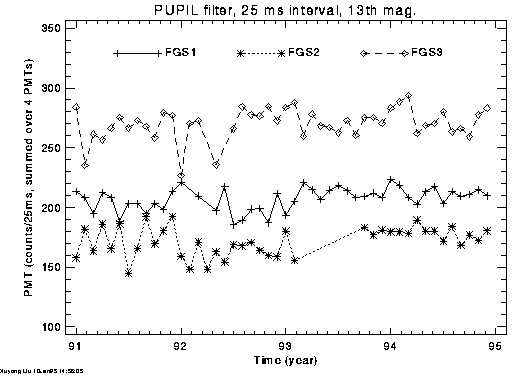
For each observation, the PMT sensitivity is calculated for each FGS in fine lock based on the PMT count rates and magnitude of the guide stars. The sensitivity is expressed in total counts of the 4 PMTs per 25 milli-seconds normalized for a 13th magnitude star with the FGS filter in pupil position. Fig. 2.5 shows the average sensitivities of each month since Janurary, 1991. The is no obvious trend. The variation of the sensitivities appears compatible to the error of the guide star magnitude.
2.2 Observations
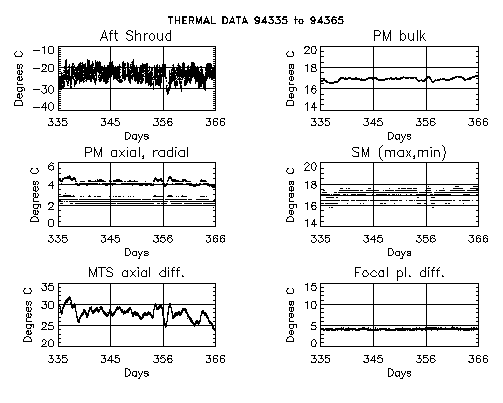
The temperature fluctuations of critical spacecraft components are shown in Figure 3.1. All temperatures are nominal.
3.2 Costar:
The COSTAR trending program is being developed. Table costar-t1 has been included to document current mechanism positions associated with the COSTAR mirrors.
3.3 WFPCII:
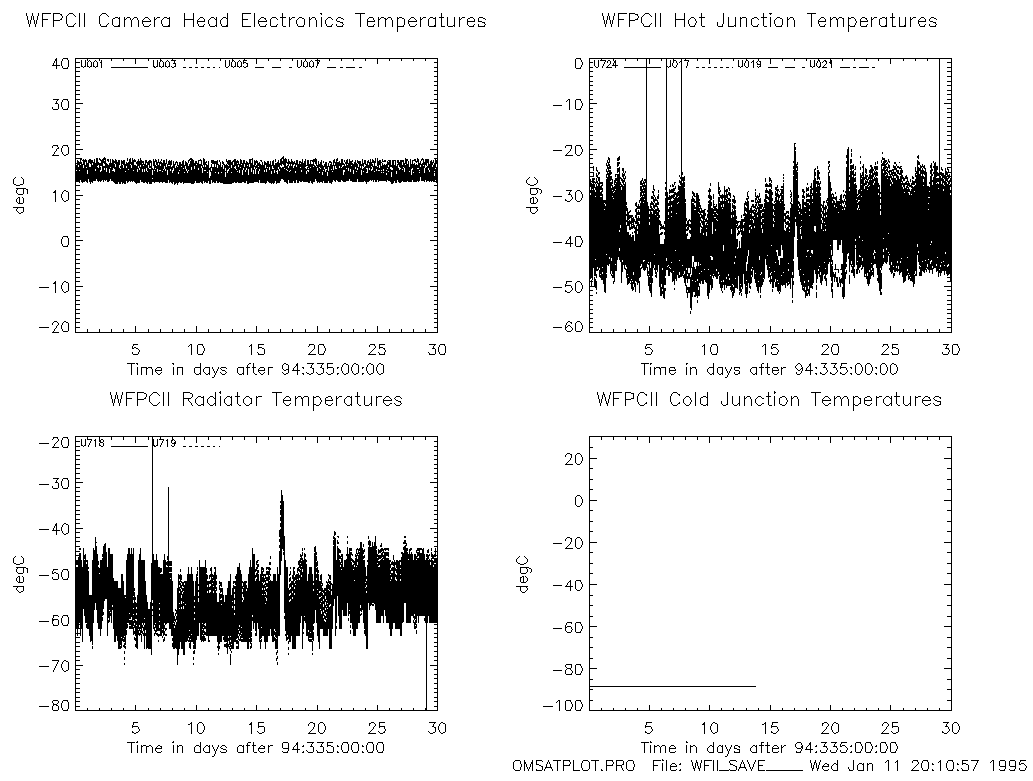
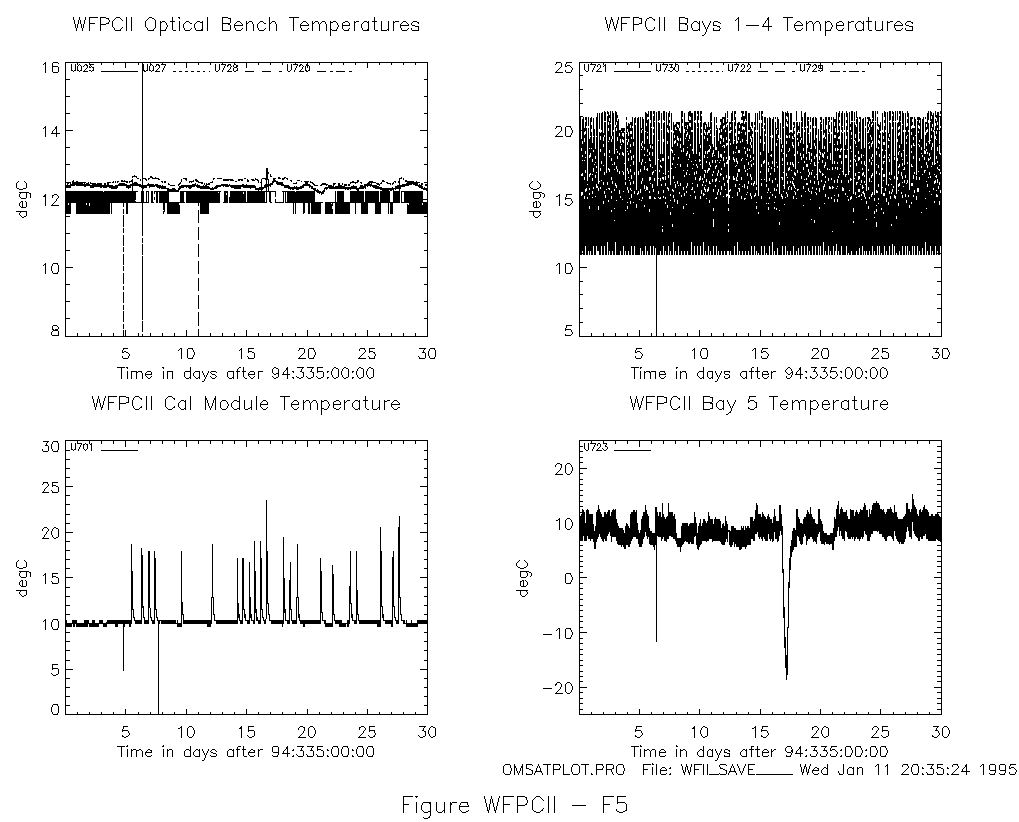
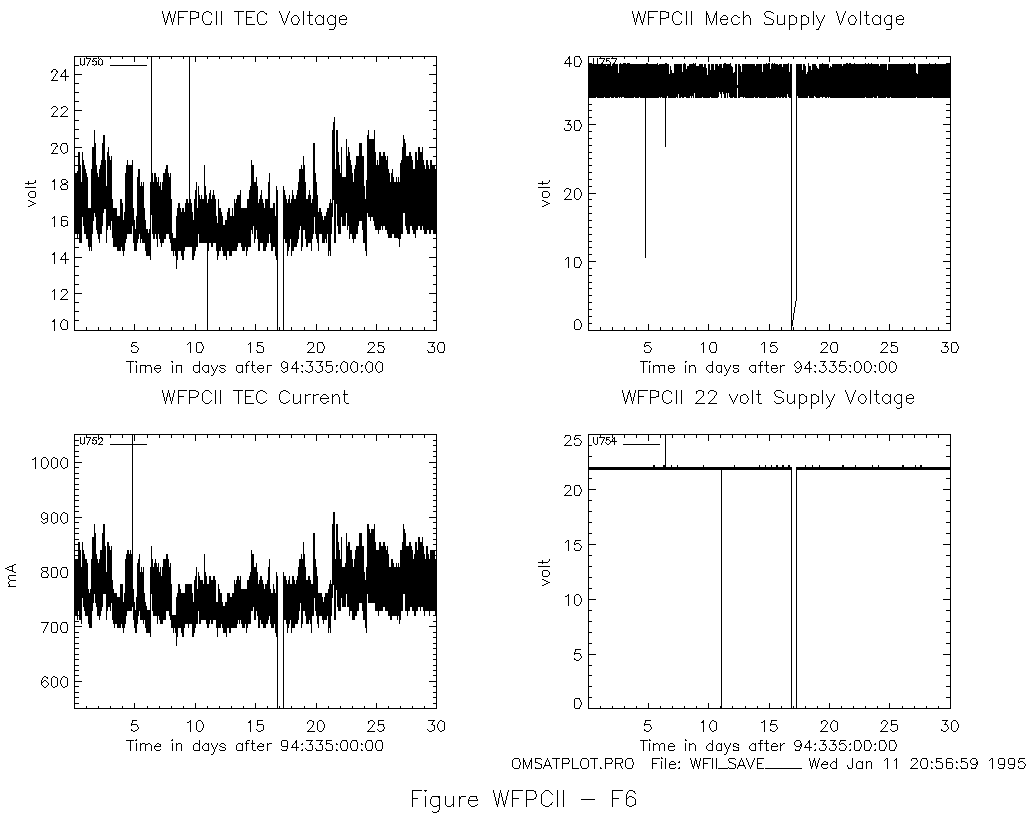
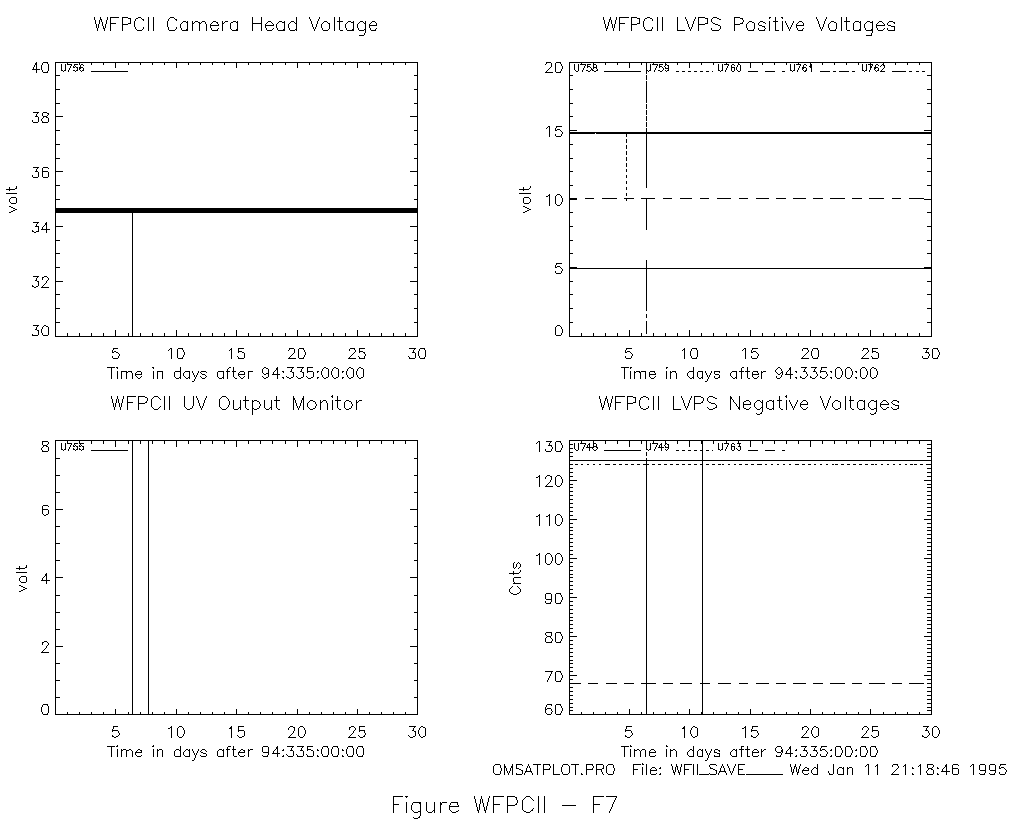
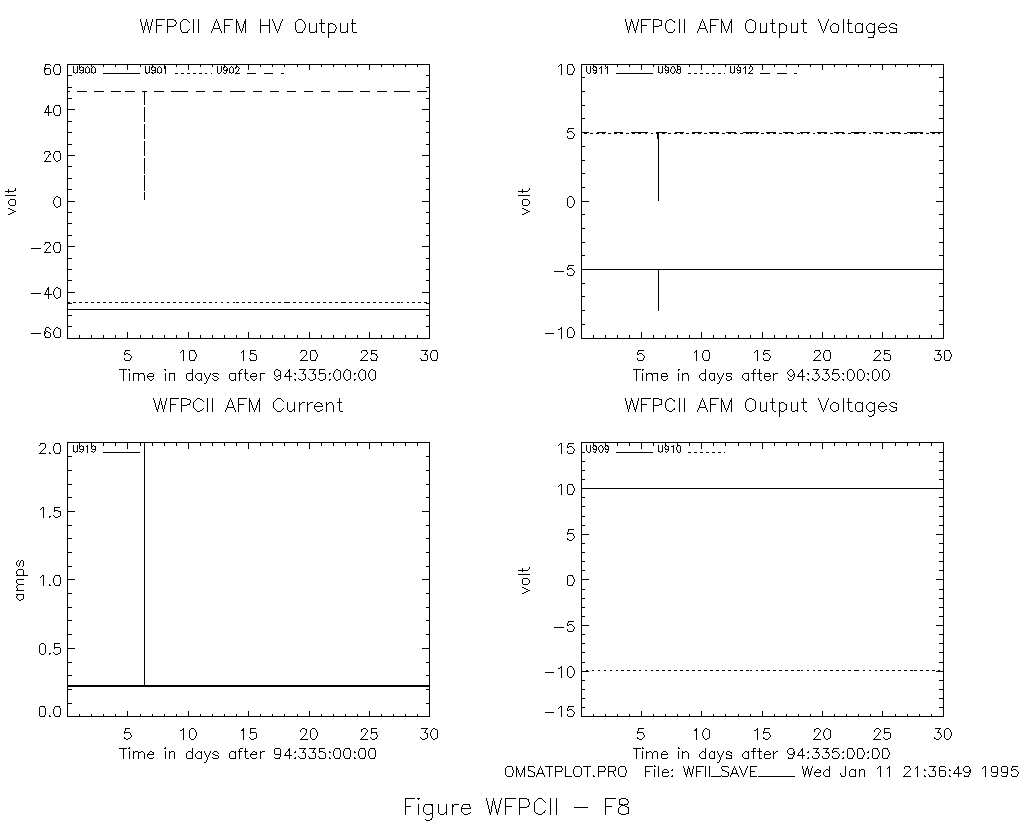
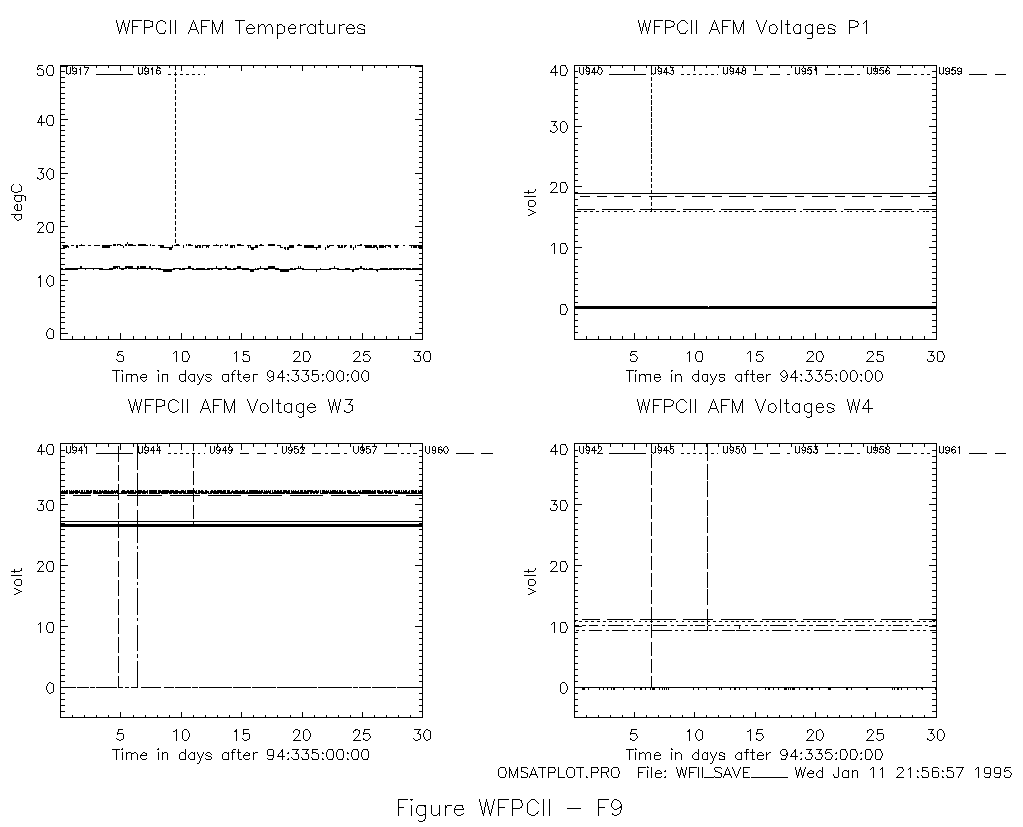
tables wfpc-ii t1, t2, t3 and Figures WFPC-II F3-F9 show the December instrument statistics and profiles for cycle usage, power and temperature. All values are nominal and within limits unless otherwise noted.
table t1 shows the cycles of various mechanisms and power supplies.
table t2 shows the lvps, mechanism, and tec voltage and current outputs.
table t3 shows the bays, optical bench, Bulkheads, Cold and Hot junctions, Camera Heads, Attach points, AFM, and Radiator temperature values.
Figure f3 shows the frequency for various shutter close/open and open/close flight times.
Figure f4 shows the cold and hot junctions, Camera Head, and Radiator temperatures.
Figure f5 shows the Bays, Optical Bench, and Cal Module temperatures.
Figure f6 shows the mechanism, tec and 22 lvps voltages and current.
Figure f7 shows the lvps, camera head, and UV Output Monitor voltages.
Figure f8 and Figure f9 shows the afm voltages and current
3.4 FOC:
FOC: The f/96 relay of the Instrument continues to operate without problems after the installation of COSTAR: Evaluation of Error Logs show all voltages, currents, and temperatures within their nominal limits.
Several plots of selected monitor points critical to the performance of the Instrument are an integral part of this report:
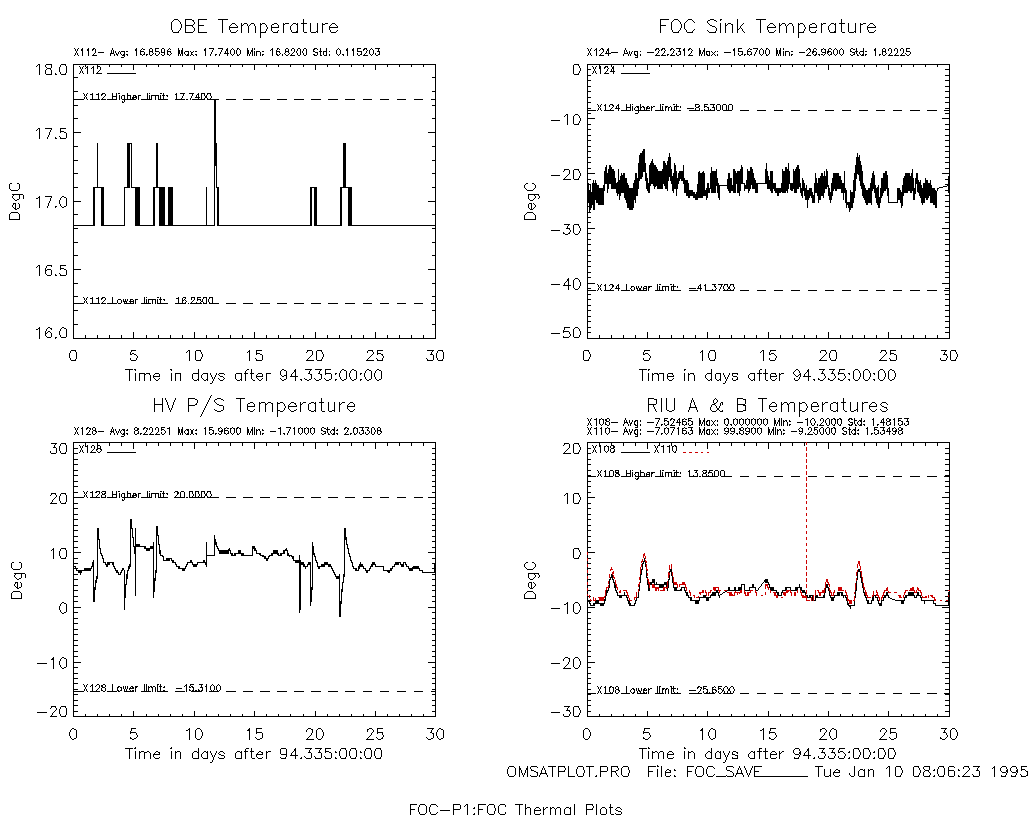
Four critical temperatures are shown foc-p1:foc thermal plots reflecting the thermal profile during the reporting period.
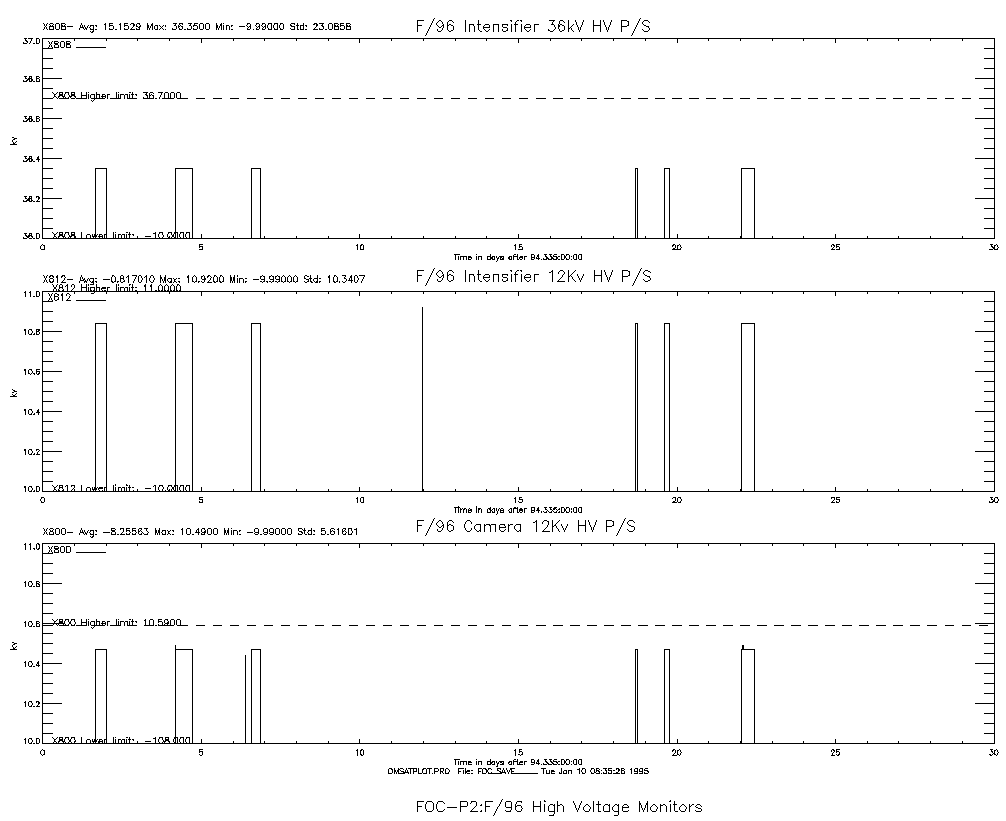
A set of three plots foc-p2:foc high voltage monitors illustrate the profile of the output voltages of the critical High Voltage Power Supplies for the FOC detectors. For a picture of the FOC Dectectors click here.
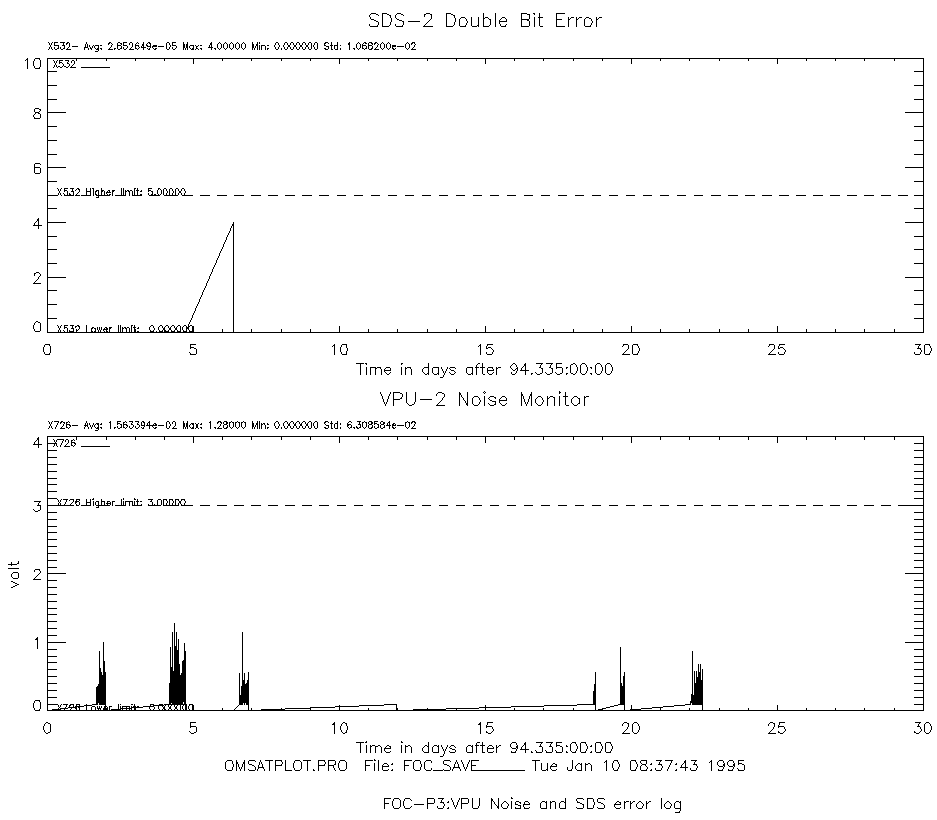
foc-p3:foc vpu noise and sds error log Both plots are focused on the health and safety of the Instrument. The Video Processing Unit (VPU) Noise level indicator summarizes the input signal as detected by the VPU. The peaks typically indicate passages throught the South Atlantic Anomaly (SAA).
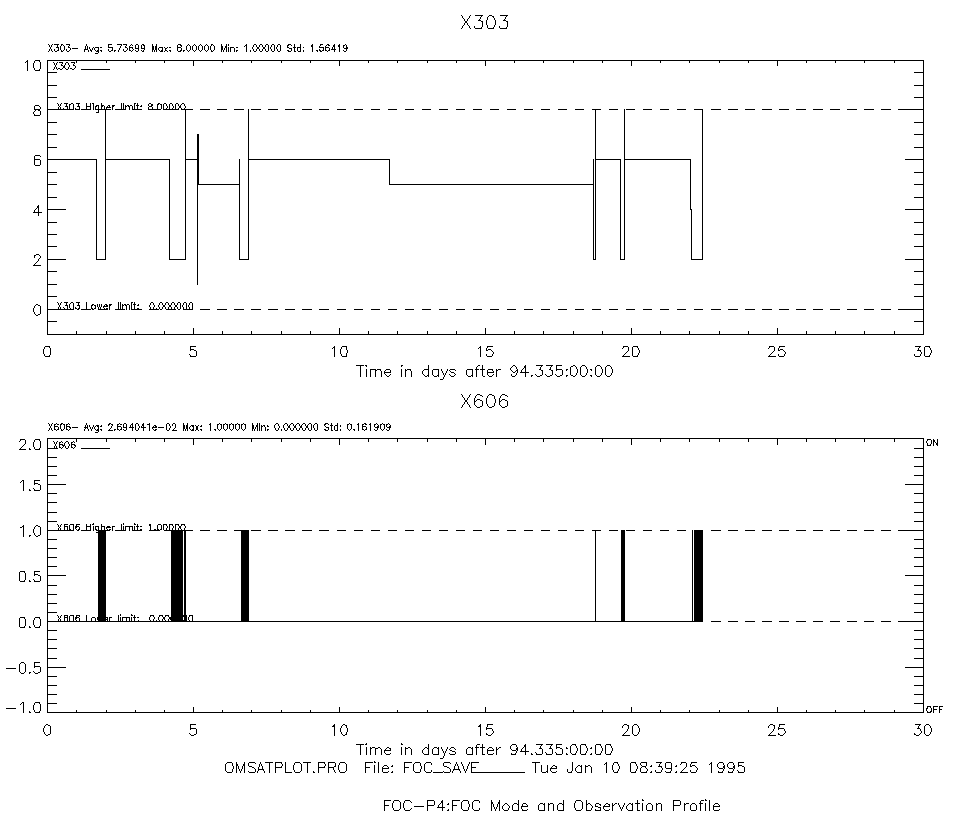
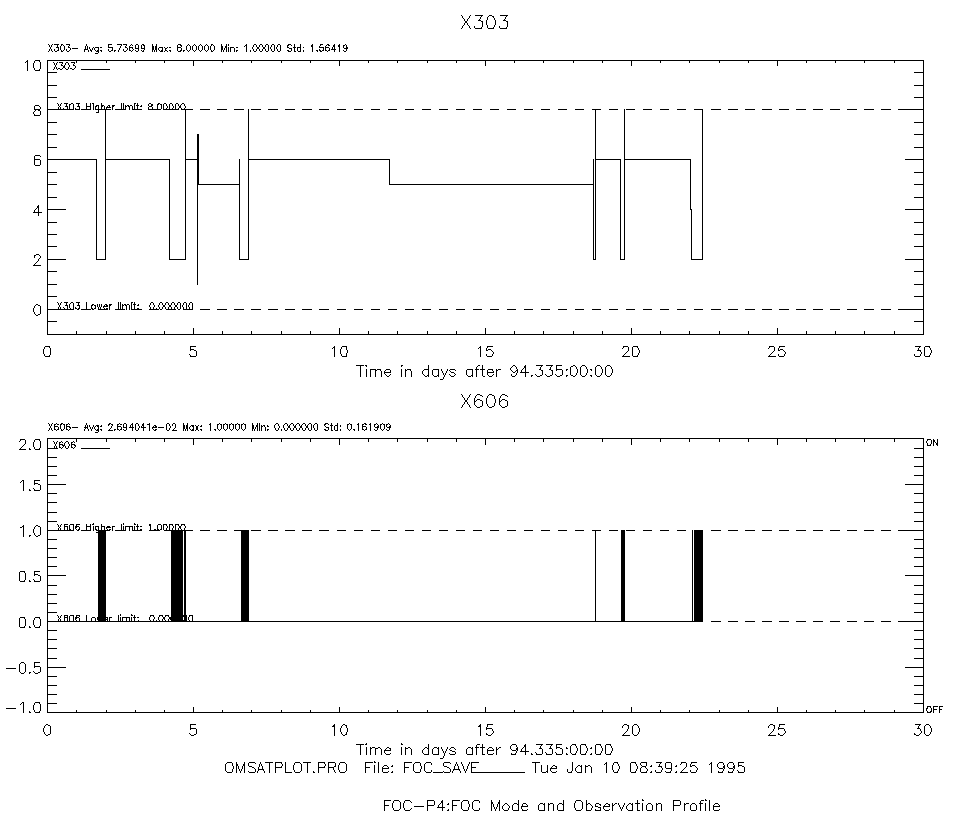
foc-p4:foc mode and observation profile shows the usage of the camera over the reporting period. A reading of the Thermal Control Table Number of "2" flags the time the FOC has been in the High Voltage Mode using the f/96 relay. The value of "1" indicates a reactivation of the F/48 Camera section.
Several Tables are inserted to keep track of operational statistics in particular of limited lifetime items: Table foc-t1 illustrates the statistics of the HV cycles and the hours the FOC was operated in the High Voltage Operate Mode. The same table foc-t1 shows the MIN/MAX/AVERAGE values grouped into the different operational modes: Safemode, Hold, and the High Voltage Operate Mode.
The foc-t2: mechanism cycle/usage table summarizes the usage of the mechanism during the reporting period and adds up the total number of cycles during Ground Testing and In-Orbit use.
A statistic on FOC f/96 Observations is given in Table foc-t2: mechanism cycle/usage table This table also keeps track of the number of loss of lock that occurred during a scheduled FOC observation time and adds up the time lost on target.
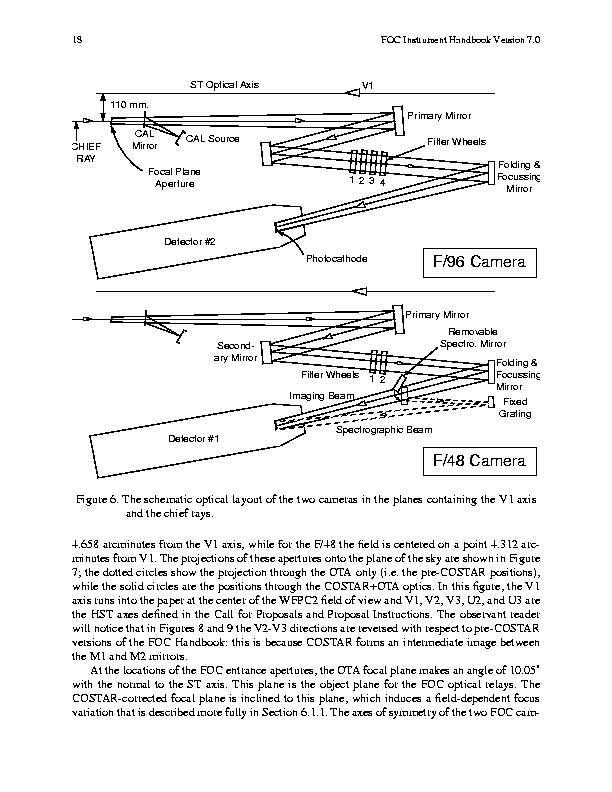
For a picture of the optical path and the FOC mechanism click here.
3.5 FOS:
Table fos-t1 shows the Cycle, Voltage and Miscellaneous summaries for the FOS for the month of December. There were no health and safety of operational limit violations for the month. No additional diodes were disabled during the month.
Table fos-t2 shows the thermal summary for the month. There were no health and safety or operational limit violations for the month.
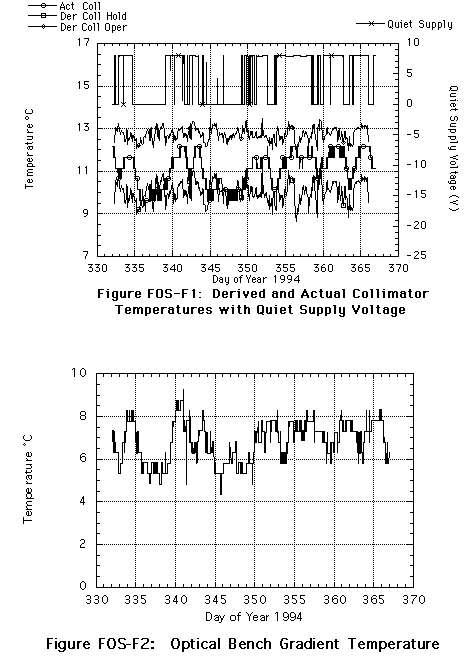
Figure fos-f1 is the standard plot of Collimator (predicted and actual) temperature (Y302) as a function of time. The predicted temperatures are based on algorithms for both the Operate (LVON) state and the Hold (LVOFF) states as a function of FOS aft shroud sink temperatures. The optical bench reacts in such a way as to be within +/- 1 deg C of equilibrium 24 hours after a transition. This plot suggests nominal thermal behavior for the detector as a whole even during the periods of continuous LVON.
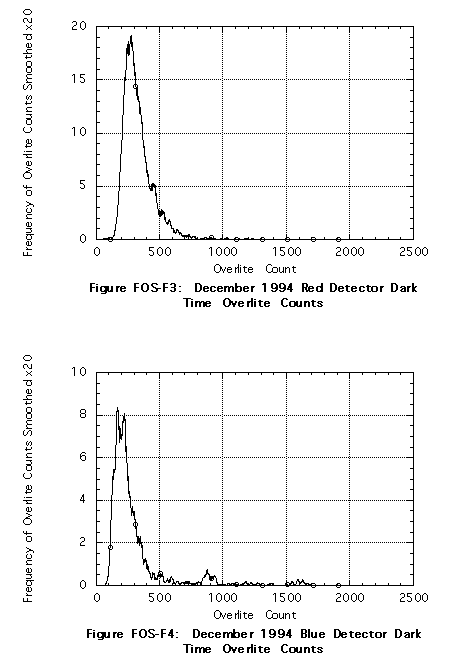
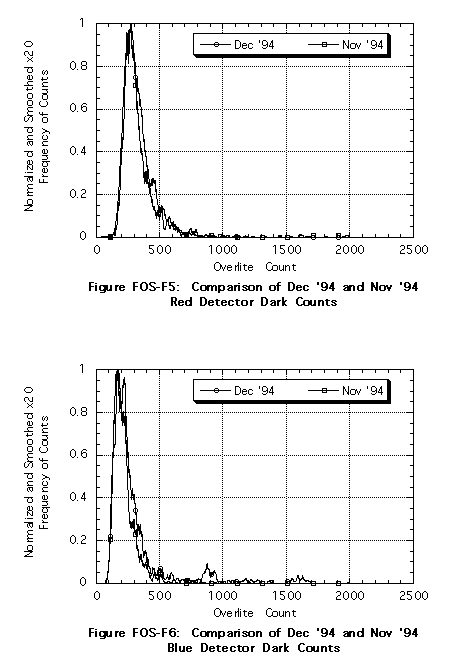
Figure fos-f2 shows a nominal optical bench gradient temperature for the month. Figures fos-f3 and f4 show the Red and Blue detector dark count data for the month. These plots are a representation of the Overlite counts from the FOS at all times that the detector is in Operate mode. Overlite is an engineering telemetry monitor of the total counts on the active detector array for the last 60 seconds. The data represented here occured after HV stabilization, after dead/noisy diode disabling, outside the SAA, with the FOS aperture door shut, and all lamps off. The data are therefore total dark counts in a 60 second period for all enabled diodes. Figures fos-f5 and f6 show the comparison of December's dark count data to Novembers's. December's dark count data represent nominal performance.
3.6 GHRS:
All trended monitors appeared normal for this reporting period. The following tables and figures summarize activity of selected areas of the instrument.
Table ghrs-t1 is a cycle and use summary of the instrument mechanisms as well as a statistical analysis of main bus voltages and currents.
Table ghrs-t2 is a statistical summary of key instrument temperatures. All temperatures are within their normal range.
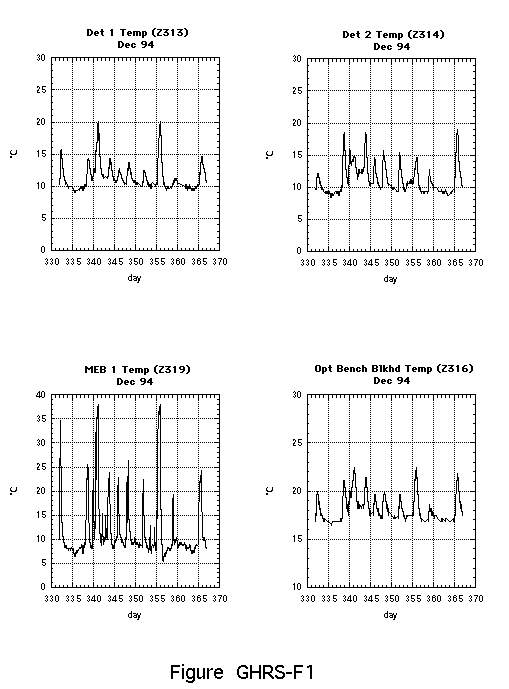
Figure ghrs-f1 contains plots of key instrumental temperatures. The temperature profiles for each detector and the optical bench are shown since these temperatures can affect optical stability. The temperature plot for MEB 1 is also included since large operational gradients on this monitor contributed to the intermittant failure on the side 1 low voltage power supply.
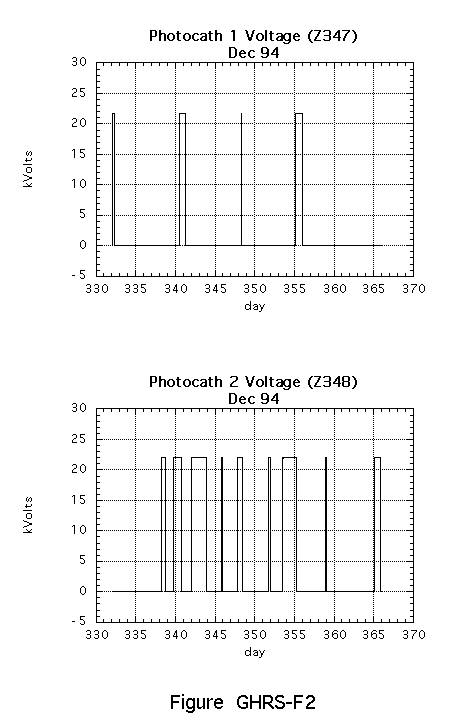
Figure ghrs-f2 shows the side 1 and side 2 power supply voltages for the month. These voltages remain very stable.
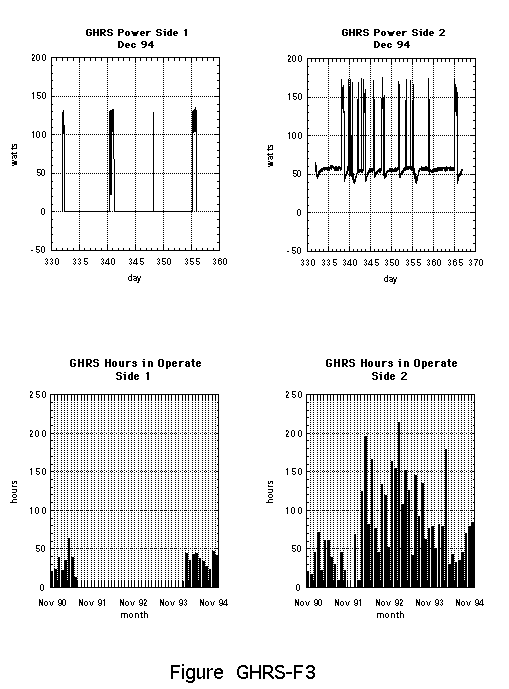
Figure ghrs-f3 contains monthly power profiles for each side of the instrument as well as historical summaries of hours spent in OPERATE mode.