Monthly Observatory Report
                                          for
                                   October 1994
COSTAR:
A routine focus adjustment was commanded to compensate for a degradation of the FOC image quality. Operation of the COSTAR was nominal.
WFPCII:
WFPCII continues to operate nominally throughout the month of October.
The 12 hours monthly decontamination on day 293 restored nominal UV throughput.
Science and Calibration observations continue to execute successfully.
Thermal modeling of the WFPC radiator is currently been done to investigate the possibility of breaking the radiator red limit of -75 C under various spacecraft attitudes and time periods. The model predictions will be used to minimize the situations in which the TEC will be turned Off due to the temperature limit being exceeded.
A centroiding algorithm is being used on WFPC observations to detect FGS drift caused by temperature variations within the FGS. Preliminary results show the observed cyclic breathing effect, and a shift within an orbital period which is attributed to the FGS drift. Further work is being done.
FOC:
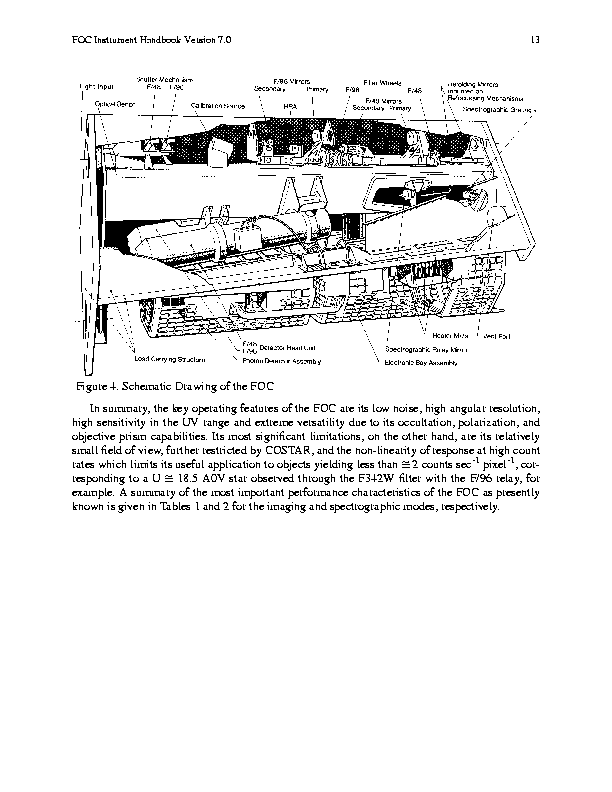
FOC is continuing the normal science program with GO and GTO cycle 4 proposals using the f/96 relay without problems. For a picture of the Faint Object Camera click here.
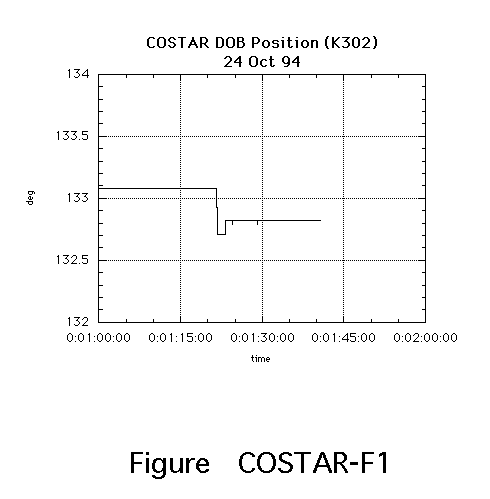
On day 298 (24-OCT-94) the COSTAR DOB was moved by -36 steps for a fine adjustment of FOC focus. As a consequence of the DOB move the FOC PSF has been restored to near optimum. For details of COSTAR commanding see paragraph 1.2 of this report.
On day 304 the F/48 camera has been successfully configured in its High Voltage Operate mode for FOC proposal 5763. The High Voltage Power Supply output voltages ramped up nominal and stayed with tied limits for the scheduled duration of the prosposal : approx 4 hrs 30 min. This was the very first time the F/48 detector has been used since the installation of COSTAR. Here are the preliminary results of the F/48 RE-activation:
Presently the Science Instrument Branch is working on a long term usage plan based on the results above.
FOS:
The FOS continued to execute a variety of GO, GTO, and CAL proposals during the month of October.
GHRS:
The FOS-assisted GHRS target acquisition test was successful. A target was located and centered in the FOS 4.3 arcsec aperture. A slew was then commanded to put the target in the GHRS large aperture. The slew easily found the GHRS aperture. This capability may be used to reduce overhead time when the GHRS is viewing a faint target, or when the FOS is viewing a relatively bright target.
1.2 Summary of major problems
COSTAR:
A slight focus adjustment was made for the FOC. A -35 step change in the DOB position was commanded. We were moving against the preferred direction so an overshoot was required. A -50 step followed by a +15 step position adjustment was commanded which resulted in a change from 0.453 mm to -0.156 mm. This move is equivalent to approximately 3 microns of secondary mirror movement. A telemetry plot of this activity can be seen in Figure costar-f1.
FOC:
In general: No major problems with FOC operations during the reporting period. Electrical and thermal monitors of the Instrument continue to show nominal values after the Servicing Mission. No HSTAR were filed against the Instrument hardware or its operational software.
FOS:
The FOS was safed on day 94.297 after a period when the blue side micro-processor was not performing normally. When the low voltage was enabled all telemetry from the micro-processor was nominal. When the telemetry synced-up after the high voltage relay was closed, the speed check counter went to zero instead of a nominal reading of around 160. The speed check counter is incremented each time the micro-processor background tasks are completed. This count is reset once per minor frame. A speed check count of zero indicated that the background tasks were not being service properly, but a hardware timer which must be reset as one of those tasks did not time-out so the processor was functioning. The high voltage ramp-up appeared normal. The serial magnitude commands needed to bring up the high voltage are issued by the micro-processor, so we had another indication that the processor was functioning at some level. The FOS remained in this state until configuration for the first observation was begun. When the shutter was commanded open at the start of the observation, the micro-processor hung and the FOS was safed. The configuration of instrument mechanisms is handled in the background tasks where the problem seems to have occurred. We believe that a spurious signal was created on the processor reset line at the time of the high voltage relay closure. In the past, this spurious signal has hung the processor. If the processor hangs at the time of high voltage turn on, the commanding will issue a reset, and the error will be corrected. In the day 297 case, the processor was affected but did not hang so the error persisted. The instrument was recovered and a blue side observation was executed without the high voltage. All telemetry looked normal during this test. A blue observation with high voltage will be performed this Saturday, day 94.309. If there is no indication of an error at that time, then no further action will be warranted and normal use of the blue detector will continue.
GHRS:
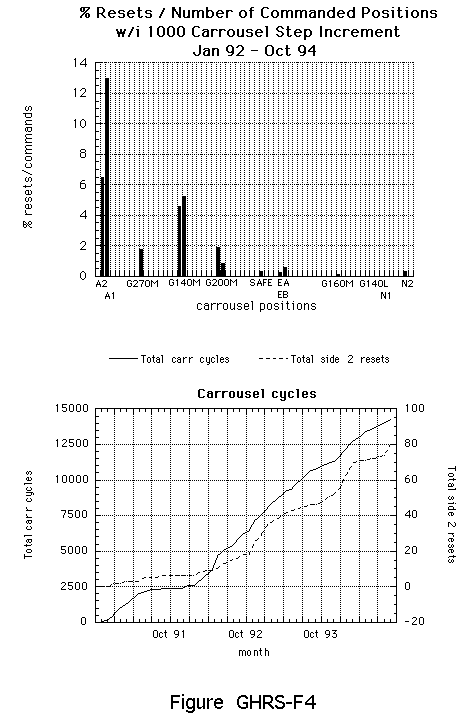
Monitoring of GHRS carrousel reset activity is continuing. During the month of October there was one reset event for 238 commanded positions. Figure ghrs-f4 contains a plot which shows the accumulated number of times the carrousel is commanded to a new position and compares this rate to the accumulation of carrousel resets. The trend of both of these data sets is similar. Figure ghrs-f4 We are anxiously waiting for the implementation of the GHRS flight software fix that will allow us to use observation time-out. The lack of this time-out feature cost us more than 5 hours of spacecraft time when observations were dropped after carrousel reset events. No progress has been made in the simulator testing of this software fix, but we are still expecting implementation by the end of the year.
WFPCII:
The UV calibration lamp was activated on day 294 following the decontamination. The measured throughput at 160nm was 87.75%, at 170nm it was 87.5%, and at 255nm it was 93%. The results indicate that the observed UV decline is strongly dependent on lamp usage. Further analysis will be done on the UV data.
On day 295 vertical streaks appeared on an external PC observation. The streaks do not appear to be external but internal since the streaks can also be observed in the pyramid shadow. The HST location was mapped with respect to the SAA (contour 5) during the period of the observation and the mapping shows that the beginning and end of the observation were clearly outside the SAA contour. The 42 bit time code for each line readout from the CCDs to the CU/SDF were also extracted from the PKX files and were found to be normal. Further analysis will be done by JPL.
During a STR dump on day 290 at 05:40:26 WFPC data was lost due to missing bits and sync patterns in the TDRSS block (HSTAR 4954 Missing data in WFPCII observation 231). The anomaly does not appear to be a ground system problem. The line readout times from the PKX files will be extracted and analyzed, and may help determine a possible cause for the corruption of the frame sync pattern. DCF is assessing the anomaly.
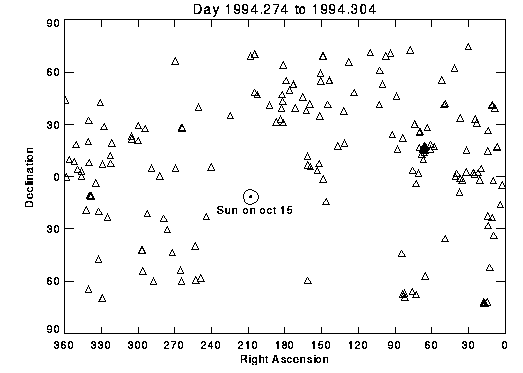
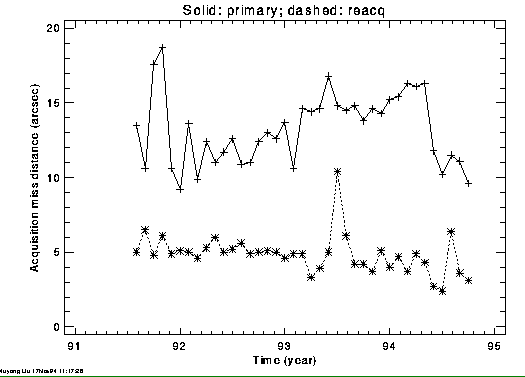
The sky distribution of pointings in this month is shown in Fig. 2.1. Fig. 2.2 shows the monthly average pointing miss for primary guide start acquisitions and reacquisitions. The pointing miss is measured from the location of the guide star found during search compared to the predicted position (start of the search). table 2.1 describes the statistics of guide star acquisitions. It takes into account both primary acquisitions and reacquisitions. "No lock" means that coarse track cannot be established or maintained. "Degraded mode" refers to the cases where the guiding mode falls back to coarse track when the commanded mode of the find lock cannot be established or maintained. "Search rad exc" refers to cases where the guide stars are not found.
The distribution of guiding modes by Science Instrument during scheduled exposures is given in table 2.2. for each scheduled exposure, the actual guiding mode is obtained from the engineering telemetry. The scheduled exposure time is subsequently summed up by guding mode for each SI to produce the distribution.
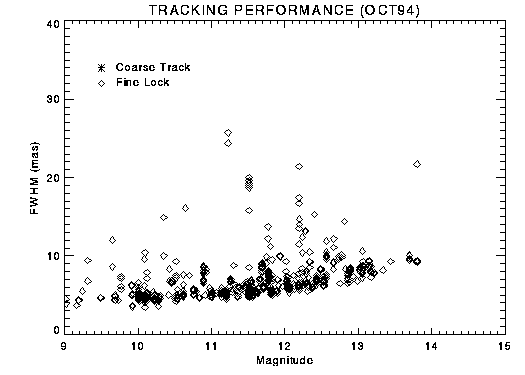
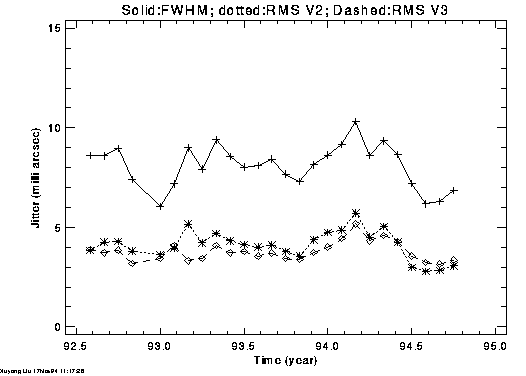
The full-width at half-max (FWHM) of jitter during observations are plotted as a function of the magnitude of the dominant guide stars in Fig. 2.4. the jitter is obtained from the motion of the dominant guide stars in the FGS. The rms of jitter along V2 and V3 axes is also calculated for each observation. The average of FWHM and rms of jitter over all observations in each month is given in Fig. 2.3 and shows no obvious trend.
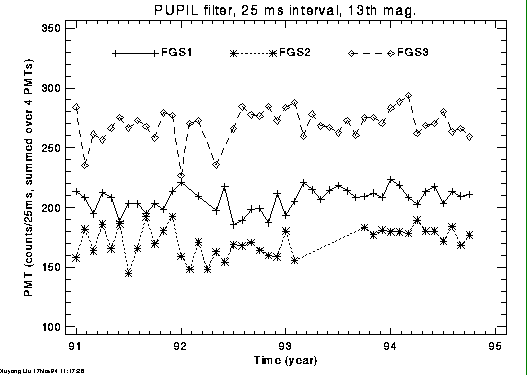
For each observation, the PMT sensitivity is calculated for each FGS in fine lock based on the PMT count rates and magnitude of the guide stars. The sensitivity is expressed in total counts of the 4 PMTs per 25 milli-seconds normalized for a 13th magnitude star with the FGS filter in pupil position. Fig. 2.5 shows the average sensitivities of each month since Janurary, 1991. The is no obvious trend. The variation of the sensitivities appears compatible to the error of the guide star magnitude.
2.2 Observations
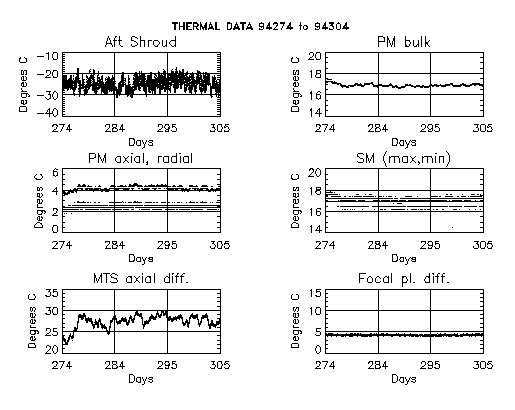
The temperature fluctuations of critical spacecraft components are shown in Figure 3.1. All temperatures are nominal.
3.2 Costar:
the costar trending program is being developed. Table costar-t1 has been included to document current mechanism positions associated with the COSTAR mirrors.
3.3 WFPCII:
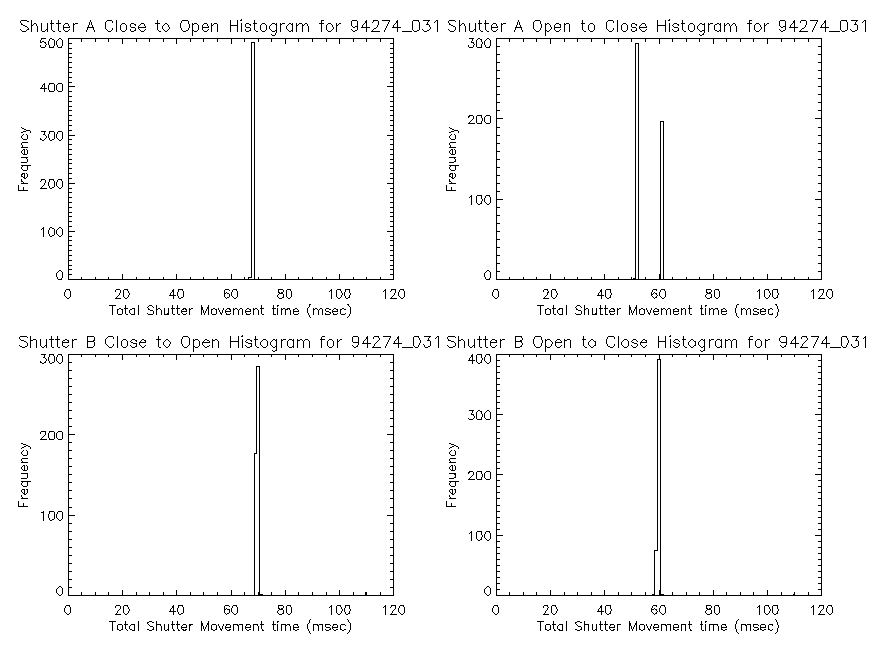
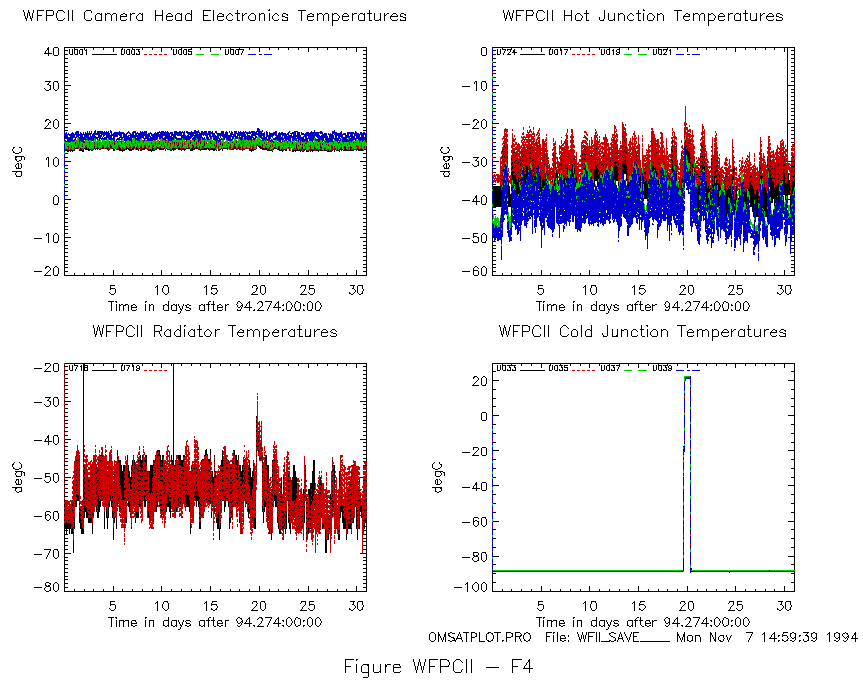
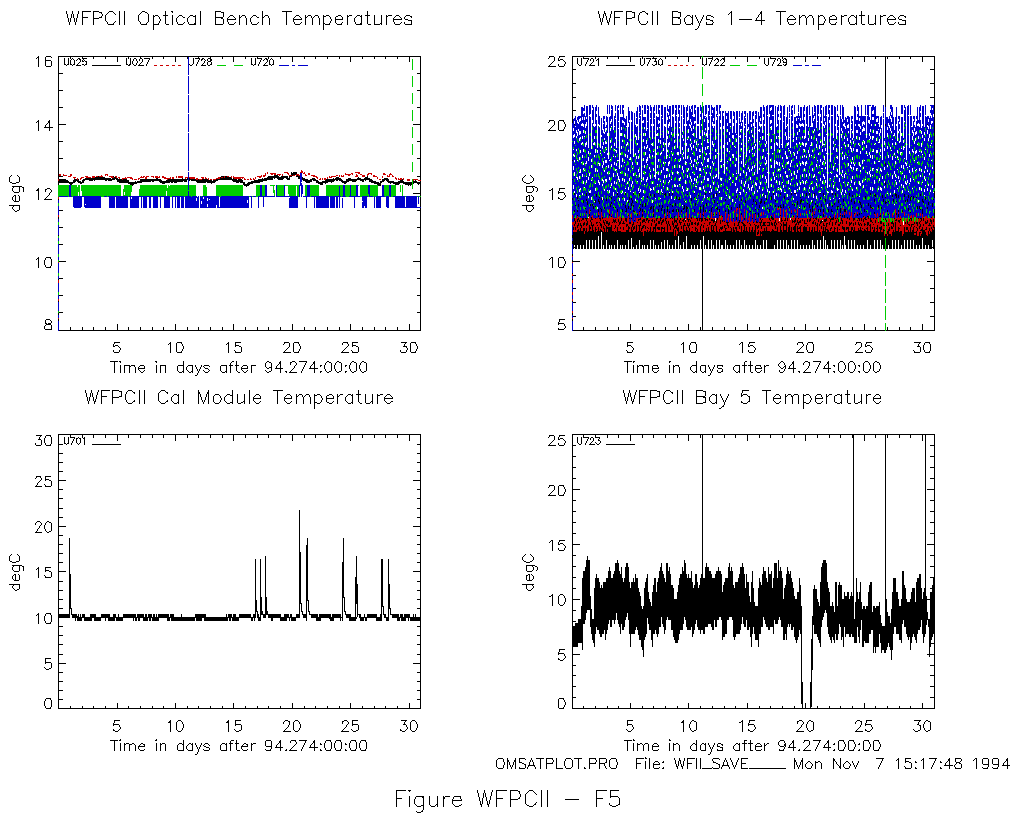
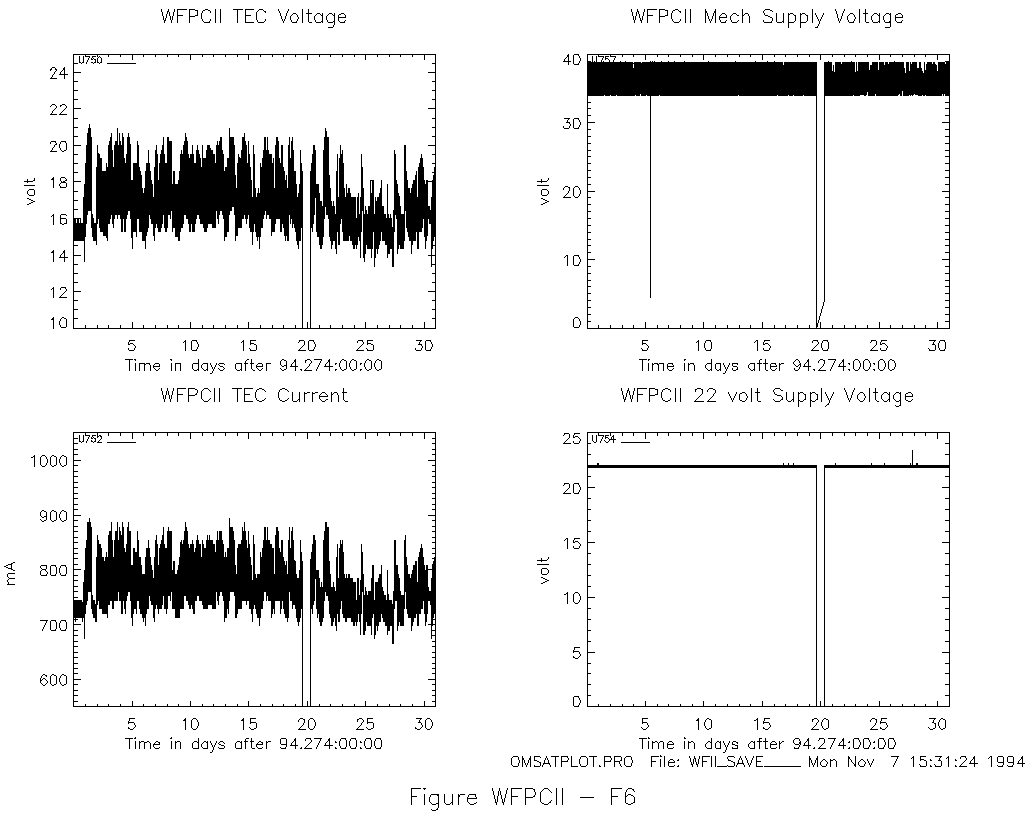
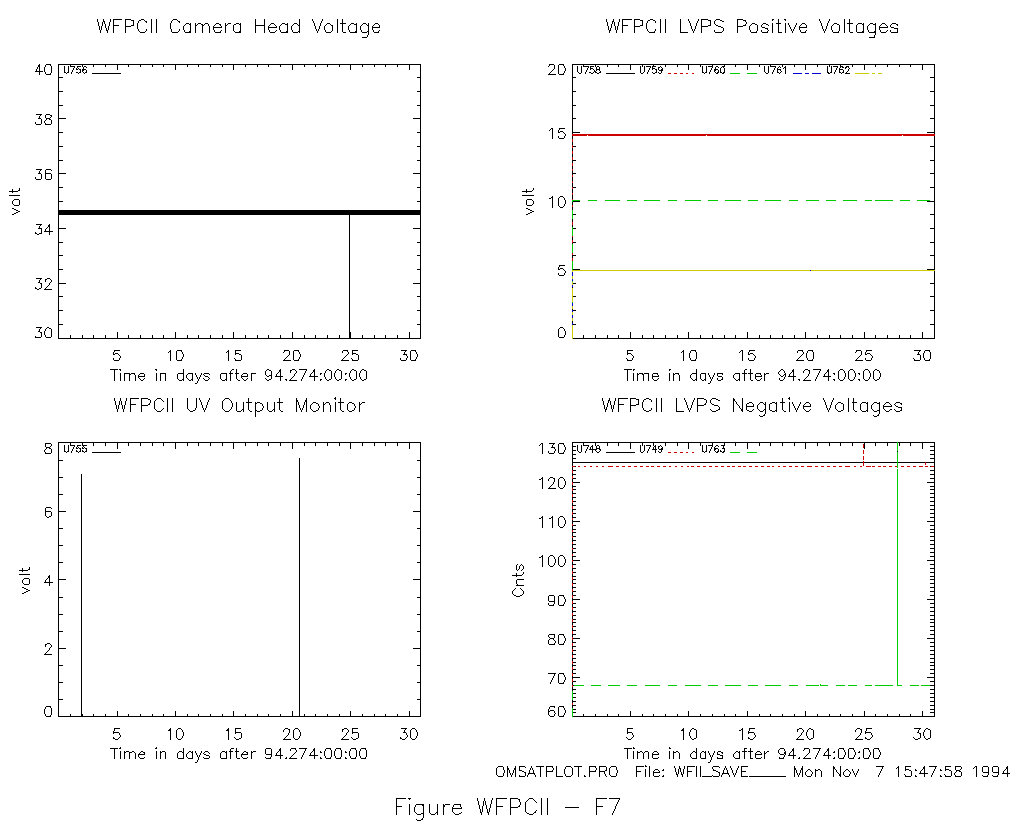
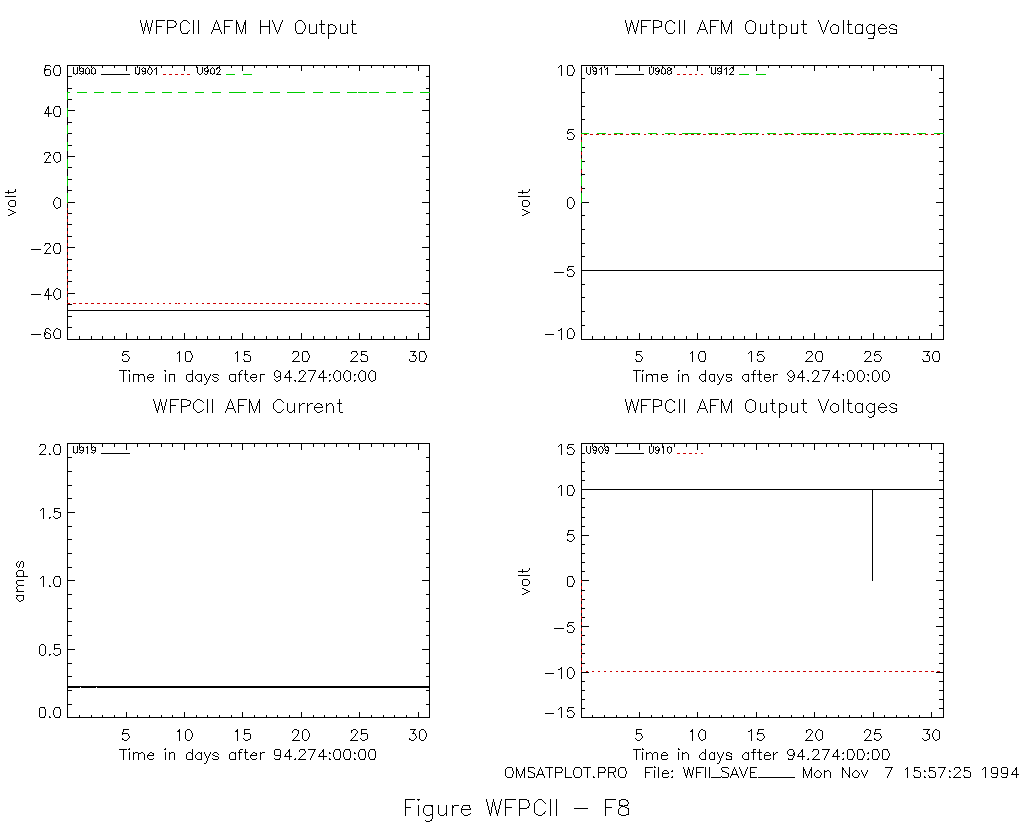
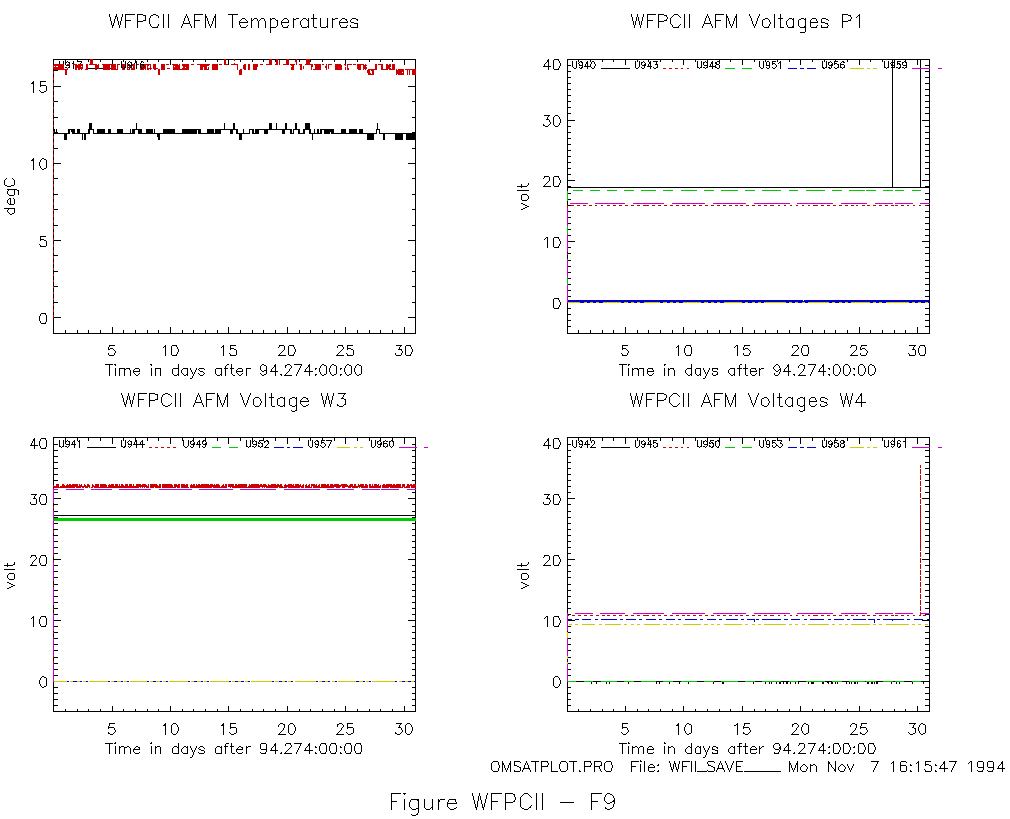
tables wfpc-ii t1, t2, t3 and Figures WFPC-II F3-F9 show the October instrument statistics and profiles for cycle usage, power and temperature. All values are nominal and within limits unless otherwise noted.
table t1 shows the cycles of various mechanisms and power supplies.
table t2 shows the lvps, mechanism, and tec voltage and current outputs.
table t3 shows the bays, optical bench, Bulkheads, Cold and Hot junctions, Camera Heads, Attach points, AFM, and Radiator temperature values.
Figure f3 shows the frequency for various shutter close/open and open/close flight times.
Figure f4 shows the cold and hot junctions, Camera Head, and Radiator temperatures.
Figure f5 shows the Bays, Optical Bench, and Cal Module temperatures. On day 294 the cal module reached a temperature of +21.8 C. This was caused by the UV lamp being turned On for 70 minutes instead of the usual 40 minutes.
Figure f6 shows the mechanism, tec and 22 lvps voltages and current.
Figure f7 shows the lvps, camera head, and UV Output Monitor voltages.
Figure f8 and Figure f9 shows the afm voltages and current
3.4 FOC:
FOC: The f/96 relay of the Instrument continues to operate without problems after the installation of COSTAR: Evaluation of Error Logs show all voltages, currents, and temperatures within their nominal limits. For the F/48 Re-activation on day 304 see para. 1.1 of this report.
Several plots of selected monitor points critical to the performance of the Instrument are an integral part of this report:
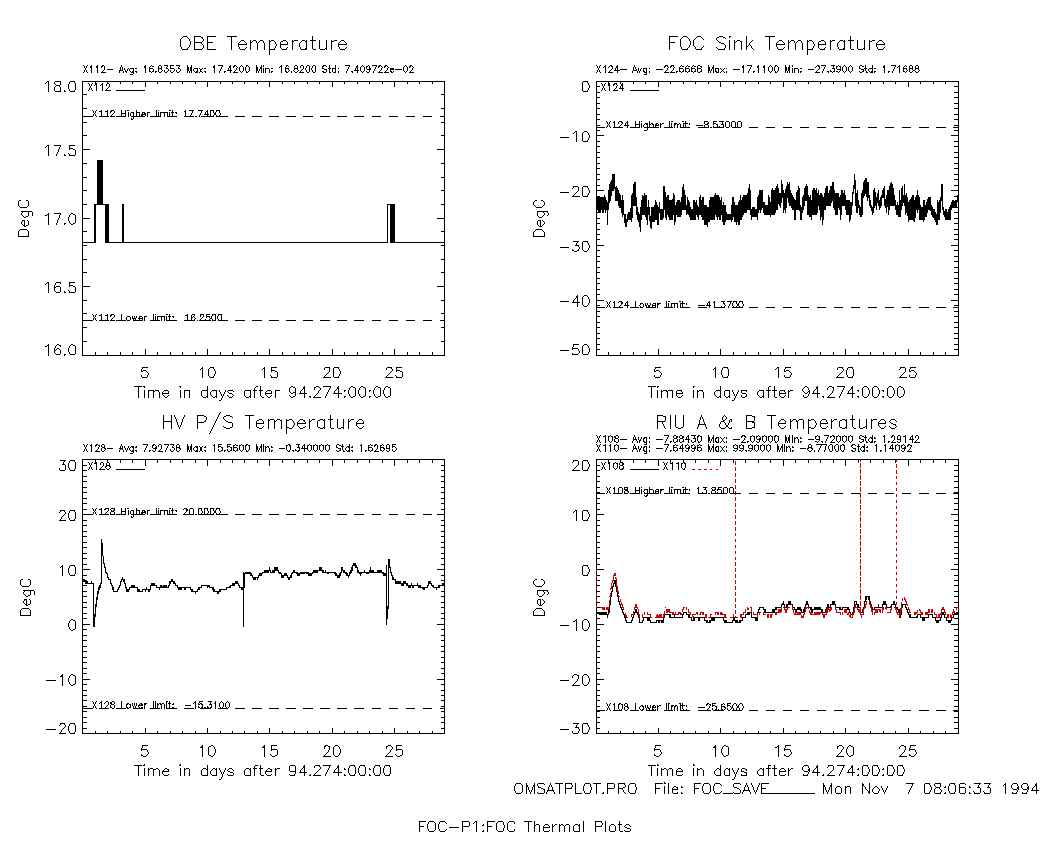
Four critical temperatures are shown foc-p1:foc thermal plots reflecting the thermal profile during the reporting period.
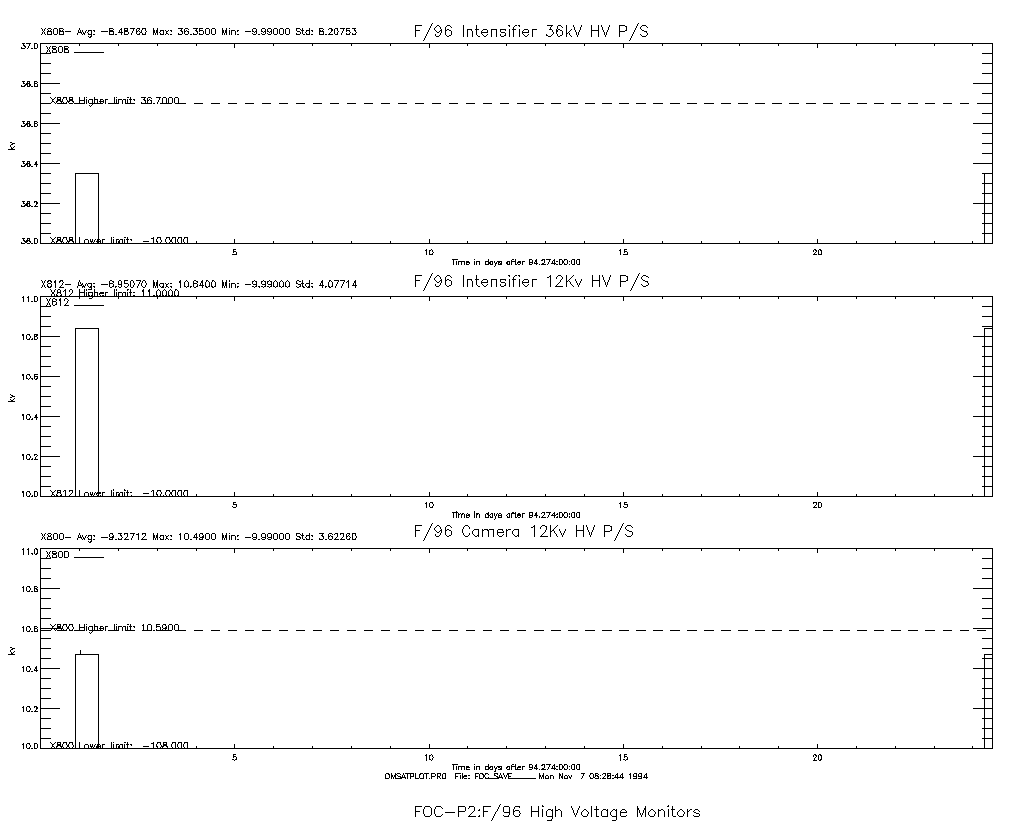
A set of three plots foc-p2:foc high voltage monitors illustrate the profile of the output voltages of the critical High Voltage Power Supplies for the FOC detectors. For a picture of the FOC Dectectors click here.
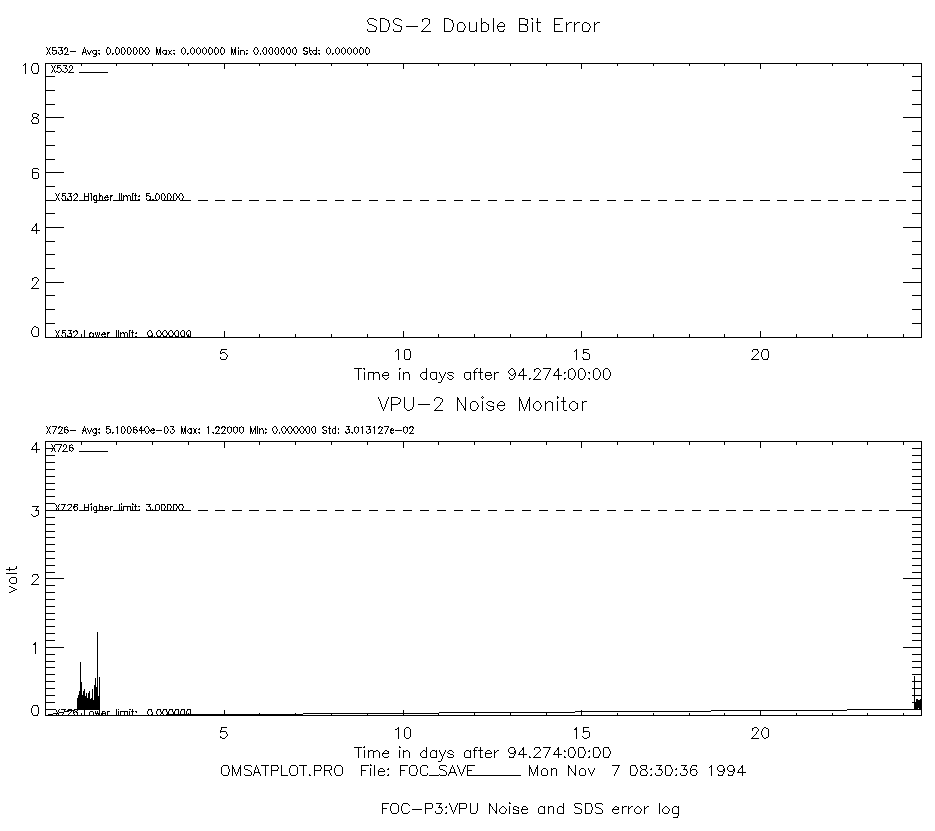
foc-p3:foc vpu noise and sds error log Both plots are focused on the health and safety of the Instrument. The Video Processing Unit (VPU) Noise level indicator summarizes the input signal as detected by the VPU. The peaks typically indicate passages throught the South Atlantic Anomaly (SAA).
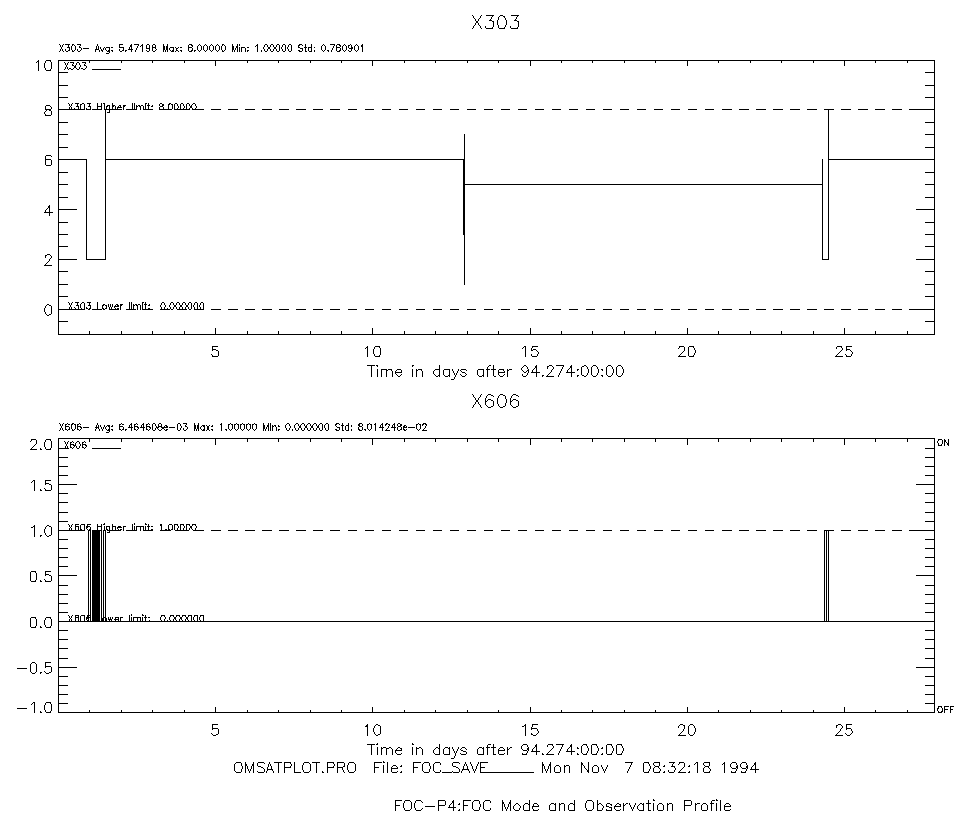
foc-p4:foc mode and observation profile shows the usage of the camera over the reporting period. A reading of the Thermal Control Table Number of "2" flags the time the FOC has been in the High Voltage Mode using the f/96 relay. The value of "1" indicates a reactivation of the F/48 Camera section.
Several Tables are inserted to keep track of operational statistics in particular of limited lifetime items: Table foc-t1 illustrates the statistics of the HV cycles and the hours the FOC was operated in the High Voltage Operate Mode. The same table foc-t1 shows the MIN/MAX/AVERAGE values grouped into the different operational modes: Safemode, Hold, and the High Voltage Operate Mode.
The foc-t2: mechanism cycle/usage table summarizes the usage of the mechanism during the reporting period and adds up the total number of cycles during Ground Testing and In-Orbit use.
A statistic on FOC f/96 Observations is given in Table foc-t2: mechanism cycle/usage table This table also keeps track of the number of loss of lock that occurred during a scheduled FOC observation time and adds up the time lost on target.
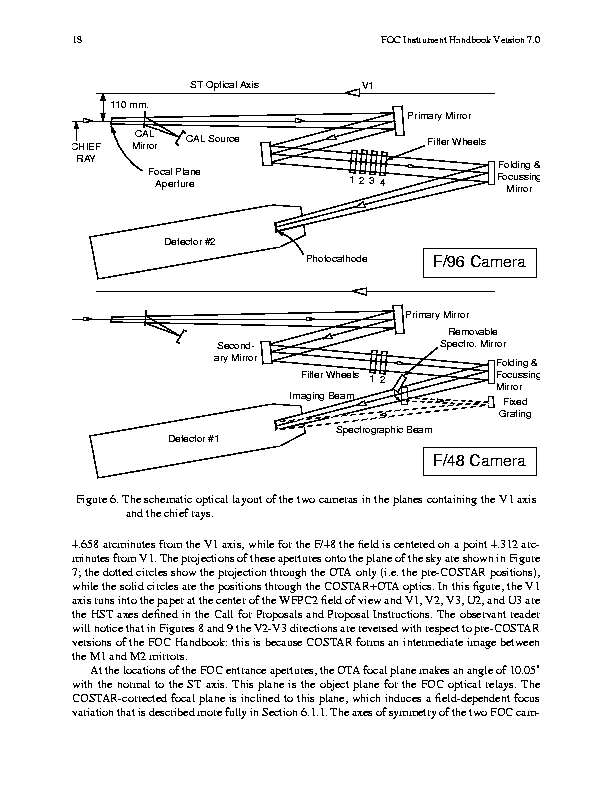
For a picture of the optical path and the FOC mechanism click here.
3.5 FOS:
Table fos-t1 shows the Cycle, Voltage and Miscellaneous summaries for the FOS for the month of October. There were no health and safety of operational limit violations for the month. No additional diodes were disabled during the month.
Table fos-t2 shows the thermal summary for the month. There were no health and safety or operational limit violations for the month.
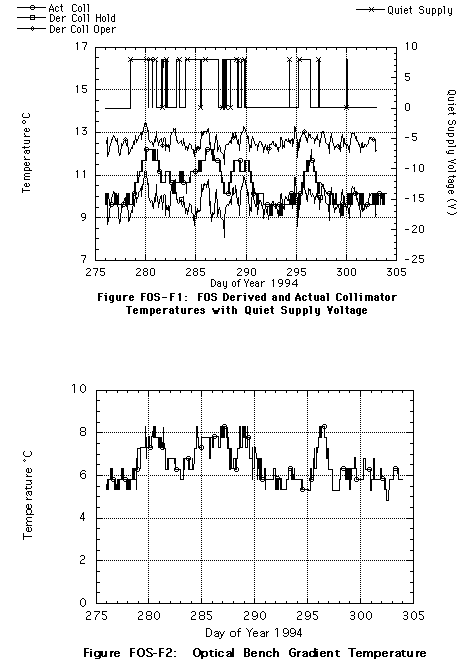
Figure fos-f1 is the standard plot of Collimator (predicted and actual) temperature (Y302) as a function of time. The predicted temperatures are based on algorithms for both the Operate (LVON) state and the Hold (LVOFF) states as a function of FOS aft shroud sink temperatures. The optical bench reacts in such a way as to be within +/- 1 deg C of equilibrium 24 hours after a transition. This plot suggests nominal thermal behavior for the detector as a whole even during the periods of continuous LVON.
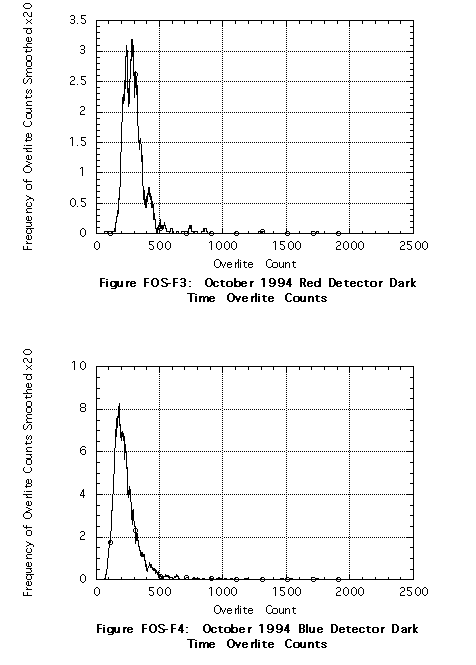
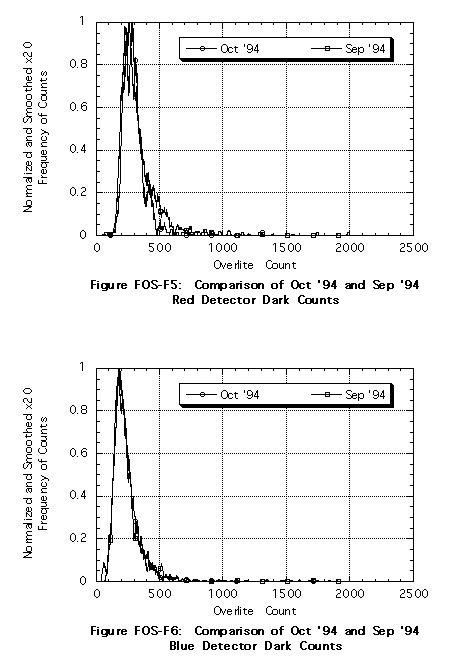
Figure fos-f2 shows a nominal optical bench gradient temperature for the month. Figures fos-f3 and f4 show the Red and Blue detector dark count data for the month. These plots are a representation of the Overlite counts from the FOS at all times that the detector is in Operate mode. Overlite is an engineering telemetry monitor of the total counts on the active detector array for the last 60 seconds. The data represented here occured after HV stabilization, after dead/noisy diode disabling, outside the SAA, with the FOS aperture door shut, and all lamps off. The data are therefore total dark counts in a 60 second period for all enabled diodes. Figures fos-f5 and f6 show the comparison of October's dark count data to September's. October's dark count data represent nominal performance.
3.6 GHRS:
All trended monitors appeared normal for this reporting period. The following tables and figures summarize activity of selected areas of the instrument.
Table ghrs-t1 is a cycle and use summary of the instrument mechanisms as well as a statistical analysis of main bus voltages and currents.
Table ghrs-t2 is a statistical summary of key instrument temperatures. All temperatures are within their normal range.
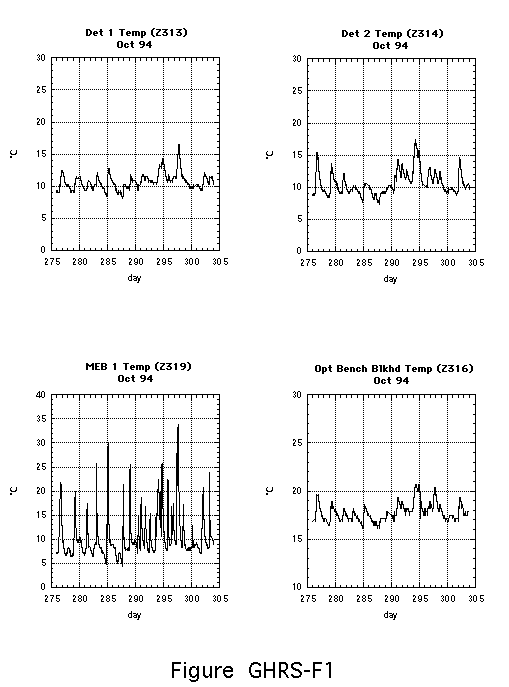
Figure ghrs-f1 contains plots of key instrumental temperatures. The temperature profiles for each detector and the optical bench are shown since these temperatures can affect optical stability. The temperature plot for MEB 1 is also included since large operational gradients on this monitor contributed to the intermittant failure on the side 1 low voltage power supply.
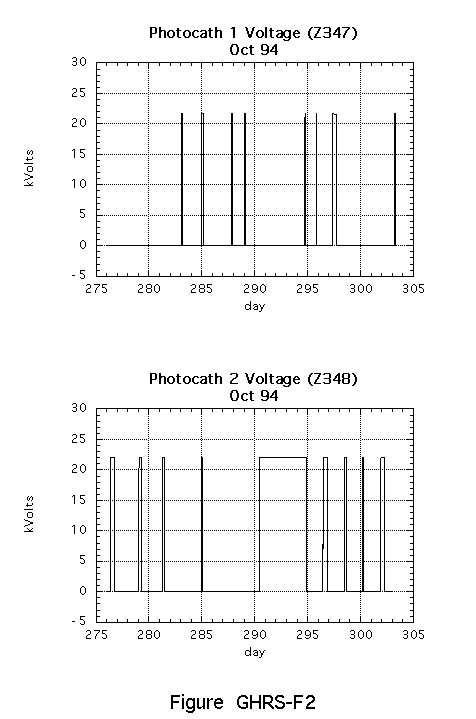
Figure ghrs-f2 shows the side 1 and side 2 power supply voltages for the month. These voltages remain very stable.
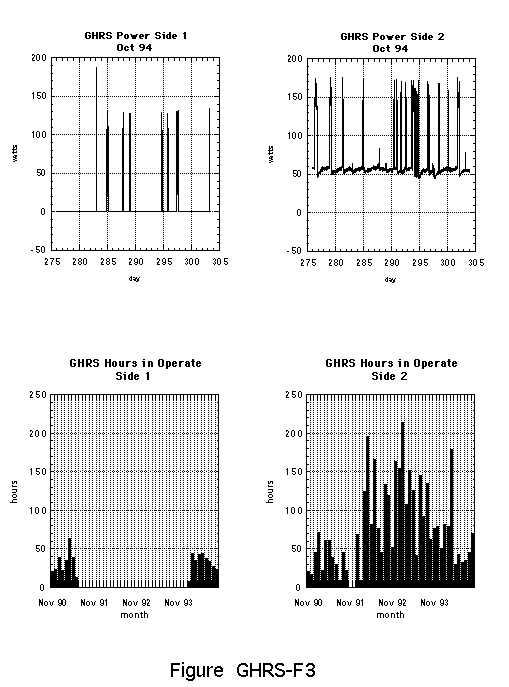
Figure ghrs-f3 contains monthly power profiles for each side of the instrument as well as historical summaries of hours spent in OPERATE mode.