Monthly Observatory Report
                                          for
                                   June 1994
COSTAR:
The COSTAR was stable during this reporting period.
WFPCII:
WFPCII continued to operate nominally throughout the month of June. All subsystems with the exception of the UV Cal system discussed below, appear to be operating with no signs of degradation.
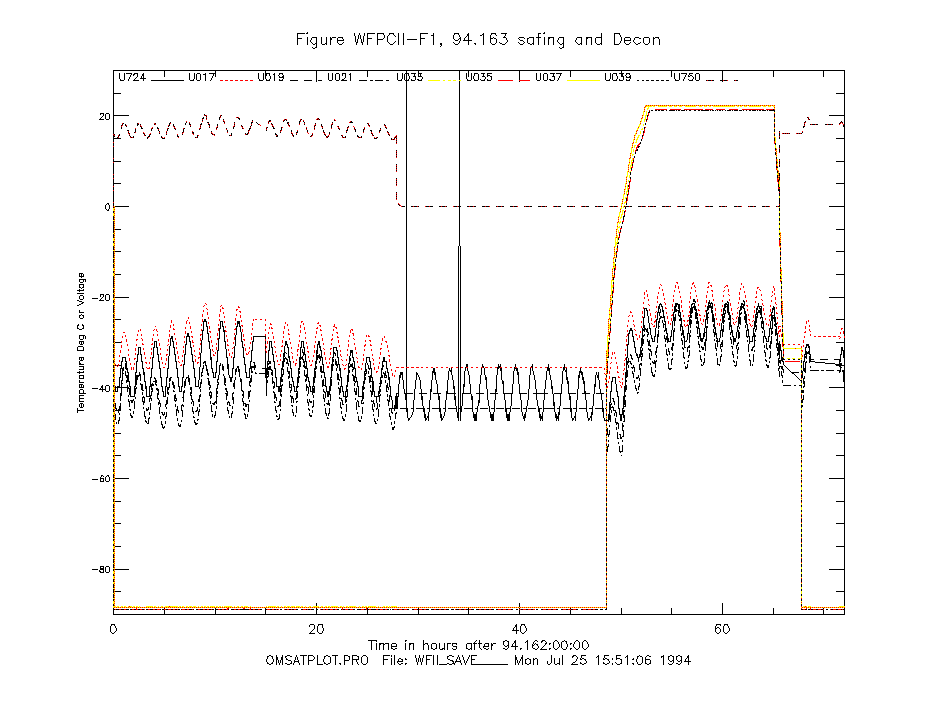
A stored command decontamination was completed successfully on day 164. The decontamination was a 12 hour decontamination in an attempt to restore a larger percentage of hot pixels to their nominal dark current. The analysis is still ongoing, but preliminary indications suggest that there was very little difference between the 12 hour and the 6 hour decontamination sequence. A plot of the temperature profile for the decontamination is shown in figure wfpcii-f1. the results from science data taken after the real time decontamination show that the UV throughput was restored to nominal levels.
The WFPCII was placed into safe mode for the first time since the servicing mission. This was to allow for the NSSC1 5.3 FSW installation on day 163. The instrument was successfully recovered from safe on day 164.
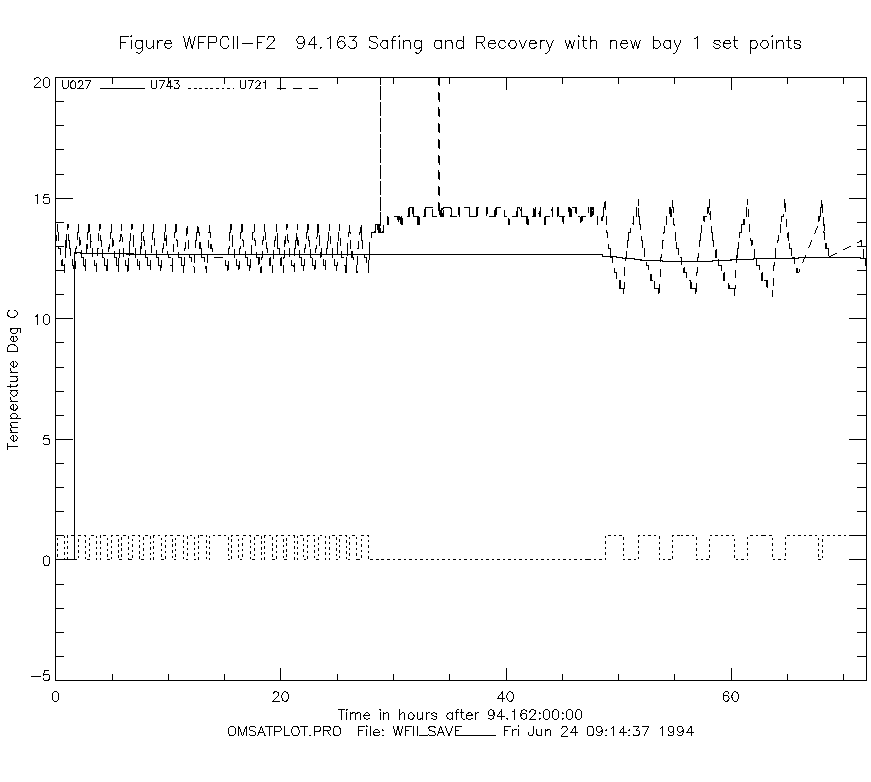
As part of the safing recovery, a new set of Bay 1 set points was loaded for the WFPCII software. This was done to decrease the amount of cycling of the replacement heaters while still maintaining optical bench stability. A plot of the bay 1 temperature, the fold mirror bulkhead temperature and the replacement heater relay is shown in figure wfpcii-f2. from this figure, it can be seen that during the safing event, the replacement heaters were on continuously. After the safing recovery, the replacement heater cycling dropped by a factor of approximately 3 and the optical bench temperature returned to its previous value.
An analysis of kspot data taken with the new set points shows no positional shift from the previous set points.
FOC:
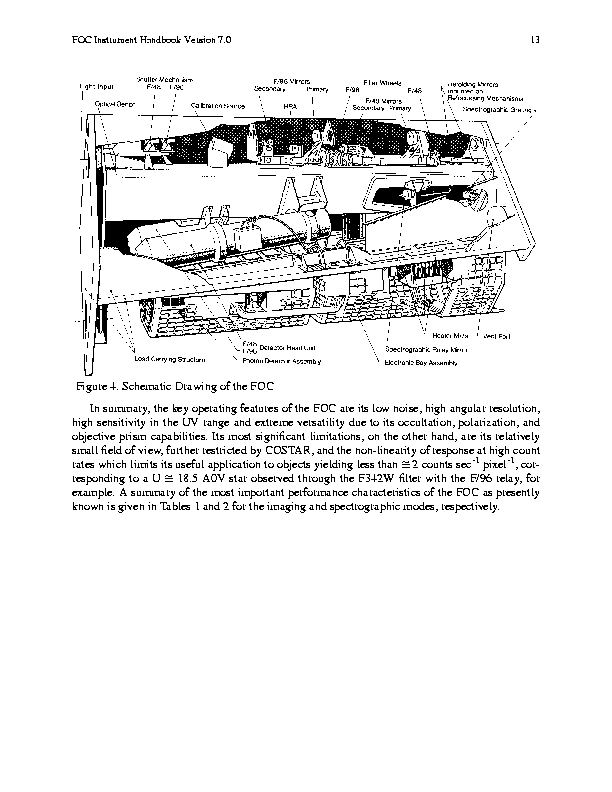
FOC is continuing the normal science program with GO and GTO cycle 4 proposals using the f/96 relay without problems. For a picture of the faint object camera click here. The calibration proposal 5526 " FOC UV Throughput Monitoring" was used as a regression test to verify the integrity of the FOC Flight Software after the installation of version 5.3 of the NSSC-1 Flight Software package. During the Software installation the FOC was temporarily configured into its safemode. Science data and engineering telemetry were nominal after the implementation of the new Flight Software.
FOS:
The FOS continued to execute a variety of GO, GTO, and CAL proposals during the month of June.
GHRS:
Both side 1 and side 2 of the GHRS are running well.
1.2 Summary of major problems
COSTAR:
A change in the shape of the FOC image suggested that X-tilt drift may have occurred in the position of the FOC-COSTAR mirror. The COSTAR was configured to FOC sensor mode to check the position telemetry of the FOC mirror. This telemetry verified that no drift in the mirror position had occurred. A subsequent move of the HST secondary mirror has improved the FOC image. FOC data is being evaluated to determine if any further adjustment of the FOC-COSTAR mirror position is required.
WFPCII:
FOC:
In general: No major problems with the FOC during the reporting period. Electrical and thermal monitors of the Instrument continue to show nominal values after the Servicing Mission. During the execution of proposal 5151 " Far UV Prism Observations of High z QSOs " a loss of lock of the HST pointing system shortened the scheduled exposure time of one of the observations. FOC Flight software generated appropriate error code.
No HSTAR were opened against the Instrument or its operational software.
FOS:
The FOS experienced no new problems during this reporting period albeit the instrument was placed in safe state on July 5,1994 at 08:57:00 UT and recovered on July 10, 1994 at 12:03:22 UT. This safe state was initiated by a DF244 guidance computer anomaly.
GHRS:
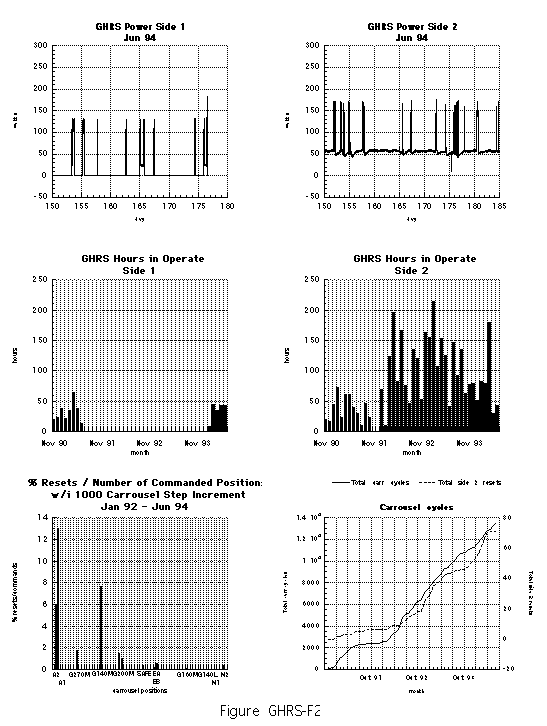
Monitoring of GHRS carrousel reset activity is continuing. During the month of June there were no reset events for 401 commanded positions.
Since the resumption of side 1 observing, the profile of the side 1 thermal shelf temperature montiors has been significantly different than what was seen after launch. The change in the response of these monitors is a reflection of the different way that thermal control is maintained. After launch, the GHRS operated with primary heater control enabled on both sides. At the time of the side 1 power supply failure, the side 1 heater control was disabled to reduce power load and the side 2 backup heaters were enabled to compensate. The primary heaters are controlled independently from each other. The backup heaters, however, are configured with their thermistors in series. The colder zone will have a predominant effect in controlling the temperature of the three zones resulting in a more non-uniform temperature control than provided by the primary thermal control. Analysis of the three side 1 monitors shows that two monitors are running slightly cooler that before while the remaining monitor is about eight degrees warmer. The upper limit on this warmer monitor has been raised from 32 to 34 degrees.
An error has been found in the GHRS commanding for moving targets. For moving targets only, the right ascension and declination coordinates are set to zero. The result is that the doppler correction is improperly applied. This error has been fixed and the corrected commanding is in effect as of the 94192 SMS.
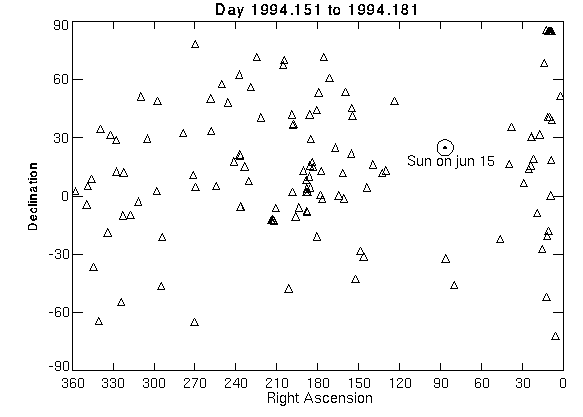
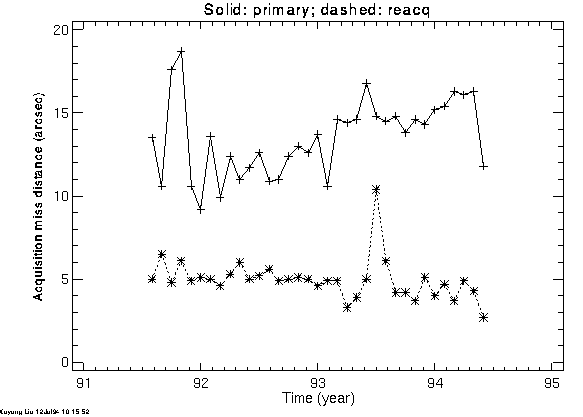
The sky distribution of pointings in this month is shown in Fig. 2.1. Fig. 2.2 shows the monthly average pointing miss for primary guide star acquisitions and reacquisitions. The pointing miss is measured from the location of the guide star found during search compared to the predicted position (start of the search). table 2.1 describes the statistics of guide star acquisitions. It takes into account both primary acquisitions and reacquisitions. "No lock" means that coarse track cannot be established or maintained. "Degraded mode" refers to the cases where the guiding mode falls back to coarse track when the commanded mode of the find lock cannot be established or maintained. "Search rad exc" refers to cases where the guide stars are not found.
The distribution of guiding modes by Science Instrument during scheduled exposures is given in table 2.2. for each scheduled exposure, the actual guiding mode is obtained from the engineering telemetry. The scheduled exposure time is subsequently summed up by guding mode for each SI to produce the distribution.
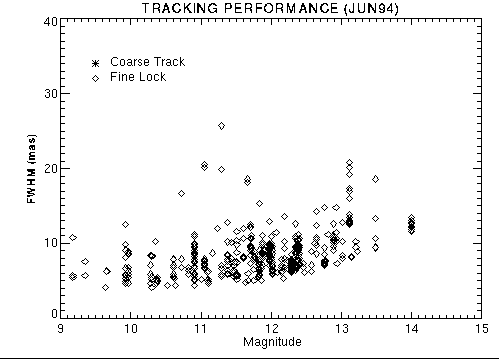
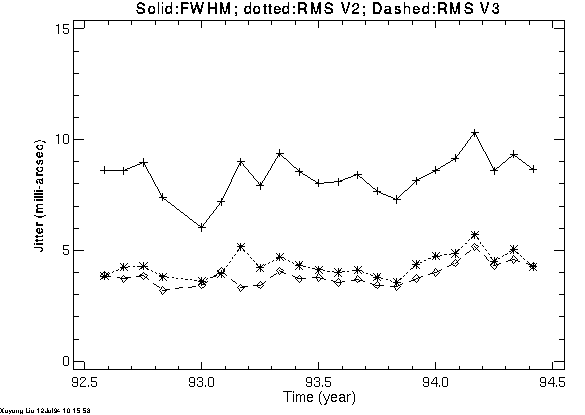
The full-width at half-max (FWHM) of jitter during observations are plotted as a function of the magnitude of the dominant guide stars in Fig. 2.4. the jitter is obtained from the motion of the dominant guide stars in the FGS. The rms of jitter along V2 and V3 axes is also calculated for each observation. The average of FWHM and rms of jitter over all observations in each month is given in Fig. 2.3 and shows no obvious trend.
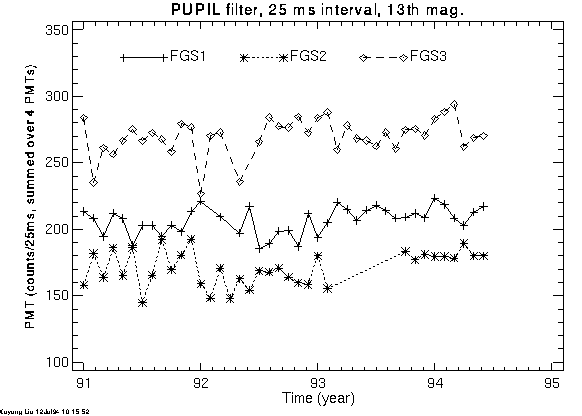
For each observation, the PMT sensitivity is calculated for each FGS in fine lock based on the PMT count rates and magnitude of the guide stars. The sensitivity is expressed in total counts of the 4 PMTs per 25 milli-seconds normalized for a 13th magnitude star with the FGS filter in pupil position. Fig. 2.5 shows the average sensitivities of each month since Janurary, 1991. The is no obvious trend. The variation of the sensitivities appears compatible to the error of the guide star magnitude.
2.2 Observations
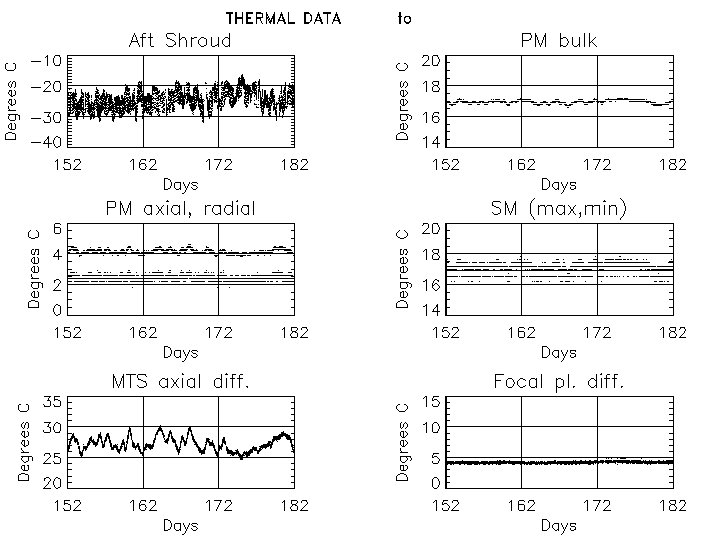
The temperature fluctuations of critical spacecraft components are shown in Figure 3.1. All temperatures are nominal.
3.2 Costar:
3.3 WFPCII:
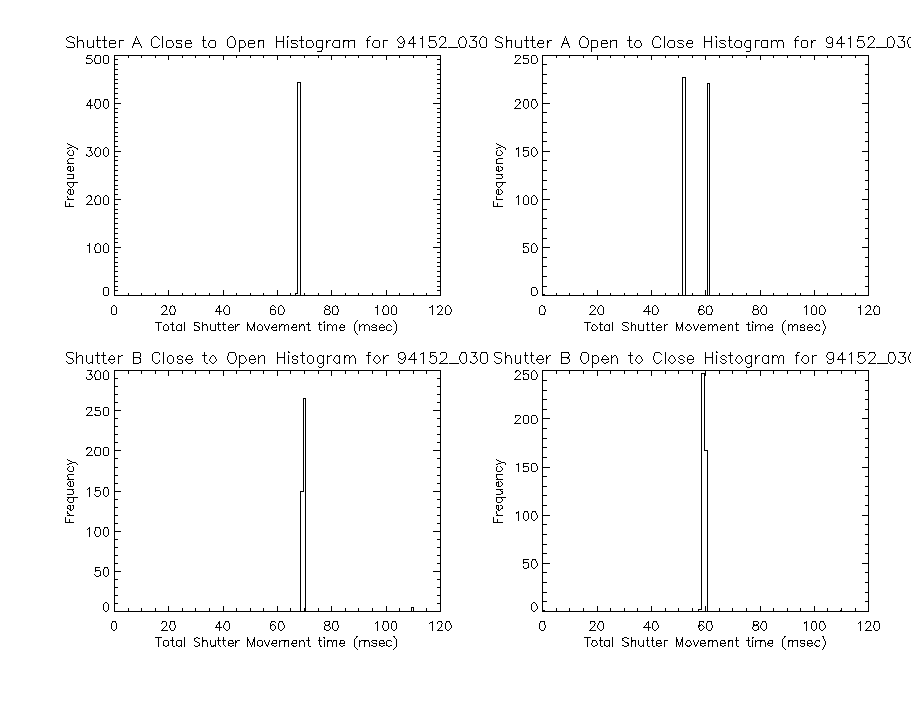
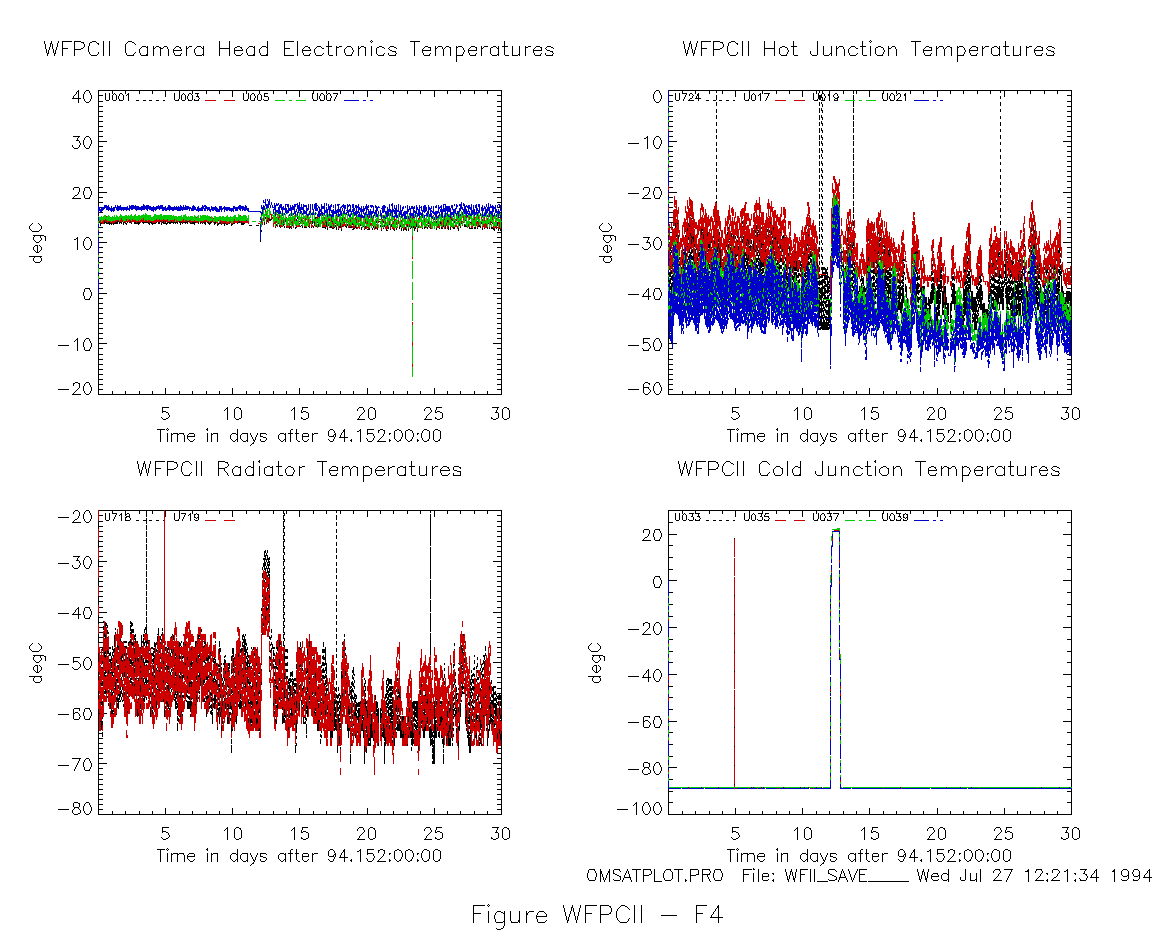
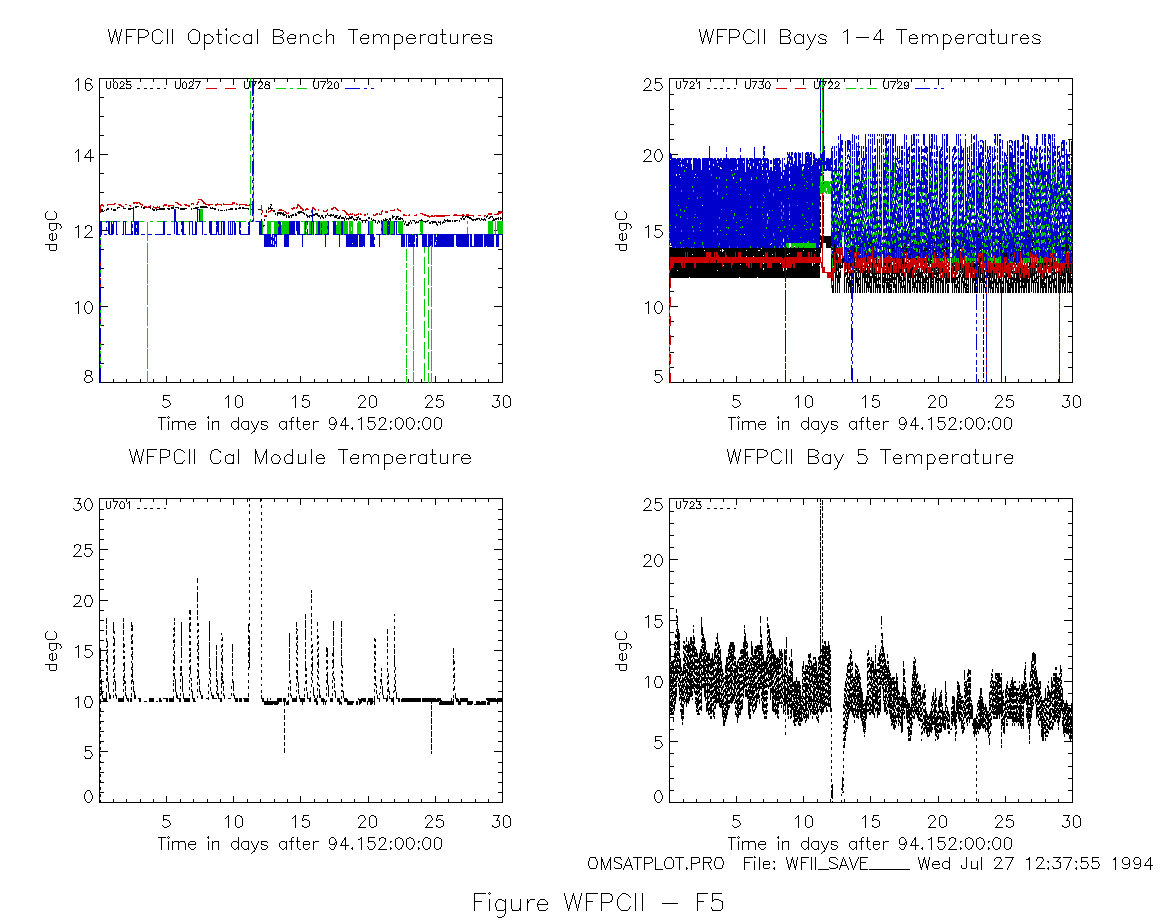
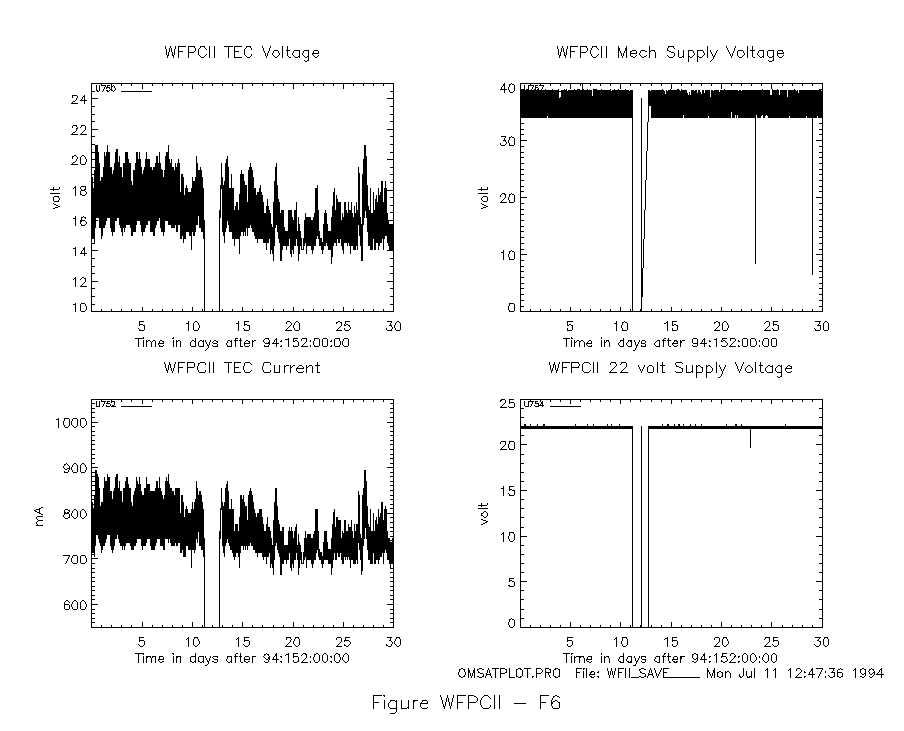
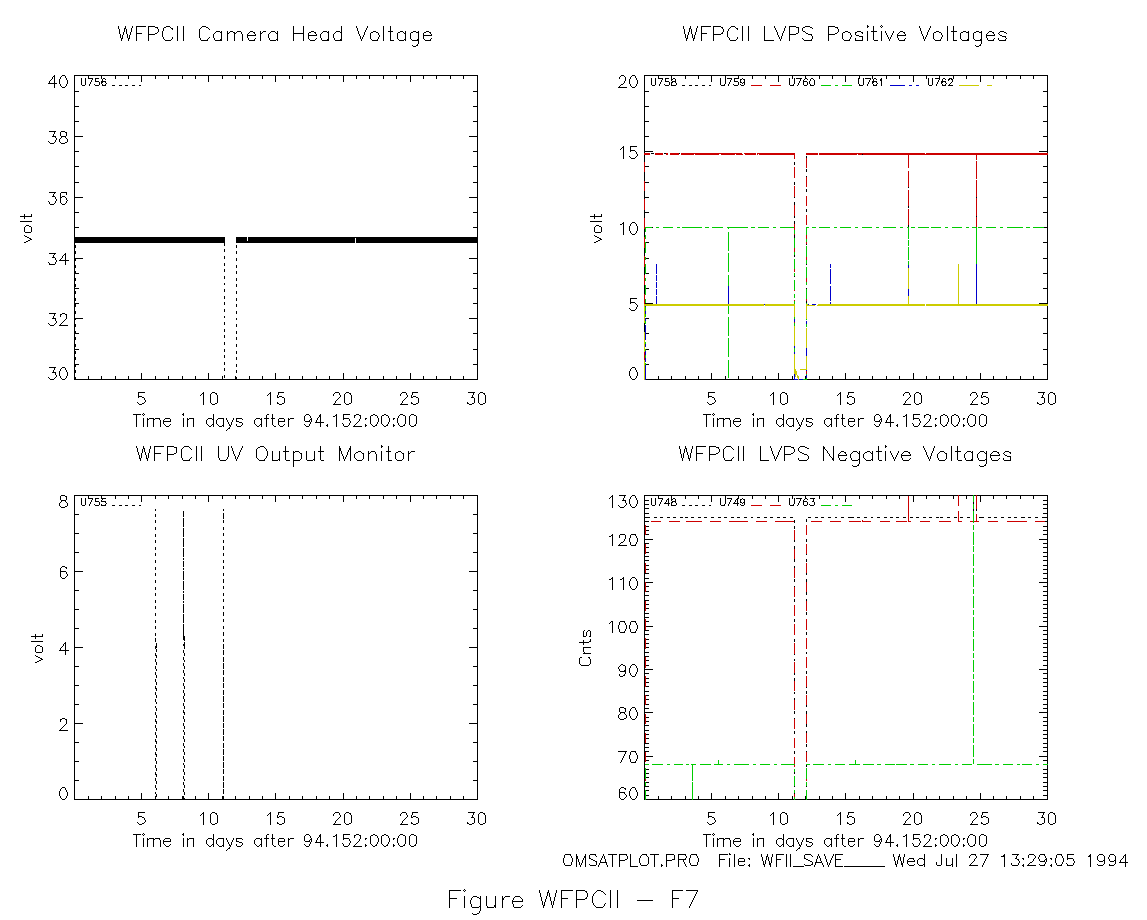
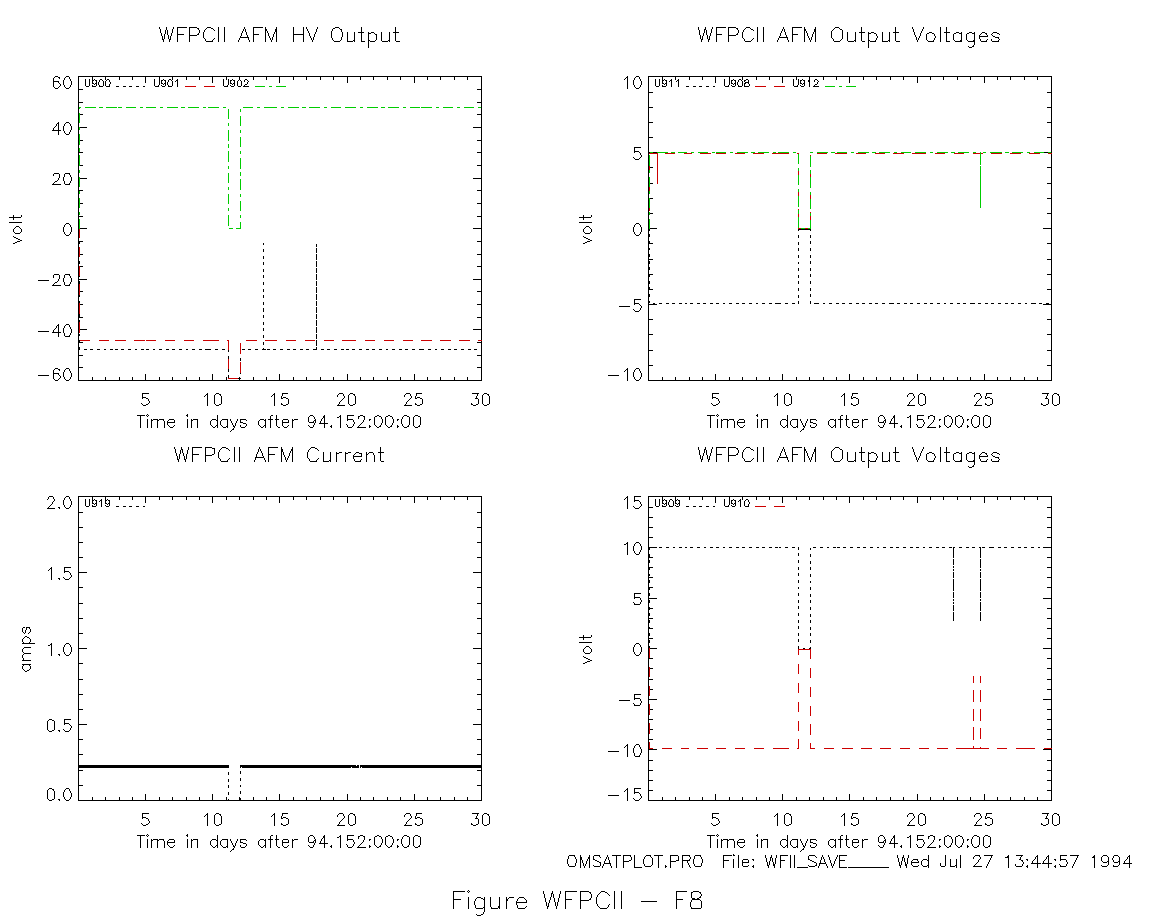
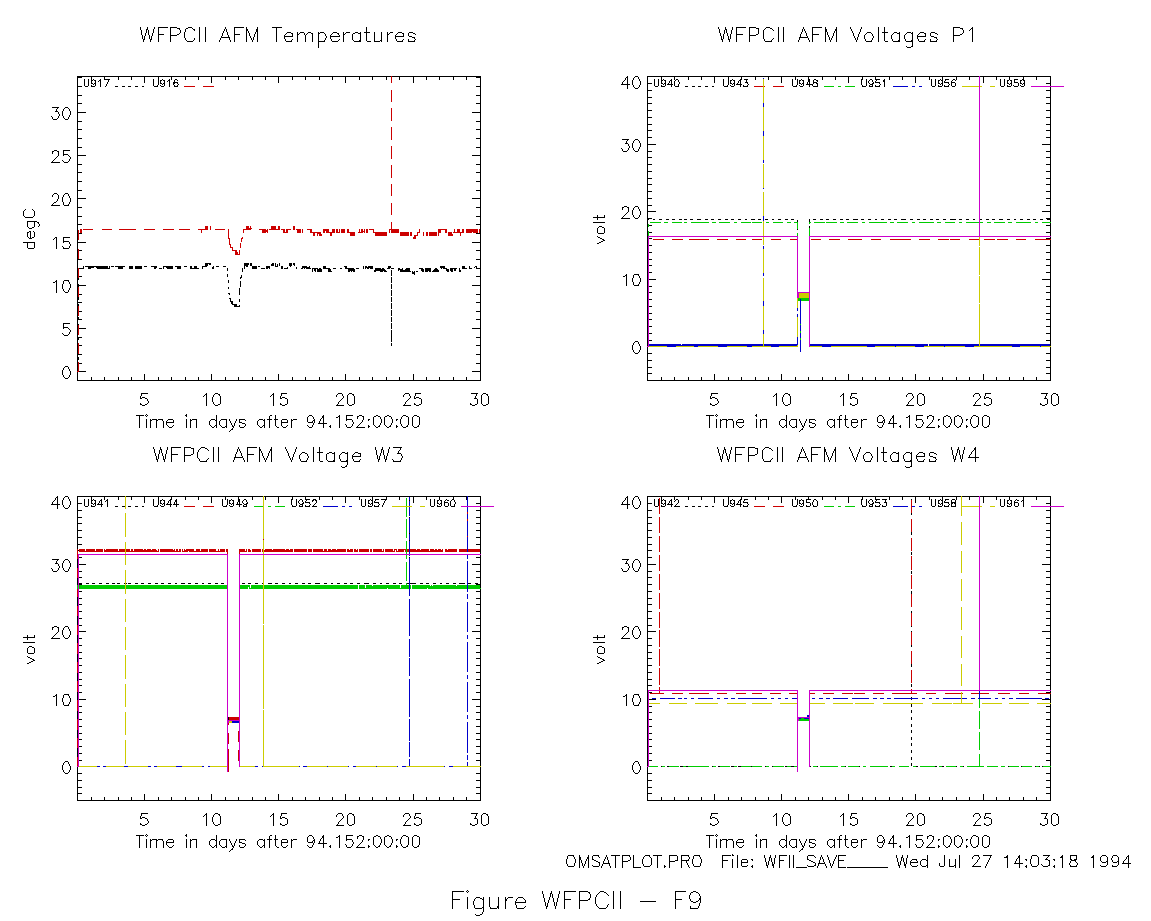
tables wfpc-ii t1, t2, t3 and Figures WFPC-II F3-F9 show the usage and performance of the instrument for the month of June. Several of the plots show the effect of the day 164 decontamination. This is reflected in various temperature monitors as well as several of the voltage monitors. All of these are nominal reflections of the commanded decontamination.
Figure f3 shows histograms for shutter time of flight for the month of June. These histograms have been produced in the past but have not been included in this report. Comparison of these histograms from month to month shows no decrease in the time of flight for any shutter moves. Note that the histogram for shutter A Open to Close shows an apparent bi-level distribution. This is due to the way the telemetry is output from the SI. The shutter speed is computed from the sum of the 5 speed flags plus the shutter speed interpolation. The interpolation is allowed to wrap without error. For the Shutter A Open to Close case, the interpolation is very near the edge of the wrapping of this telemetry monitor. If the monitor wraps, the interpolation is close to 0 ms, if it does not, the interpolation is close to 10 ms. The spread in shutter speed of a few ms causes the apparent bi-level output. The true speed is very close to 61 ms. This output has not changed since launch.
Figure f4 shows a change in temperature for the camera head electronics which is due to the change in Bay 1 set points. This also shows that the radiator reached -72 deg C for apparently 3 different instances during the month. These events will be reviewed in light of the spacecraft pointing.
Figure f5 shows best the effects of the changed Bay 1 set points. The modulation of the replacement heaters can now be seen in the optical bench monitor U025, however the modulation is well below specification and causes no apparent degradation to the image quality. Figure F5 also shows the large usage of the calibration system (primarily visual lamps) during the month.
Figure f6 shows the tec voltage and current as well as the mechanism power supply output voltages. Note that the mechanism power supply was cycled after the safing and before the decontamination. This was required to open the shutter for the decontamination.
Figure f7 shows the output of the uv Calibration system monitor. This is the expected behavior of this monitor during UV cal system operations. Note that the UV portion of the cal system has been discontinued after day 163 until operation workarounds to its apparent degradation can be found.
Figure f8 and Figure f9 shows the afm segment voltages and indicates nominal operation. Note that the AFMs were turned off during the safing for the NSSC1 FSW build. Note also that previous versions of this figure did not have the correct segment designations for the P1, W3, and W4 afms. These designations have been corrected in this figure.
Several of the plots and tables show single event telemetry interruptions. These occur relatively infrequently and are reviewed in the daily error logs.
3.4 FOC:
The f/96 relay of the Instrument continues to operate without problems after the installation of COSTAR: Evaluation of Error Logs show all voltages, currents, and temperatures within their nominal limits.
Several plots of selected monitor points critical to the performance of the Instrument are an integral part of this report:
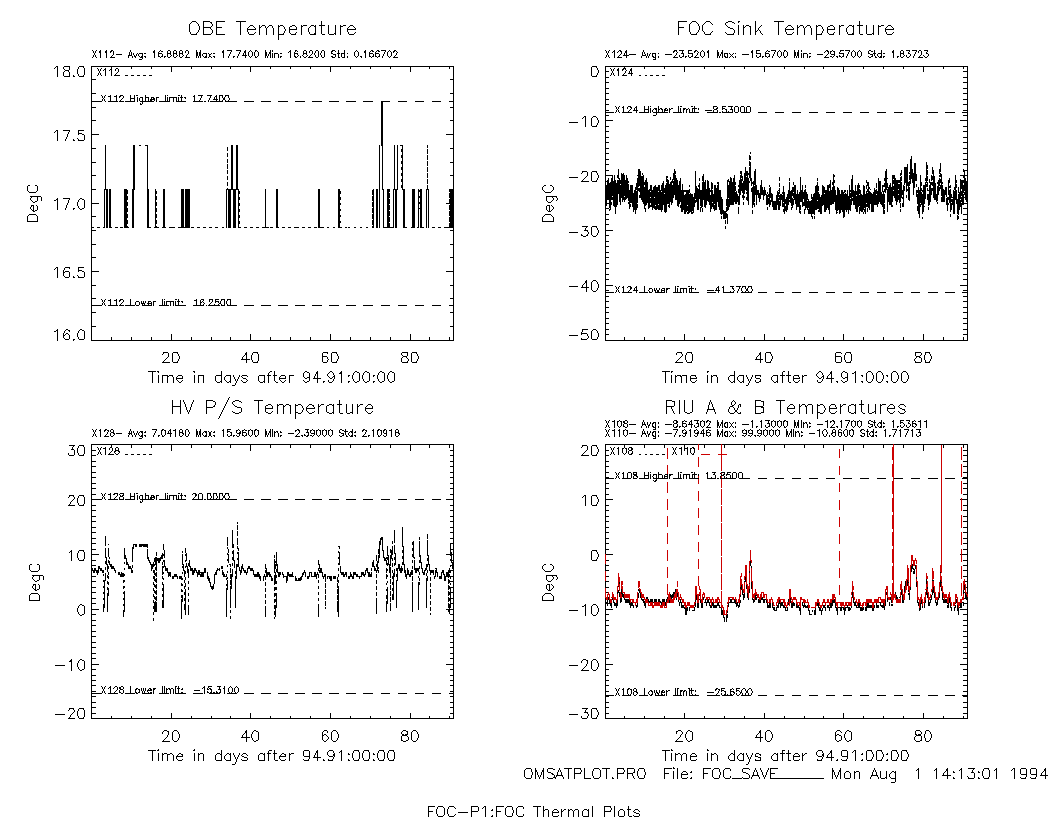
Four critical temperatures are shown foc-p1:foc thermal plot reflecting the thermal profile during the reporting period. The brief Safing Event for the installation of version 5.3 of the NSSC-1 Flight Software on day 164 did not significantly change the temperature within the Optical Bench Enclosure (OBE).
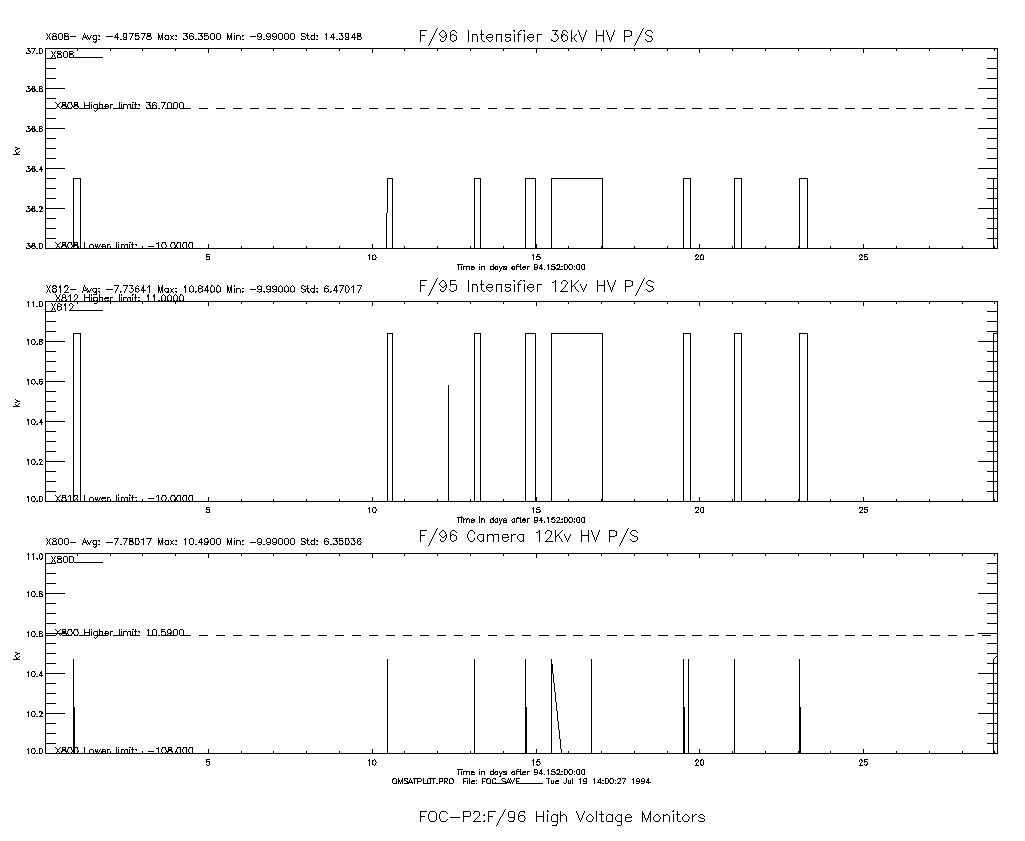
a set of three plots foc-p2:foc high voltage monitors illustrate the profile of the output voltages of the critical High Voltage Power Supplies for the FOC detectors. For a picture of the FOC Detectors click here.
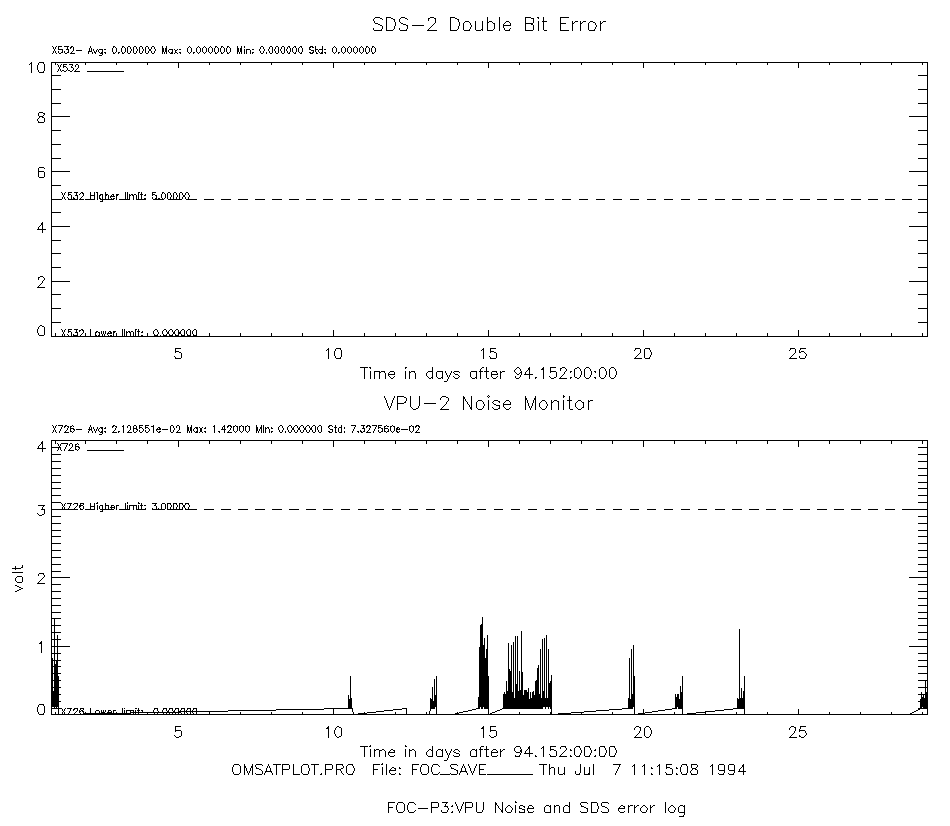
foc-p3:foc vpu noise and sds error log Both plots are focused on the health and safety of the Instrument. The Video Processing Unit (VPU) Noise level indicator summarizes the input signal as detected by the VPU. The peaks typically indicate passages through the South Atlantic Anomaly (SAA).
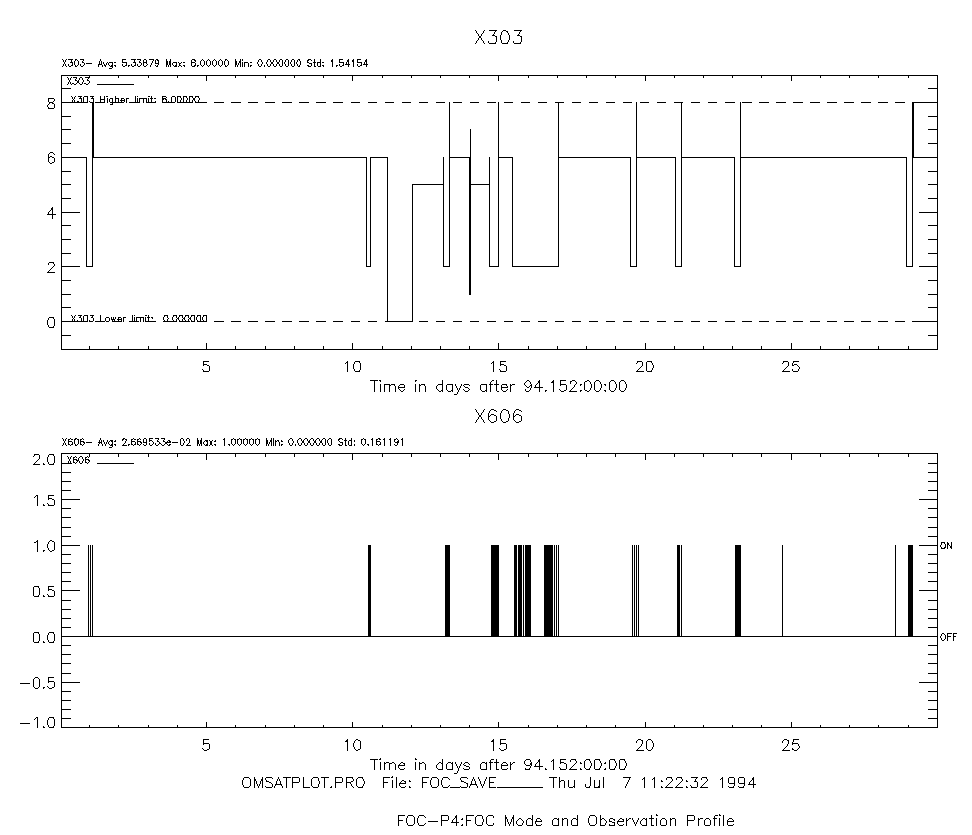
foc-p4:foc mode and observation profile shows the usage of the camera over the reporting period. A reading of the Thermal Control Table Number of "2" flags the time the FOC has been in the High Voltage Mode using the f/96 relay.
Several Tables are inserted to keep track of operational statistics in particular of limited lifetime items:
table foc-t1 illustrates the statistics of the HV cycles and the hours the FOC was operated in the High Voltage Operate Mode. The same table foc-t1 shows the MIN/MAX/AVERAGE values grouped into the different operational modes: Safemode, Hold, and the High Voltage Operate Mode. The presentation of "********" in this table indicates no data or no change in value for this monitor during the reporting period.
the foc-t2: mechanism cycle/usage table
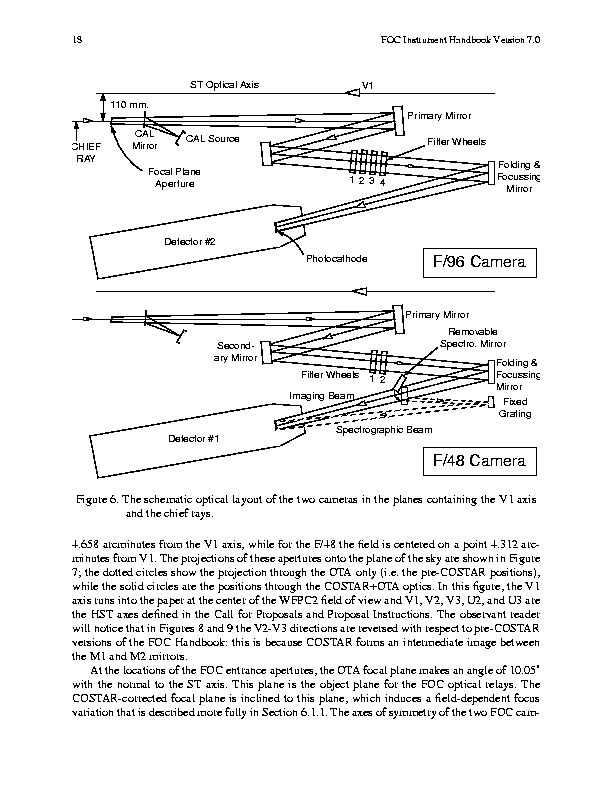
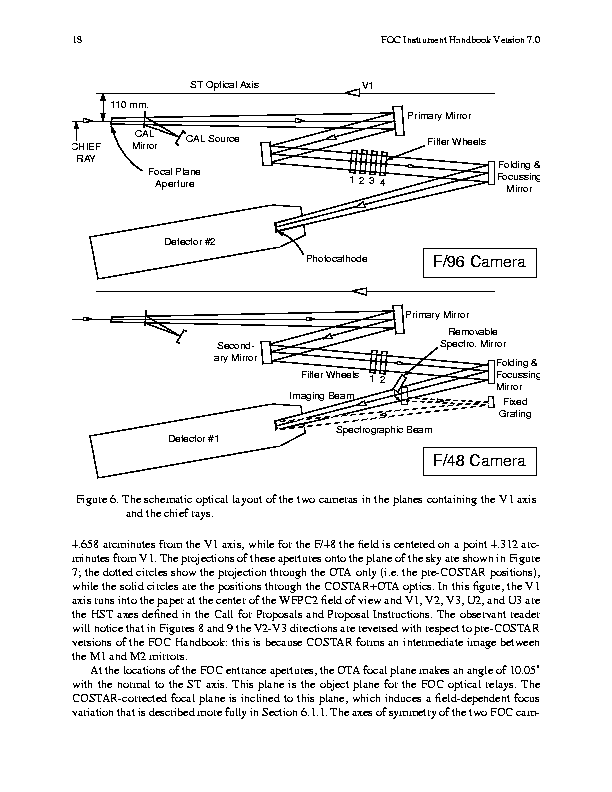
summarizes the usage of the mechanism during the reporting period and adds up the total number of cycles during Ground Testing and In-Orbit use. For a picture of the optical path and the foc mechanism click here.
A statistic on FOC f/96 Observations is given in Table
3.5 FOS:
Table
fos-t1
shows the Cycle, Voltage and Miscellaneous summaries for the FOS for the
month of May. There were no health and safety or operational limit violations for the
month. No additional diodes were disabled during the month.
Table
fos-t2
shows the thermal summary for the month. There were no health and safety
or operational limit violations for the month.
Figure
fos-f1
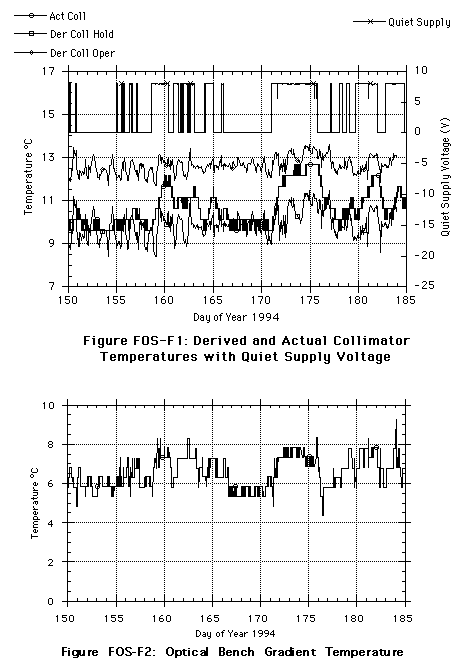
is the standard plot of Collimator (predicted and actual) temperature (Y302)
as a function of time. The predicted temperatures are based on algorithms for both the Op-
erate (LVON) state and the Hold (LVOFF) states as a function of FOS aft shroud sink tem-
peratures. The optical bench reacts in such a way as to be within +/- 1C of equilibrium 24
hours after a transition. This plot suggests nominal thermal behavior for the detector as a
whole even during these periods of continuous LVON.
Figure
fos-f2
shows a nominal optical bench gradient temperature for the month.
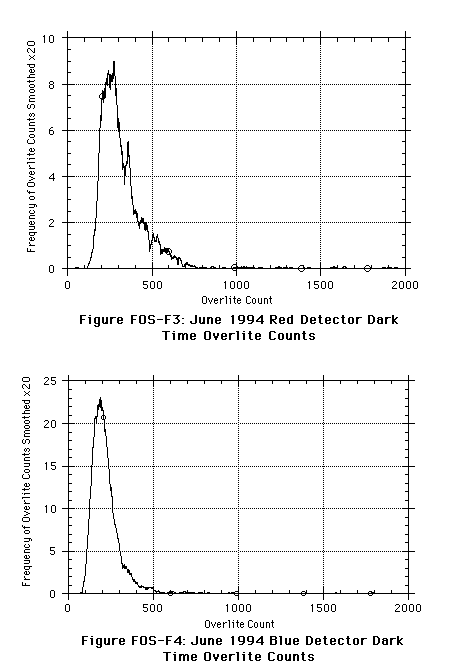
Figures
fos-f3
and
fos-f4
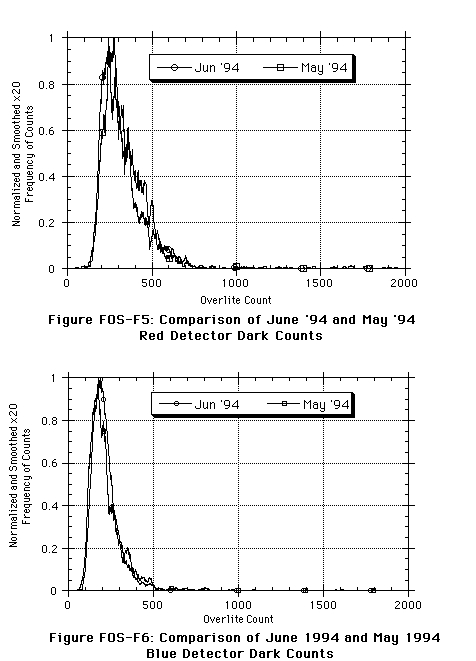
show the Red and Blue detector dark count data for the month. (See
the Sept 91 report for a description of these plots.)
Figures
fos-f5
and
fos-f6
show the comparison of June's dark count data to May's.
June's dark count data represent nominal performance.
3.6 GHRS:
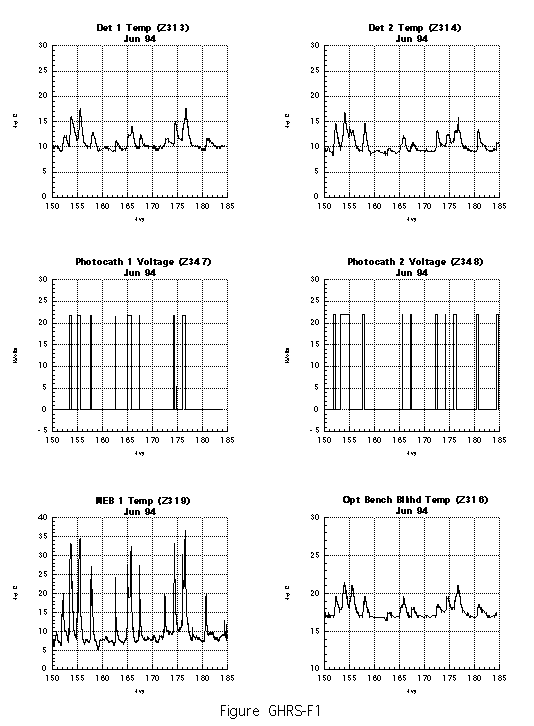
All trended monitors appeared normal for this reporting period. The following
tables and figures summarize activity of selected areas of the instrument.
Table
ghrs-t1
is a cycle and use summary of the instrument mechanisms as well as
a statistical analysis of main bus voltages and currents.
Table
ghrs-t2
is a statistical summary of key instrument temperatures. All
temperatures are within their normal range. Temperatures are not included for
SIDE 1 OPERATE or HOLD modes since the instrument was not in these modes, as
they were defined when the trending was begun.
Figure
ghrs-f1
contains plots of the detector temperatures and voltages for the
month, as well as plots of the optical bench and MEB 1 temperatures.
Figure
ghrs-f2
contains monthly power profiles for each side of the instrument
as well as historical summaries of hours spent in OPERATE mode and carrousel
commanding and reset activity.