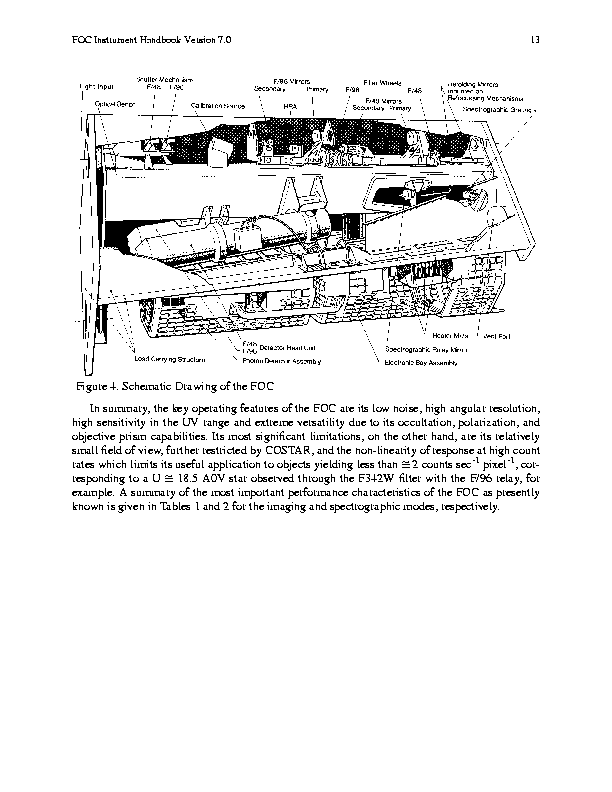
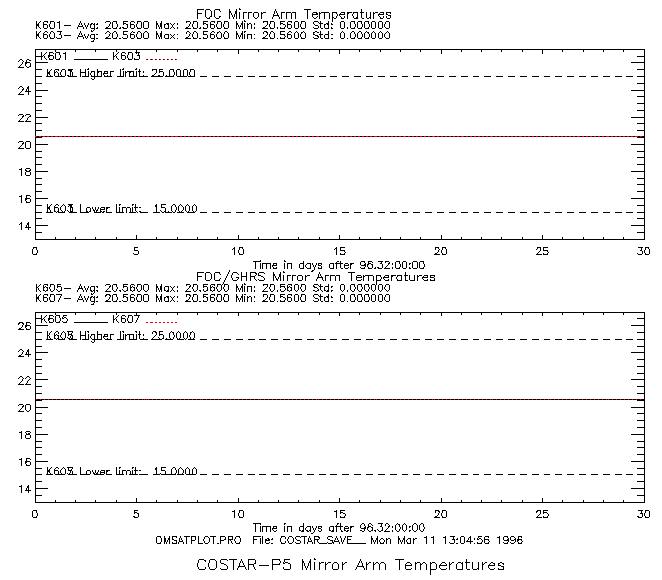
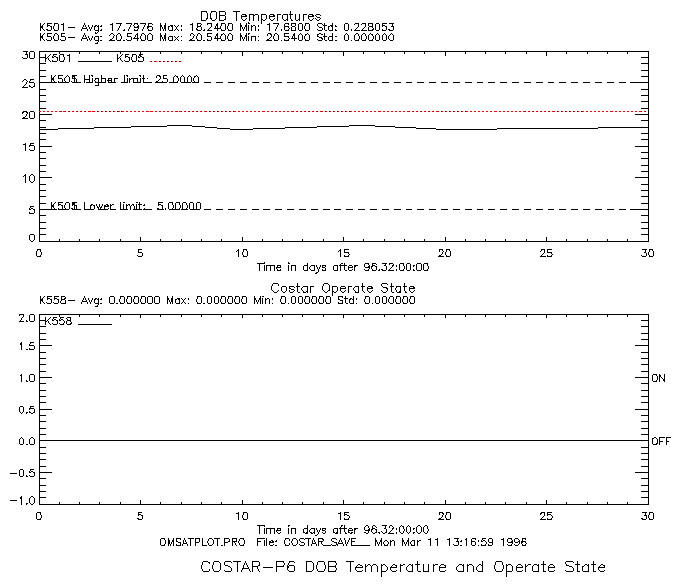
For a picture of the Faint Object Camera click here.
A cycle 5 calibration proposals has been executed: FOC 6161, to monitor the aperture location.
1.2 Summary of major problems
During the execution of FOC proposal 5835 day 049 the FOC Flight Software reported an error ( error code dec 56 ) indicating that the Take Data Flag went down during an observation ( X33E0101 ) caused by a loss of lock. Subsequent frames of the same proposal were all blank. An error in the DF224 Fligth Software is suspected. Investigations are still ongoing.
On day 42 at 15:17 a FOS Binary search acquisition failure occurred. A follow on peakup, failed to find a target. The proposal that was affected was 6020, "Super Nova intensive study". Investigation of the failure is currently in progress.
1.2.2 On day 96040 the calculation of the Y offset needed to place the spectrum on the diode array failed. Telemetry shows that the carrousel and the calibration lamp were stable. The central wavelength selected for this exposure was 1200 angstroms. The GHRS scientists have been reporting a steady decline in sensitivity below 1200 angstroms. A study of internal calibration data is being done to try to correlate the Y offset failure to the decline in sensitivity at this wavelength.
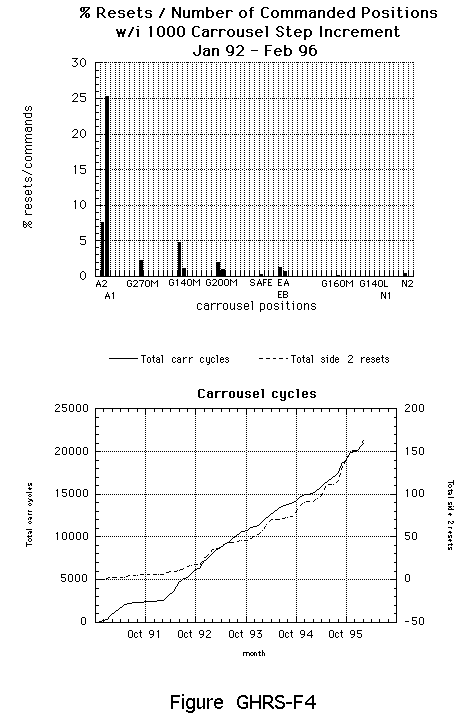
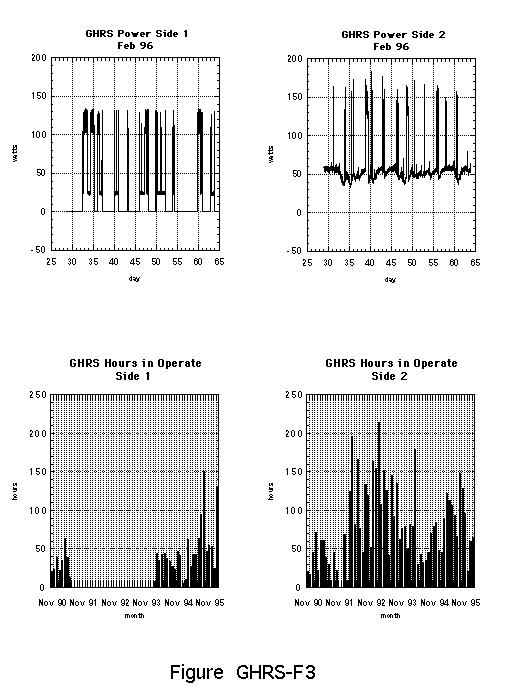
1.2.3 Monitoring of GHRS carrousel reset activity is continuing. During the month of February there were 9 reset events for 514 commanded positions. Figure ghrs-f4 contains a plot which shows the accumulated number of times the carrousel is commanded to a new position and compares this rate to the accumulation of carrousel resets. This plot shows that the rate of resets was proportional to the number of times the carrousel was moved for the first few years of the mission. More recently, however, we see the rate of carrousel resets increasing. While the rate of reset events is still small, this trend represents a deterioration of the carrousel mechanism. Figure GHRS-F4 also includes a bar chart which associates reset activity to specific locations on the carrousel. This chart shows that the rate of reset events is higher at the lower region of the carrousel step scale. The rates shown in the region of the G140M grating are mis-leading since this is a little used optical element. A single reset in this region is
Two HSTARS were opened; 5510 Missing data in WFPCII observation 43, 44, 46, 52, and 148 on day 51/14:04, and 5520 Missing data in WFPCII observation 187 on day 56/01:12. Preliminary discussion with the I&C group at Goddard indicated that the problems appears to be a ground system problem and not associated with STR1.
2. Observatory Performance
1) For acquisitions on single GS:
The acq will fail to gyro mode.
2) For acquisitions on an GS pair:
a) Attempt to achieve coarse track on both guide stars in order to perform a coarse angle check. If coarse track cannot be achieved, the acq will fail to gyro mode.
b) If the above coarse angle check passes, try to go to fine lock mode on single GS. The primary GS will be tried first. If fail to achieve FL on the primary GS, the secondary GS will be tried. If fail to achieve FL on the secondary GS, the acq will fail to gyro mode.
c) If the above coarse angle check fails, the acq will fail to gyro mode.
No acquisitions in coarse track or fallback to coarse track will be allowed.
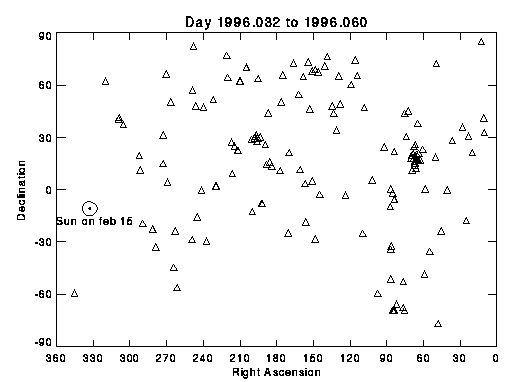
The sky distribution of pointings in this month is shown in Fig. 2.1.
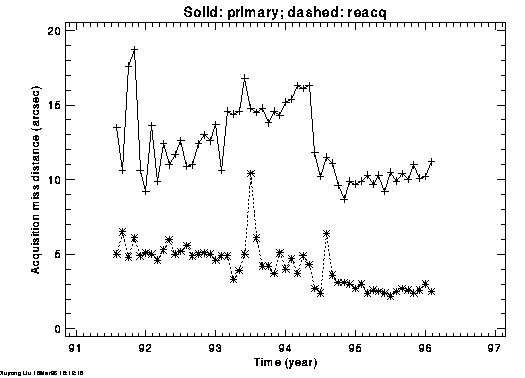
Fig. 2.2 shows the monthly average pointing miss for primary guide start acquisitions and reacquisitions. The pointing miss is measured from the location of the guide star found during search compared to the predicted position (start of the search). Table 2.1 describes the statistics of guide star acquisitions. It takes into account both primary acquisitions and reacquisitions. "No lock" means that coarse track cannot be established or maintained. "Degraded mode" refers to the cases where the guiding mode falls back to coarse track when the commanded mode of the find lock cannot be established or maintained. "Search rad exc" refers to cases where the guide stars are not found.
The distribution of guiding modes by Science Instrument during scheduled exposures is given in table 2.2. For each scheduled exposure, the actual guiding mode is obtained from the engineering telemetry. The scheduled exposure time is subsequently summed up by guding mode for each SI to produce the distribution.
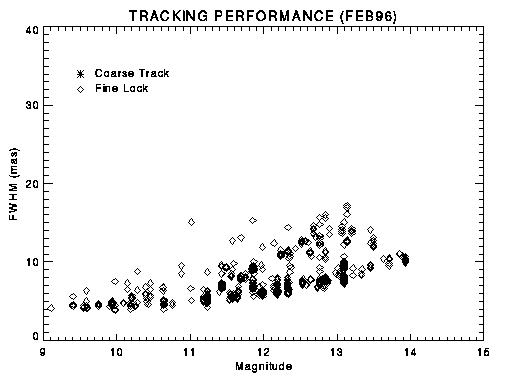
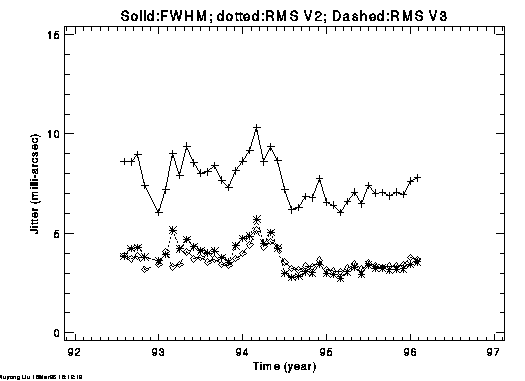
The full-width at half-max (FWHM) of jitter during observations are plotted as a function of the magnitude of the dominant guide stars in Fig. 2.4. the jitter is obtained from the motion of the dominant guide stars in the FGS. The rms of jitter along V2 and V3 axes is also calculated for each observation. The average of FWHM and rms of jitter over all observations in each month is given in Fig. 2.3 and shows no obvious trend.
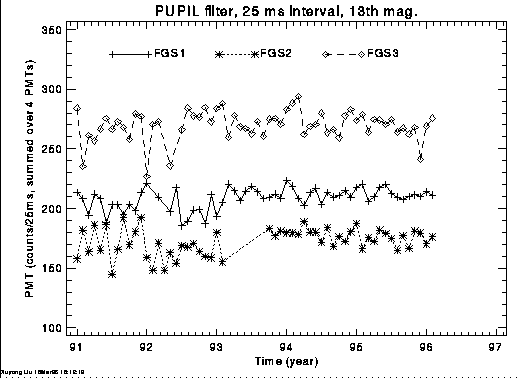
For each observation, the PMT sensitivity is calculated for each FGS in fine lock based on the PMT count rates and magnitude of the guide stars. The sensitivity is expressed in total counts of the 4 PMTs per 25 milli-seconds normalized for a 13th magnitude star with the FGS filter in pupil position. Fig. 2.5 shows the average sensitivities of each month since Janurary, 1991. The is no obvious trend. The variation of the sensitivities appears compatible to the error of the guide star magnitude.
3. Observatory Trending
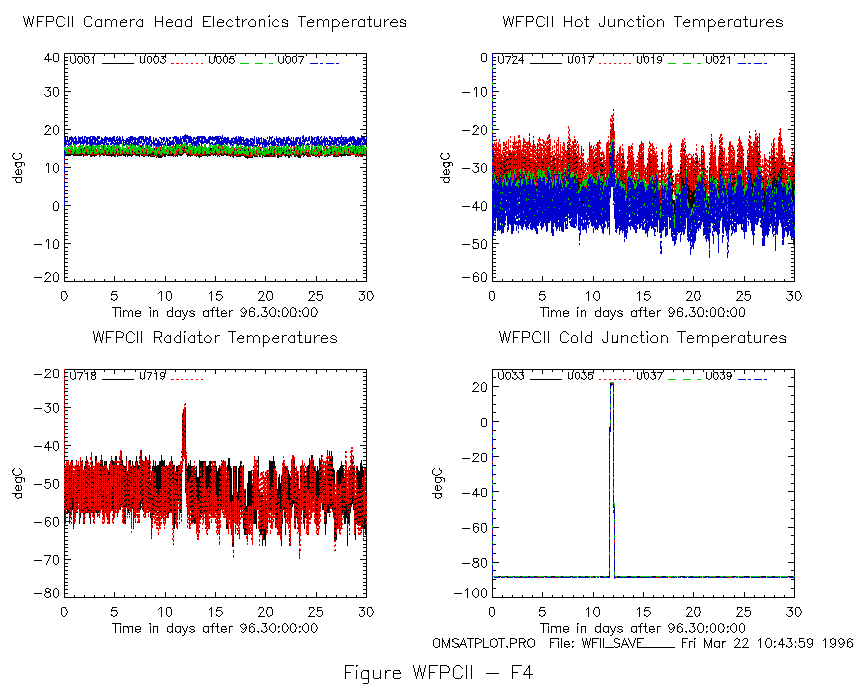
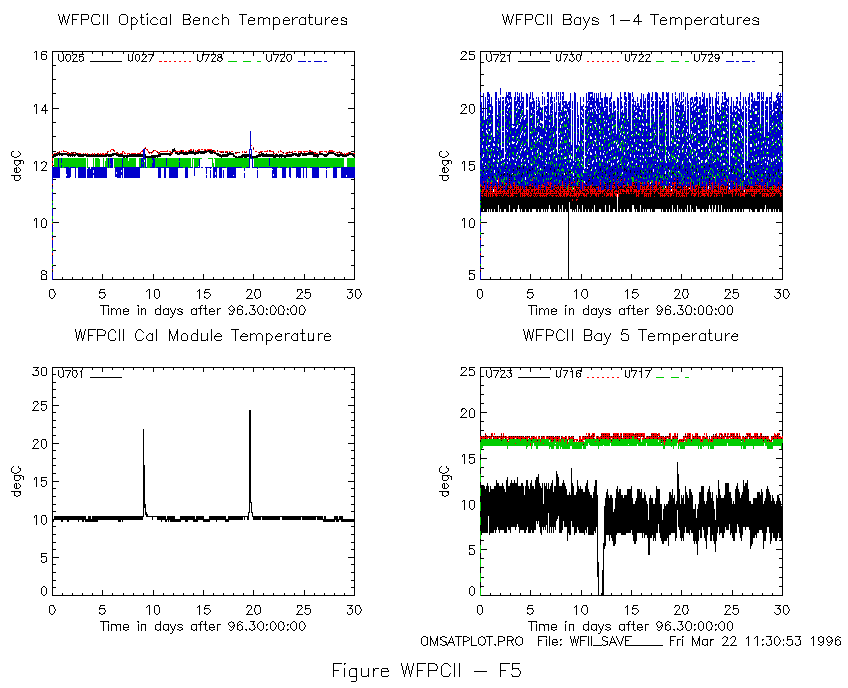
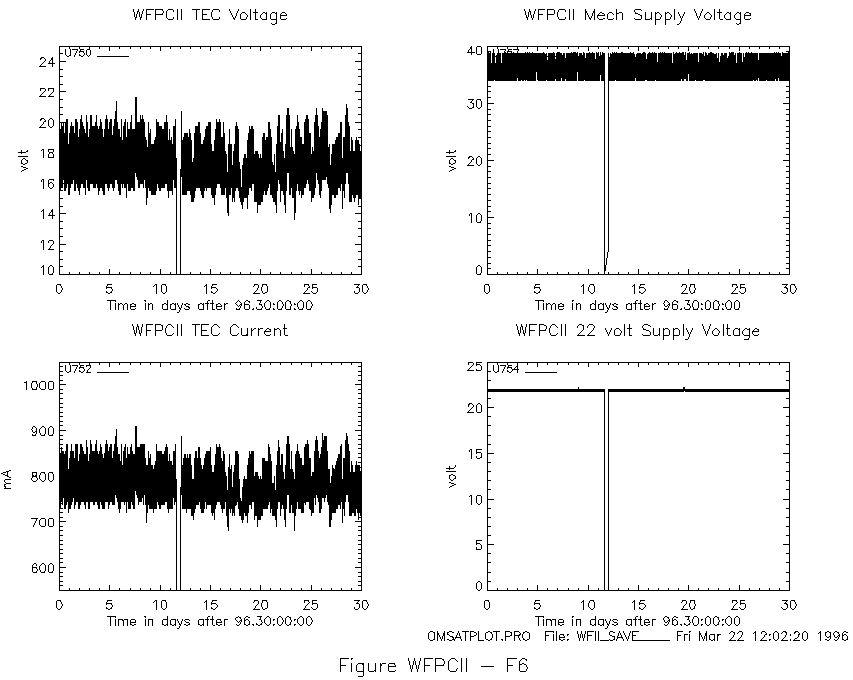
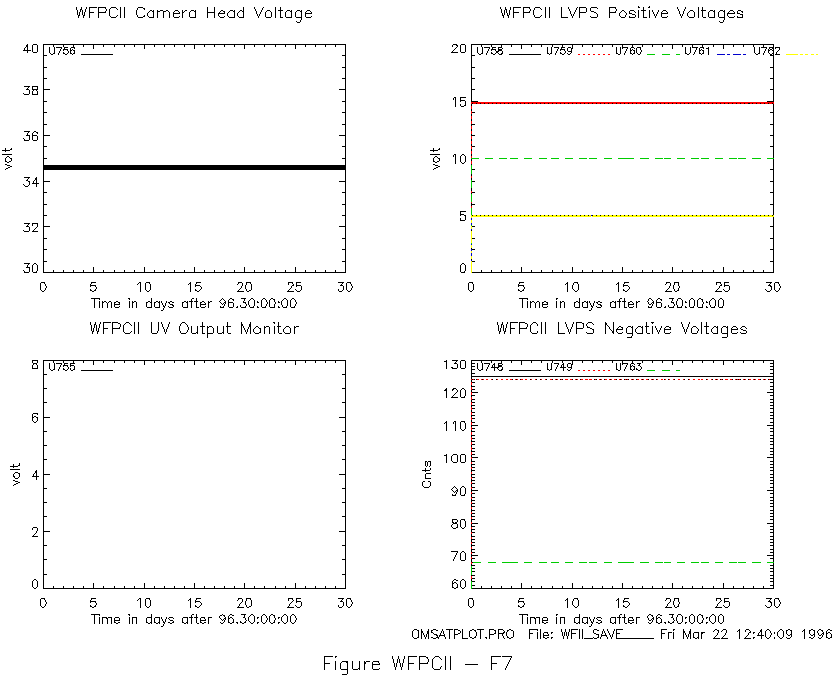
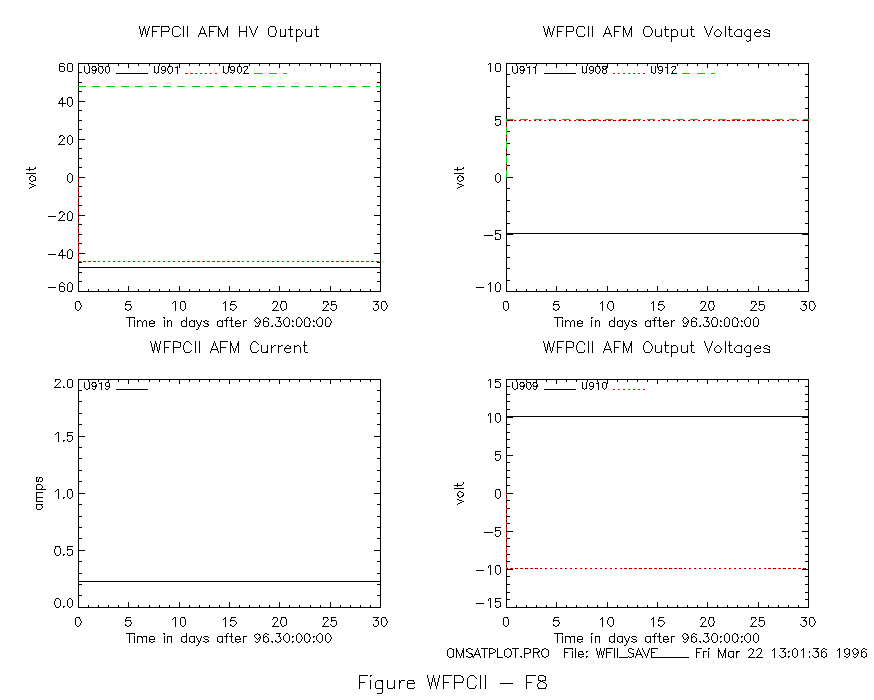
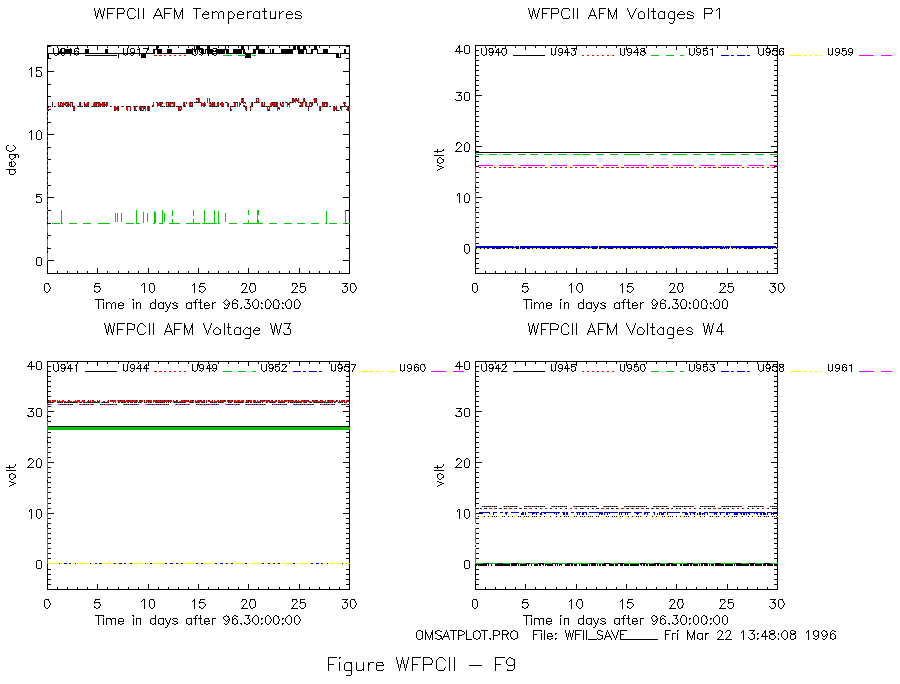
WFPCII Tables: T1, T2, T3 and Figures: F3-F9 show the January instrument statistics and profiles for cycle usage, power and temperature. All values are nominal and within limits unless otherwise noted.
table t1 shows the cycles of various mechanisms and power supplies.
table t2 shows the lvps, mechanism, and TEC voltage and current outputs.
t3 shows the bays, optical bench, Bulkheads, Cold and Hot junctions, Camera Heads, Attach points, AFM, and Radiator temperature values.
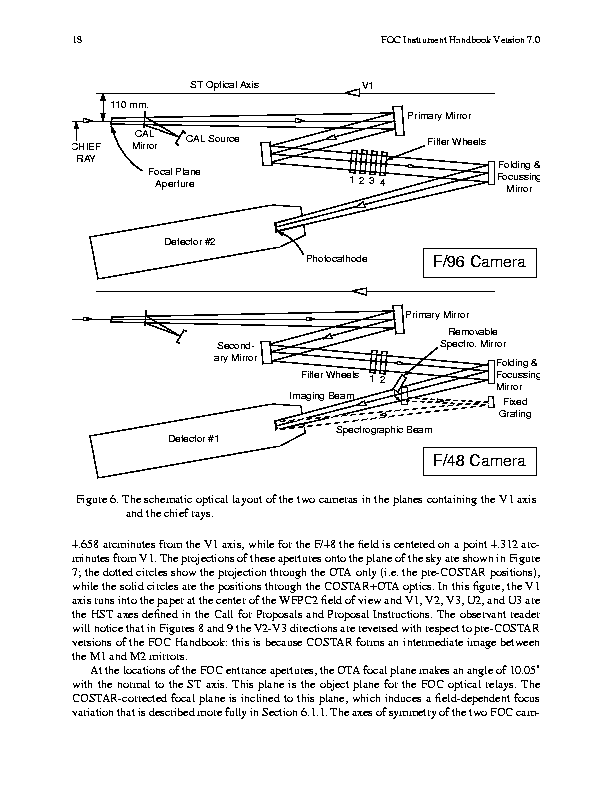
The f/48 relay is considered to be operational restriced use to the use of long slit spectrometer observations.
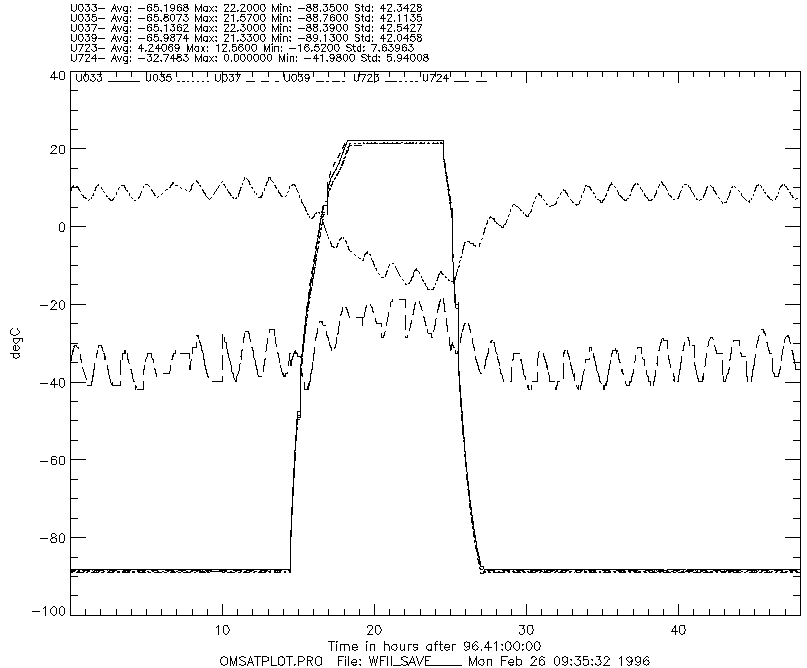
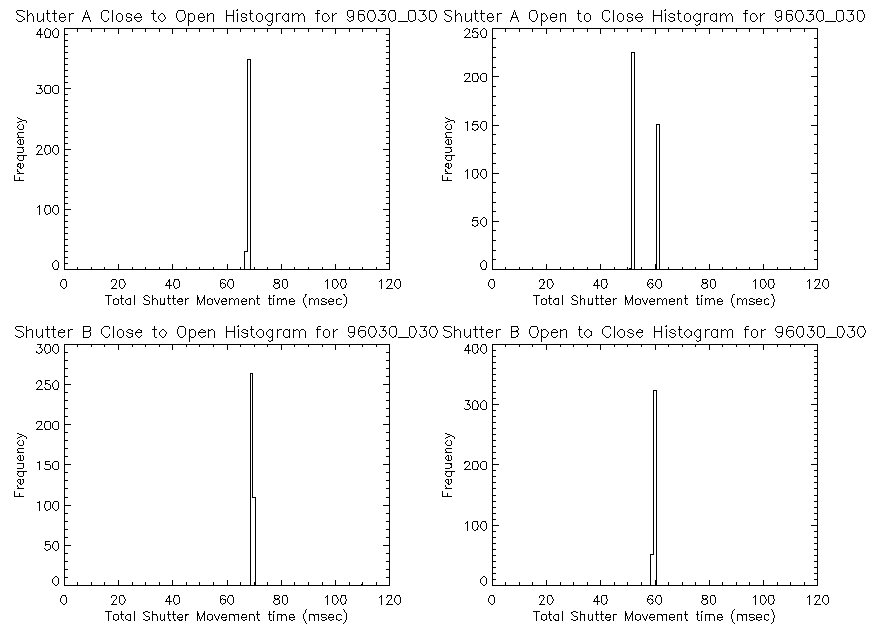
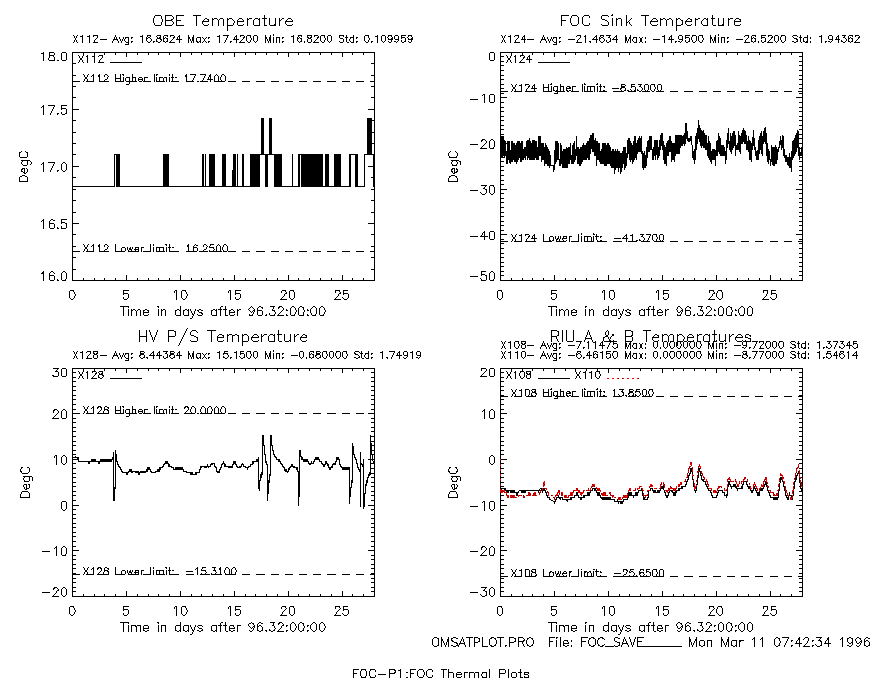
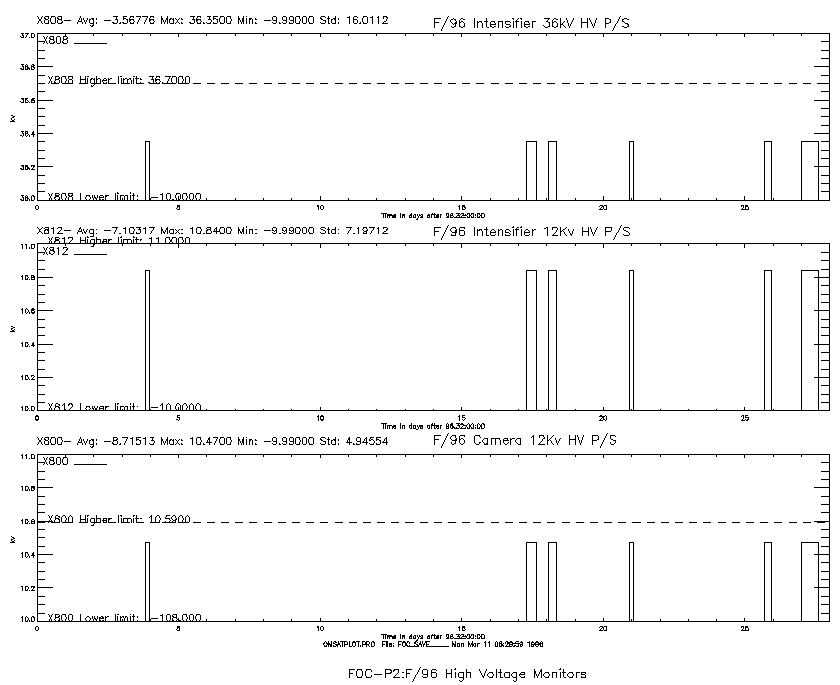
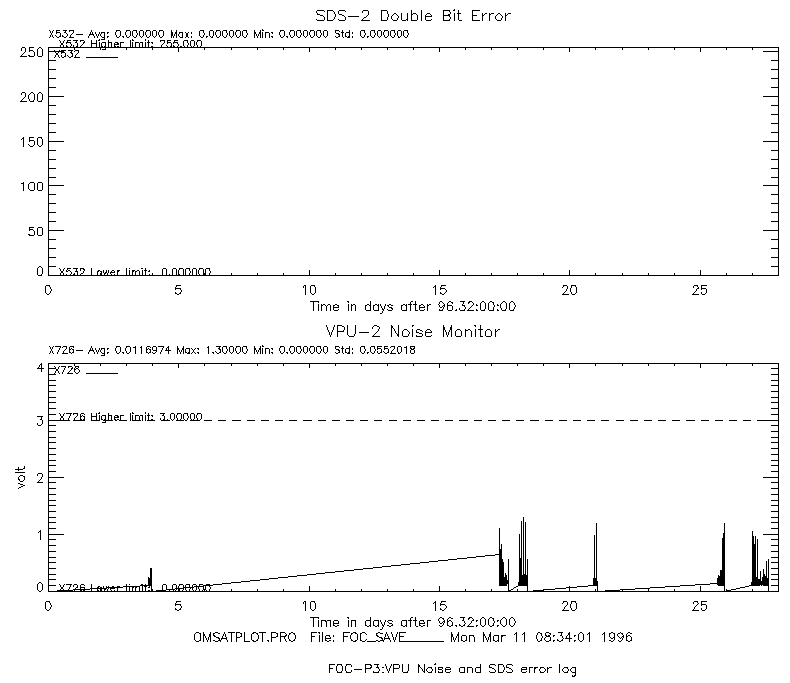
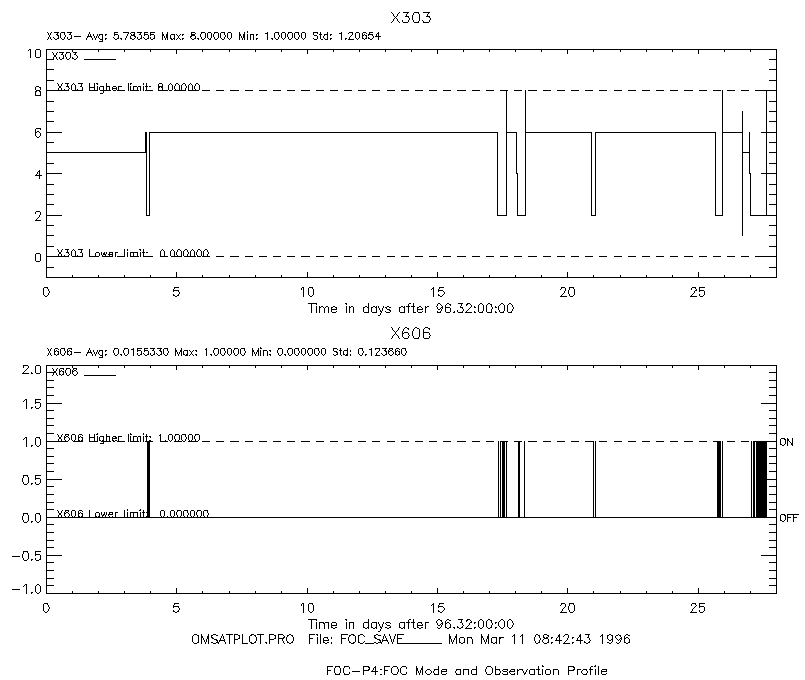
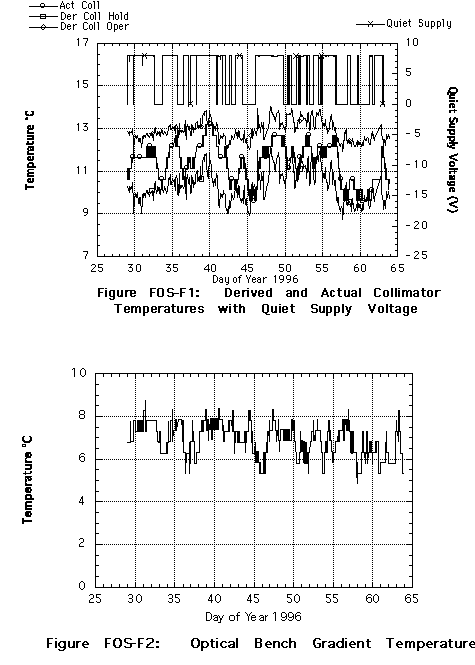
Serveral plots of selected monitor points critical to the performance of the Instrument are an integral part of this report:
Several Tables are inserted to keep track of operational statistics in particular of limited lifetime items:
For a picture of the optical path and the FOC mechanism click here.