Monthly Observatory Report
                                          for
                                   July 1994
COSTAR:
There was no COSTAR activity during this reporting period. The instrument remained in HOLD mode and was stable.
WFPCII:
WFPCII continued to operate nominally throughout the month of July. All subsystems with the exception of the UV Cal system, appear to be operating with no signs of degradation.
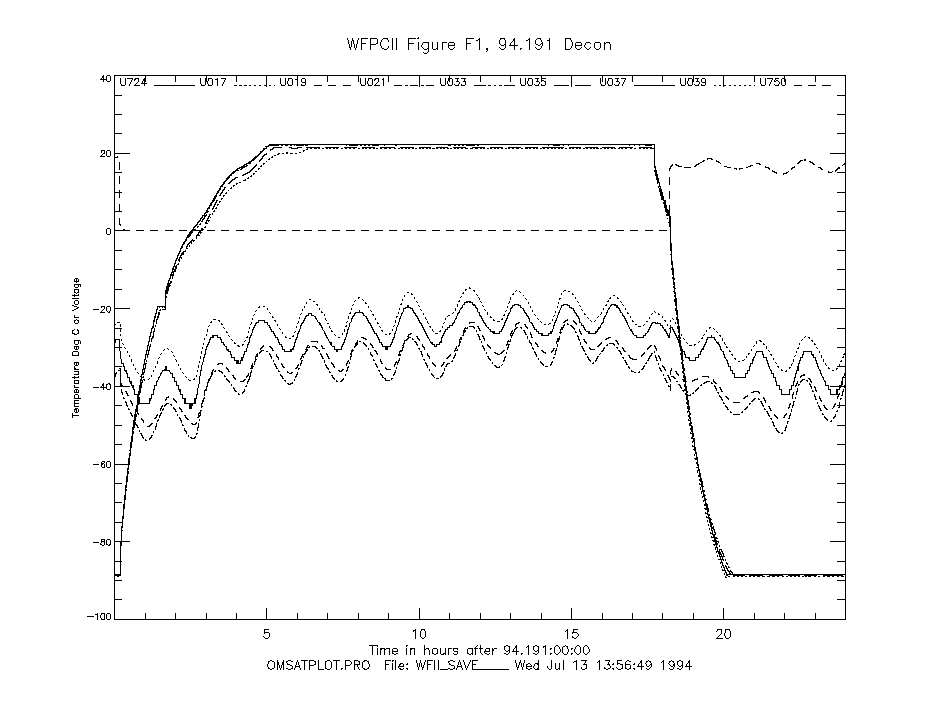
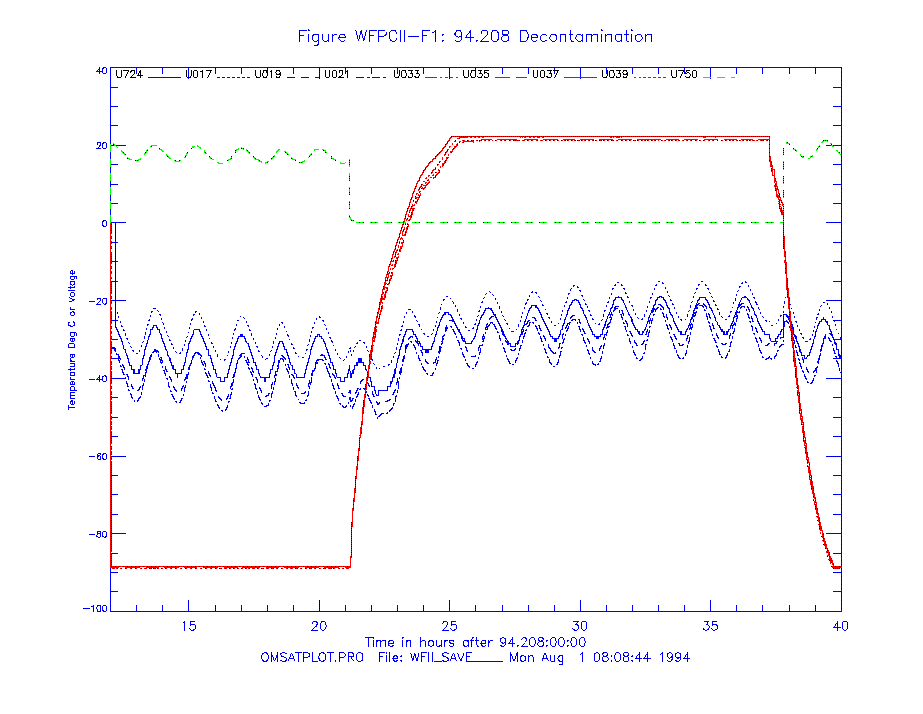
There were two decontaminations for the WFPCII during the month of July. The first was originally scheduled for day 186, but was delayed until day 191 due to a spacecraft safing event. This decontamination is shown in figure wfpcii-f1 and was in preparation for the UV imaging in the comet campaign. The second decontamination occurred on days 208 and 209. This was the standard monthly decontamination sequence for continued operations. the thermal profile is shown in figure wfpcii-f2.
Much of the July activity for WFPCII was taken up with the comet Shoemaker-Levy campaign. All of these observations were successful and samples of these observations are available here.
FOC:
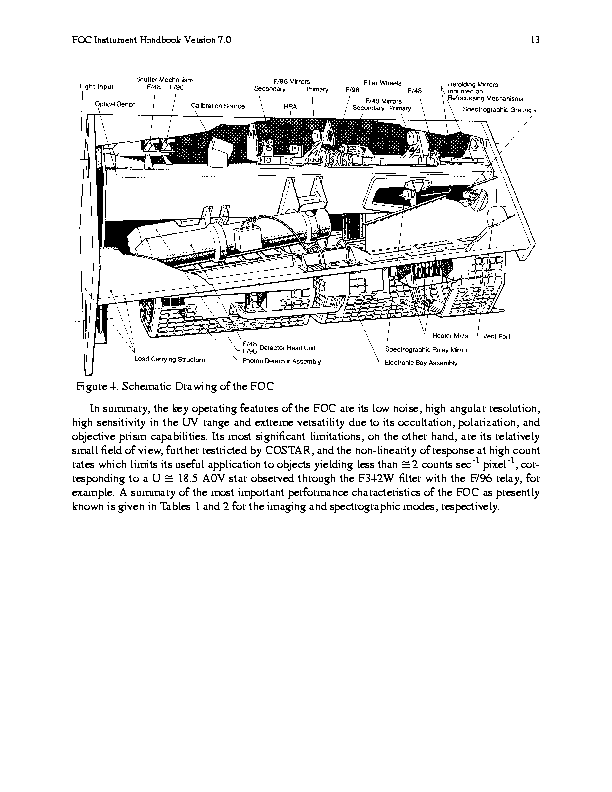
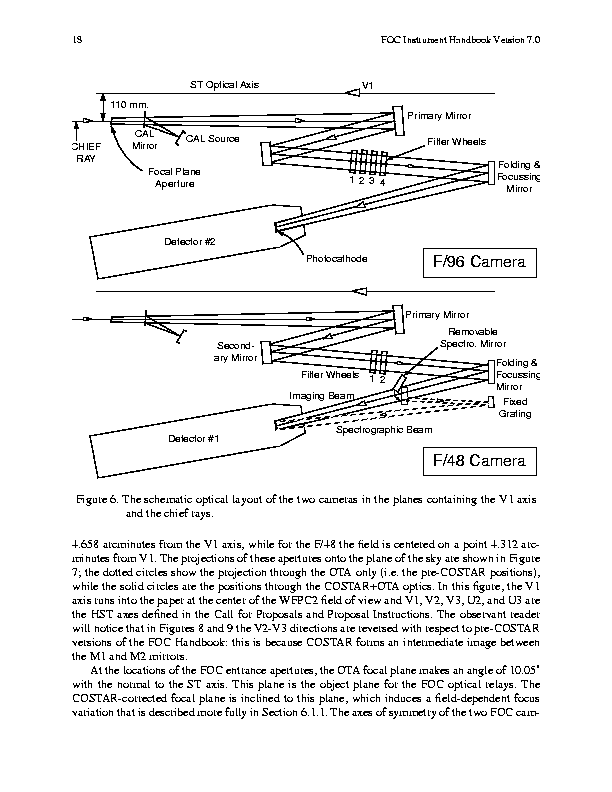
FOC is continuing the normal science program with GO and GTO cycle 4 proposals using the f/96 relay without problems. for a picture of the faint object camera click here. Several FOC science proposals were dedicated to the observation of the impact of Comet Shoemaker-Levy and Jupiter for which the Bright Object protection commanding has been invoked. A move of the secondary mirror by 5 microns resulted in a significant improvement the FOC PSF.
FOS:
The FOS continued to execute a variety of GO, GTO, and CAL proposals during the month of July.
GHRS:
Both side 1 and side 2 of the GHRS are running well.
1.2 Summary of major problems
COSTAR:
None.
WFPCII:
The spacecraft safing event from days 185-191 did not affect the thermal state of WFPCII. All science observations were stopped during that period, but the instrument remained in its operate state thereby reducing the possibility of undesired contaminant buildup.
Three HSTARs were opened in July against WFPCII to document previously reported problems which did not meet SMOV requirements;
These HSTARs will be updated with the ongoing analysis of these problems.
FOC:
In general: No major problems with FOC operations during the reporting period. Electrical and thermal monitors of the Instrument continue to show nominal values after the Servicing Mission. The FOC was configured into its Safemode on day 185 as a result of a memory board failure of the DF224; the Instrument remained in the safemode state for approx. 6 days until day 191 at which time science operations resumed without problems. No HSTAR were filed against the Instrument hardware or its operational software.
FOS:
The FOS experienced no new problems during this reporting period albeit the instrument was placed in safe state on July 5,1994 at 08:57:00 UT and recovered on July 10, 1994 at 12:03:22 UT. This safe state was initiated by a DF244 guidance computer anomaly.
GHRS:
Monitoring of GHRS carrousel reset activity is continuing. During the month of July there was one reset event for 200 commanded positions.
The one carrousel reset that occurred caused the observation executing at that time to run longer than stored commanding allowed. This resulted in the flight software requesting an observation timeout. Earlier this year, the stored commanding was changed to issue a timeout at the end of each observation sequence, so that a delay in one sequence would not affect subsequent observations. This case was the first time the timeout was issued to stop an observation with the new commanding. The timeout executed as expected but a problem in the flight software was found. Previously, timeout was issued at the end of an observing period. A new observing period would start by initializing the flight software. A timeout can now be followed by an observation that does not execute this initialization. Without initialization, a flag in the flight software will not be reset and the action taken will be to issue another timeout instead of starting the observation. The changes made to the stored commanding have been removed until a fix to the flight software is implemented.
Since the resumption of side 1 operations there have been occasional limit violations of the side 1, 5 volt DEB bus voltage, Z5D1. An analysis of this telemetry monitor suggests that this limit at 6.59 volts was set too low. During operations with all banks of the DEB enabled, the Z5D1 voltage range is from 5.3 to 5.8 volts. When the DEB's are disabled, this monitor will float between 6.3 and 6.7 volts. I have looked at the telemetry from the first half of 1991, prior to the side 1 power supply problem, and the first half of 1994 and have found that a typical monthly maximum for Z5D1 is 6.64 volts. Also, the variation and range of the voltage, both with the DEB on and off, are similar in 1991 and 1994. The reason that this limit violation has been noticed at this time may be due to changes in GHRS reconfiguration commanding. In 1991, the low voltage and DEB power were turned on and off in fairly rapid succesion. Telemetry readings in the 6.3 to 6.7 volt range looked like transients at times of turn on and turn off. Changes to the reconfiguration commanding now leave the low voltage on for long periods without the DEB's on. Now when the Z5D1 voltage exceeds the 6.59 volt limit, the out-of-limit condition can persist giving the impression of a signature different from that seen early in the mission. Although the side 1 and side 2 power supplies are identical, the limits for Z5D1 and Z5D2 are very different. Prior to launch, the side 2 bus voltage was seen to float at a higher level than side 1. The side 2 limit was set at 6.8 volts compared to 6.59 volts on side 1. These limits were based on ground testing and never adjusted after launch. Since the peak voltage seen on Z5D1 has not changed since launch, and the 6.64 volt maximum is well below the side 2 limit, the upper limit for Z5D1 will be raised to 6.7 volts.
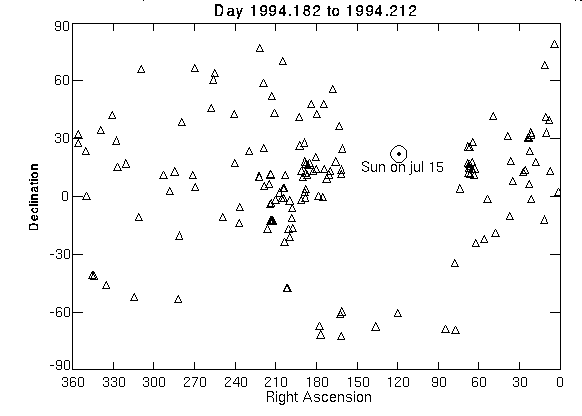
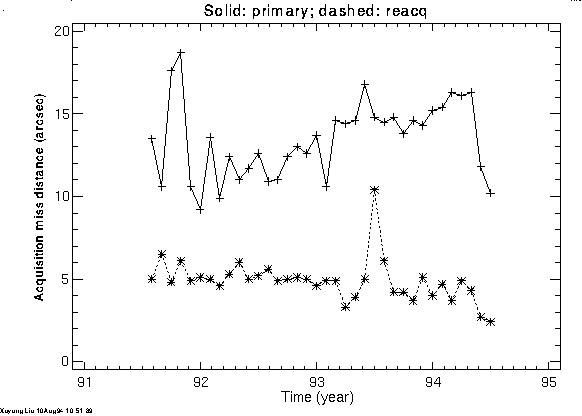
The sky distribution of pointings in this month is shown in Fig. 2.1. Fig. 2.2 shows the monthly average pointing miss for primary guide start acquisitions and reacquisitions. The pointing miss is measured from the location of the guide star found during search compared to the predicted position (start of the search). table 2.1 describes the statistics of guide star acquisitions. It takes into account both primary acquisitions and reacquisitions. "No lock" means that coarse track cannot be established or maintained. "Degraded mode" refers to the cases where the guiding mode falls back to coarse track when the commanded mode of the find lock cannot be established or maintained. "Search rad exc" refers to cases where the guide stars are not found.
The distribution of guiding modes by Science Instrument during scheduled exposures is given in table 2.2. for each scheduled exposure, the actual guiding mode is obtained from the engineering telemetry. The scheduled exposure time is subsequently summed up by guding mode for each SI to produce the distribution.
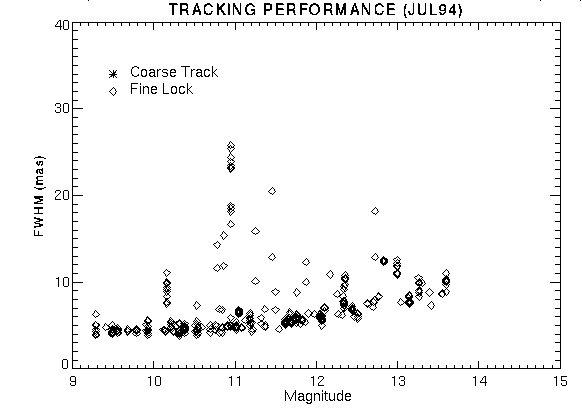
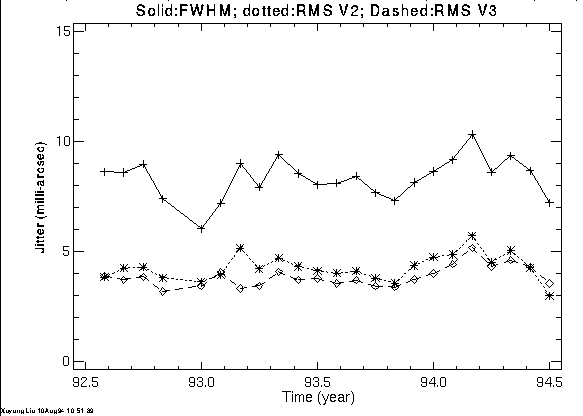
The full-width at half-max (FWHM) of jitter during observations are plotted as a function of the magnitude of the dominant guide stars in Fig. 2.4. the jitter is obtained from the motion of the dominant guide stars in the FGS. The rms of jitter along V2 and V3 axes is also calculated for each observation. The average of FWHM and rms of jitter over all observations in each month is given in Fig. 2.3 and shows no obvious trend.
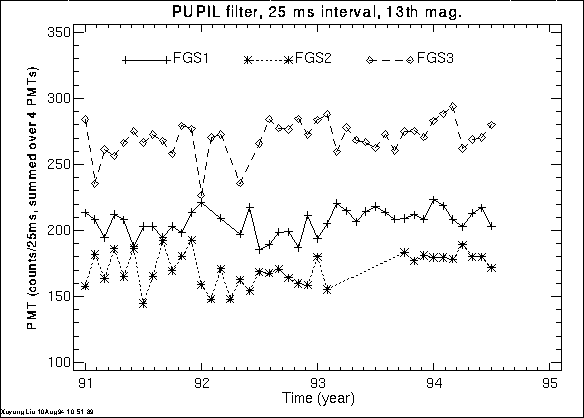
For each observation, the PMT sensitivity is calculated for each FGS in fine lock based on the PMT count rates and magnitude of the guide stars. The sensitivity is expressed in total counts of the 4 PMTs per 25 milli-seconds normalized for a 13th magnitude star with the FGS filter in pupil position. Fig. 2.5 shows the average sensitivities of each month since Janurary, 1991. The is no obvious trend. The variation of the sensitivities appears compatible to the error of the guide star magnitude.
2.2 Observations
The temperature fluctuations of critical spacecraft components are shown in Figure 3.1. All temperatures are nominal.
3.2 Costar:
The COSTAR trending program is being developed. Table COSTAR-T1 has been included to document current mechanism positions associated with the COSTAR mirrors.
3.3 WFPCII:
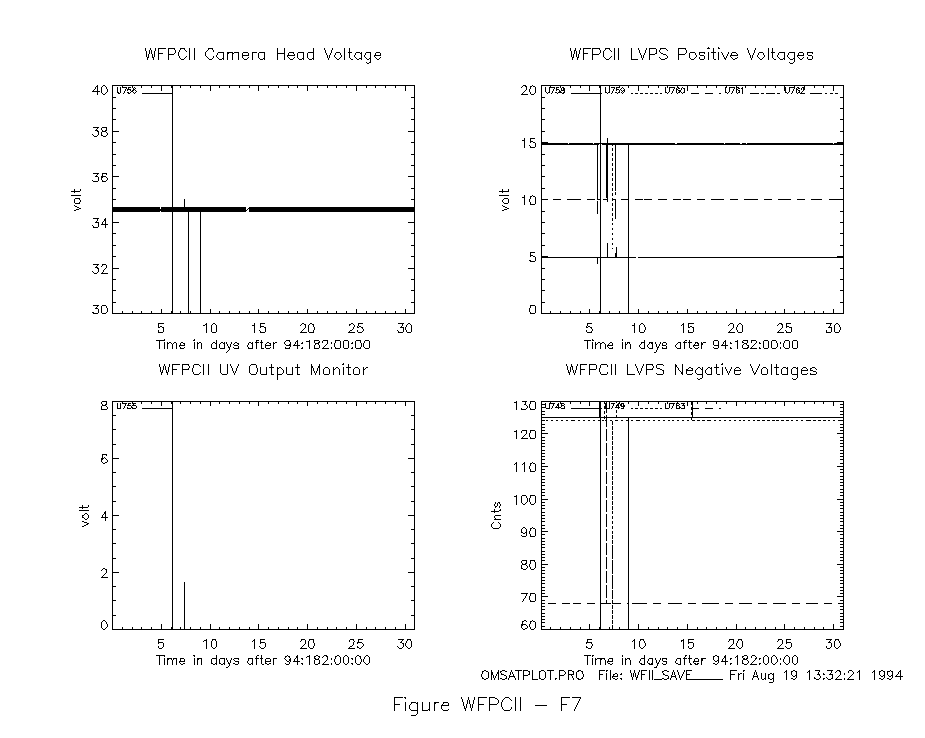
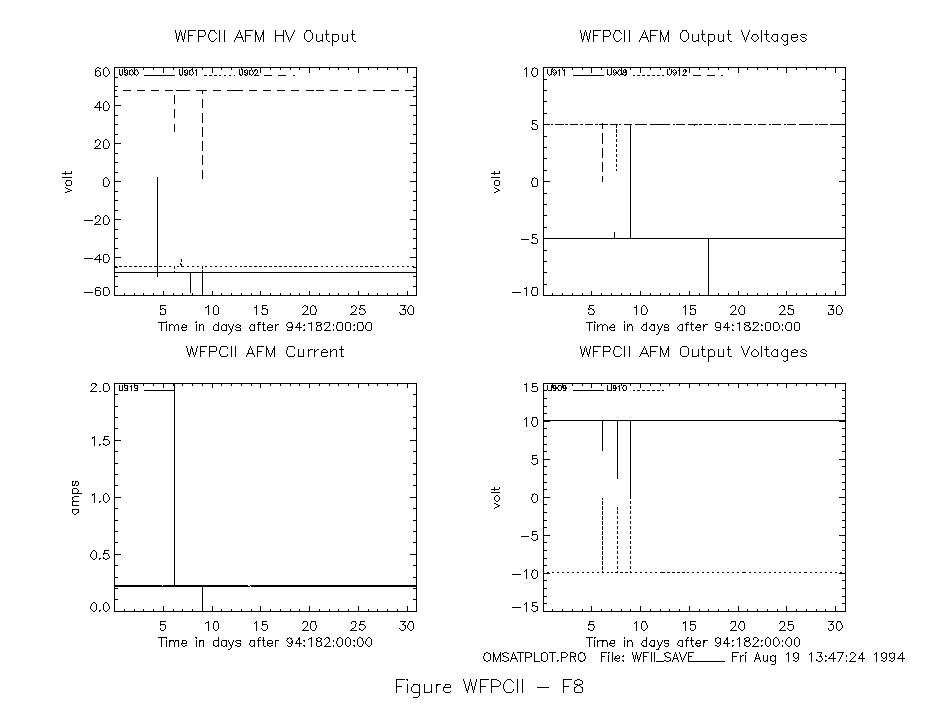
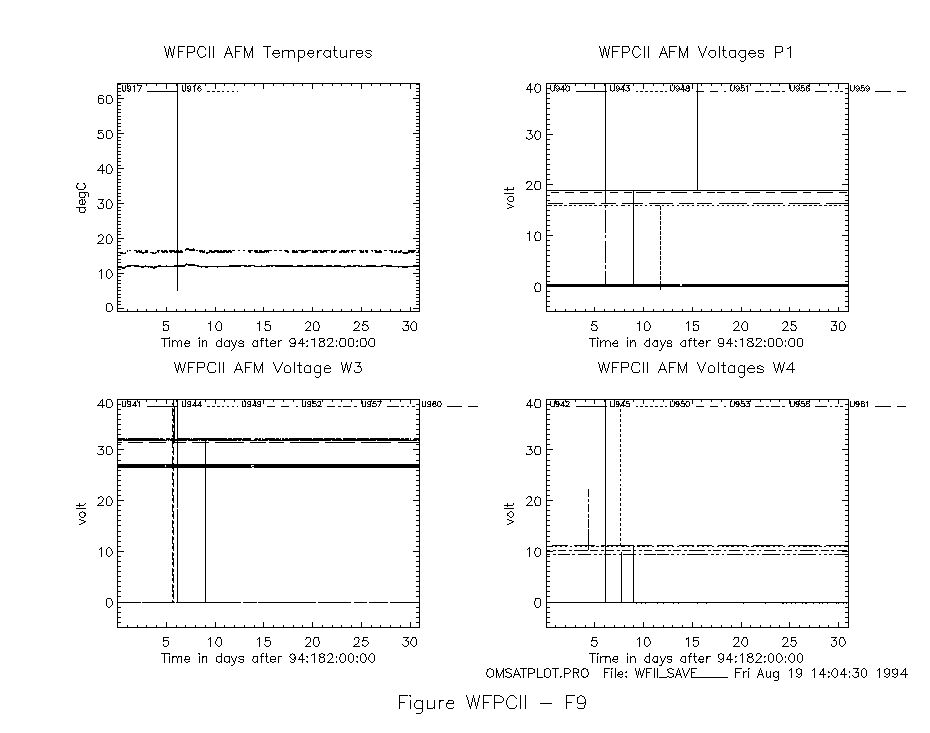
Tables WFPC-II T1,T2,T3 and Figures WFPC-II F3-F9 show the usage and performance of the instrument for the month of July. Several of the plots show the effect of the day 191 and 208 decontaminations. This is reflected in various temperature monitors as well as several of the voltage monitors. All of these are nominal reflections of the commanded decontamination.
table t1 (cycle/usage report) reflects the first full month of the new set points for cycling the replacement heaters. As shown, the number of cycles was 235 for the month of July, compared with 766 for the month of May (the last full month at the previous set points). This represents a substantial decrease in the cycling of that relay and has shown no adverse stability affects in the science data.
table t2 shows the voltage outputs for various monitors on WFPCII. All values reflect nominal behavior.
table t3 shows the thermal summary for various monitors on WFPCII. All values reflect nominal behavior.
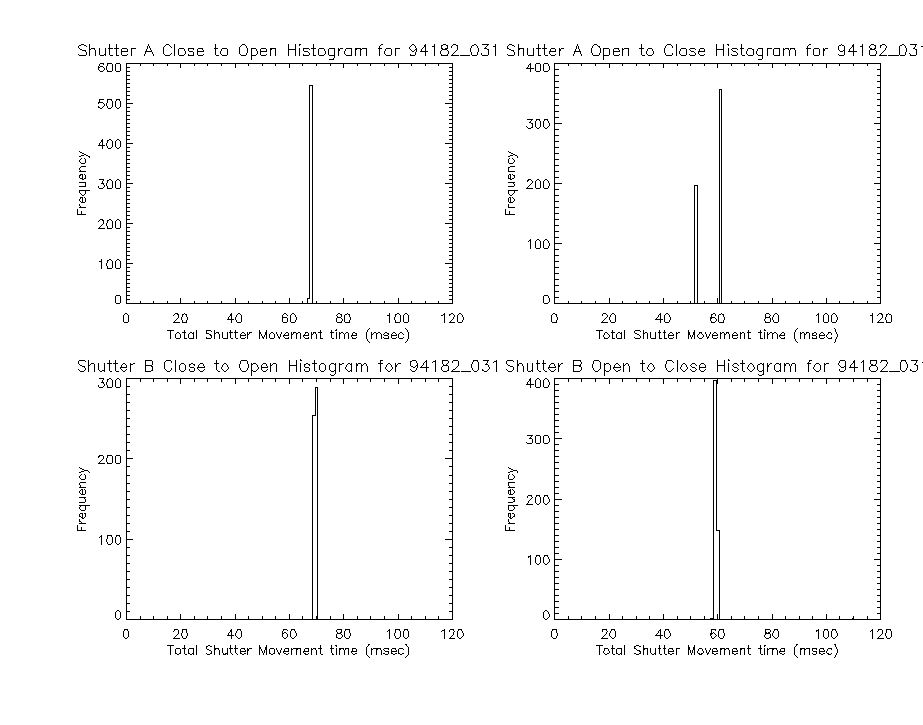
Figure f3 shows histograms for shutter time of flight for the month of July. A full description of this plot is given in the June 94 Observatory report. This output has not changed since launch.
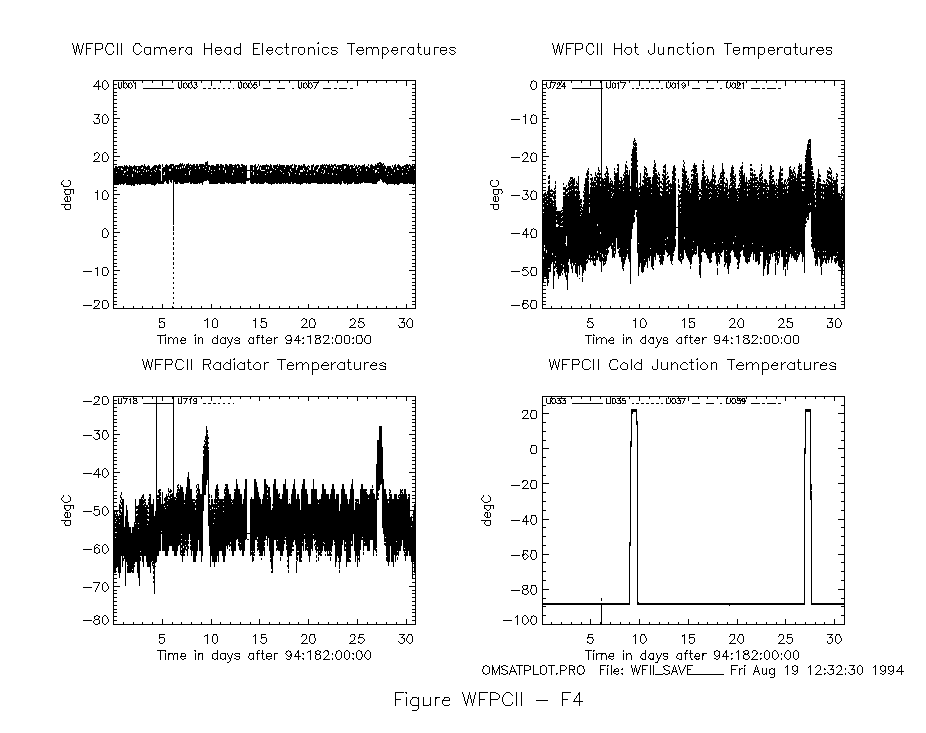
Figure f4 shows the camera head electronics, tec hot junction, TEC cold junction, and radiator thermal performance for the month of July. All monitors are consistent with nominal behavior.
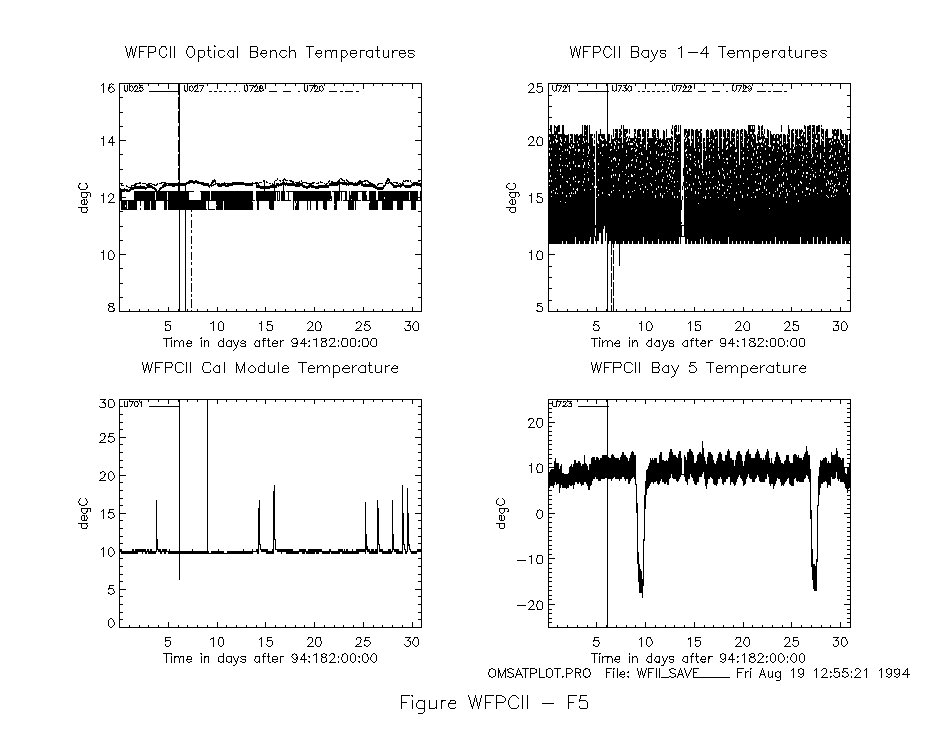
Figure f5 shows the thermal performance of the optical bench, electronics bays, and calibration system. All of the calibration system usage was from the vis lamps due to the operations limits placed on the UV system.
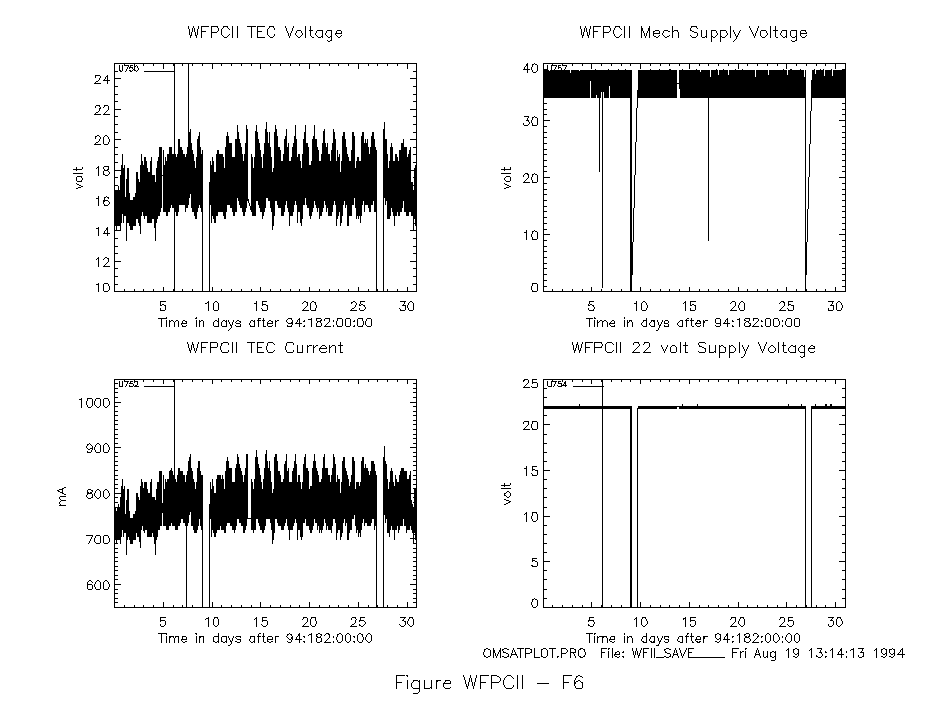
Figure f6 shows the tec voltage and current as well as the mechanism power supply output voltages. All values appear nominal.
Figure f7 shows the output voltages of the uv calibration system monitor, the Camera heads, and the low voltage power supplies. Note the noise spikes which occured in the telemetry system between days 187 and 191. These are during the time of the spacecraft safing and do not reflect true telemetry from the WFPCII.
figure f8 and Figure f9 shows the afm segment voltages and indicates nominal operations.
3.4 FOC:
The f/96 relay of the Instrument continues to operate without problems after the installation of COSTAR: Evaluation of Error Logs show all voltages, currents, and temperatures within their nominal limits.
Serveral plots of selected monitor points critical to the performance of the Instrument are an integral part of this report:
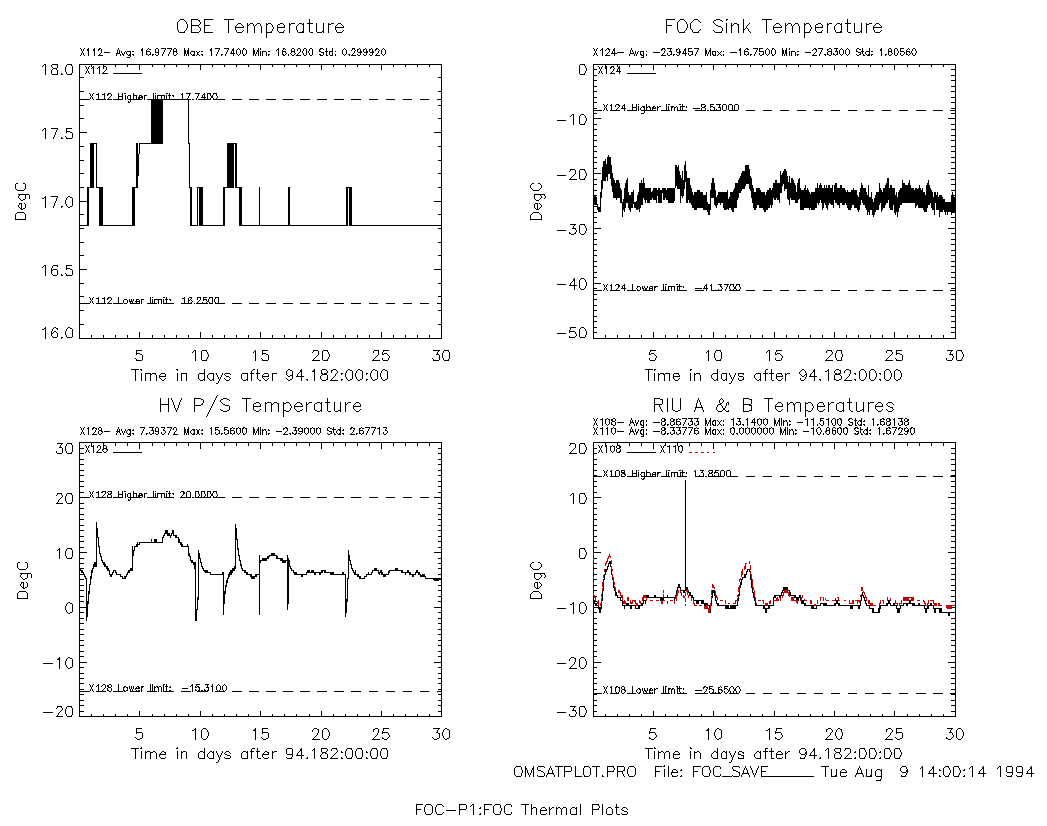
Four critical temperatures are shown foc-p1:foc thermal plots reflecting the thermal profile during the reporting period. The Safing Event from day 185 through 191 resulted in an increase of the Optical Bench Enclosure (OBE) temperature since during safemode the closed-loop thermal control law is replaced by fixed safemode heater power.
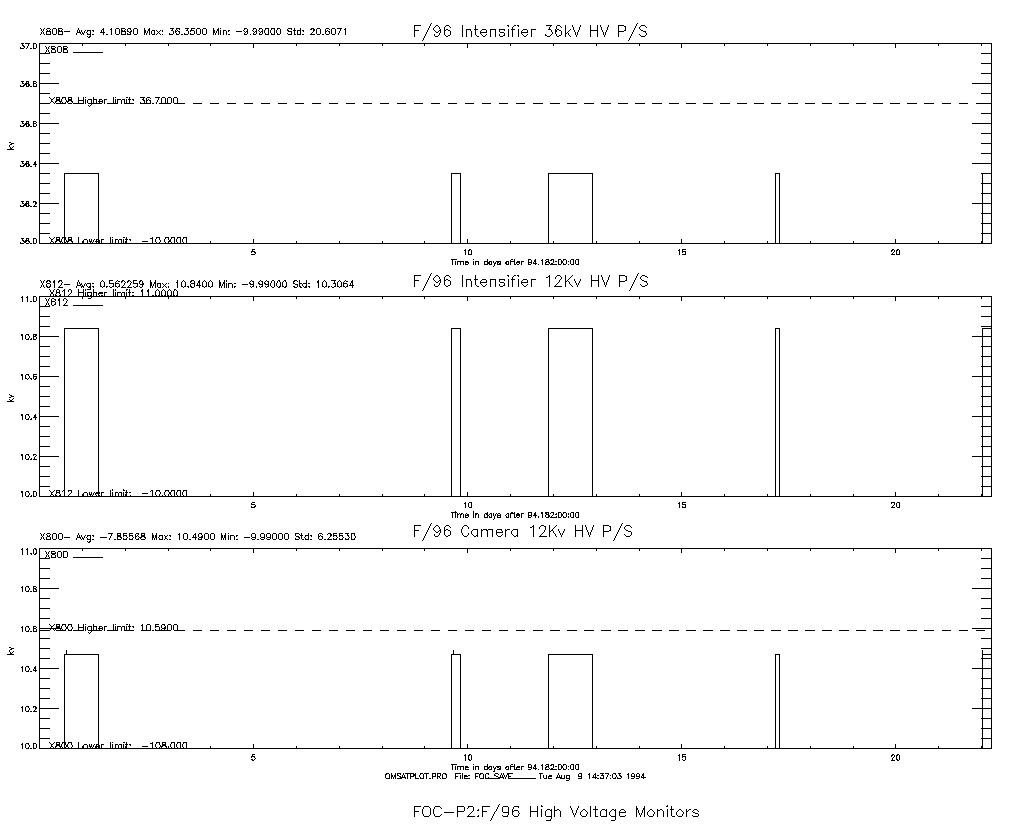
A set of three plots foc-p2:foc high voltage monitors illustrate the profile of the output voltages of the critical High Voltage Power Supplies for the FOC detectors. For a picture of the FOC Dectectors click here.
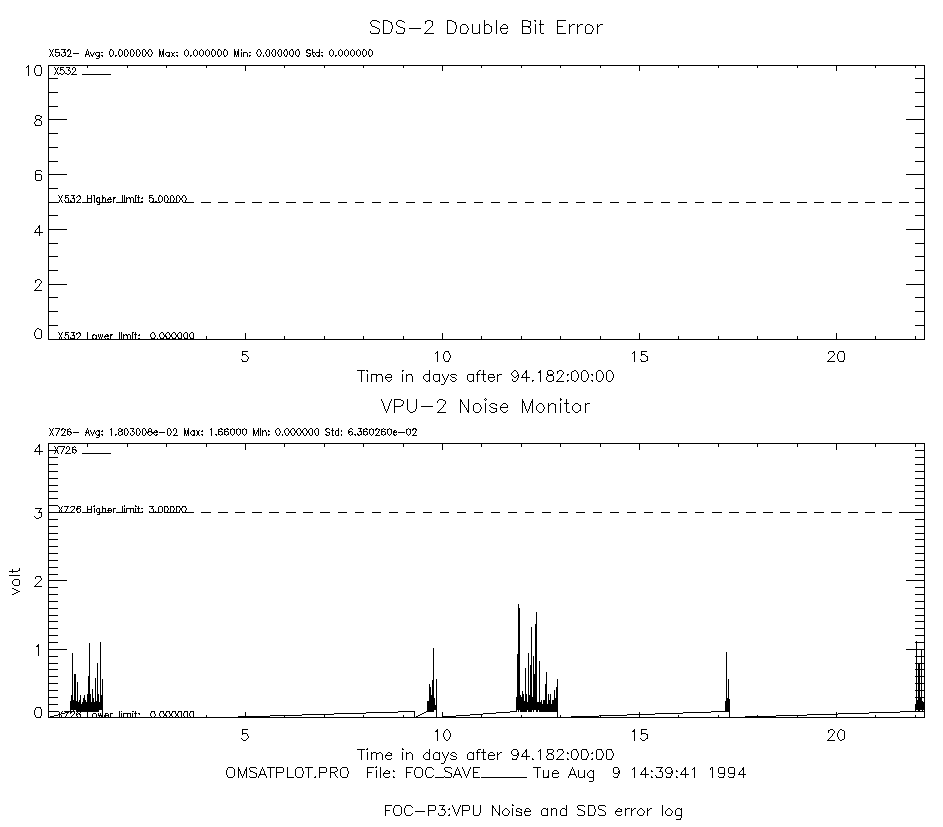
foc-p3:foc vpu noise and sds error log Both plots are focused on the health and safety of the Instrument. The Video Processing Unit (VPU) Noise level indicator summarizes the input signal as detected by the VPU. The peaks typically indicate passages throught the South Atlantic Anomaly (SAA).
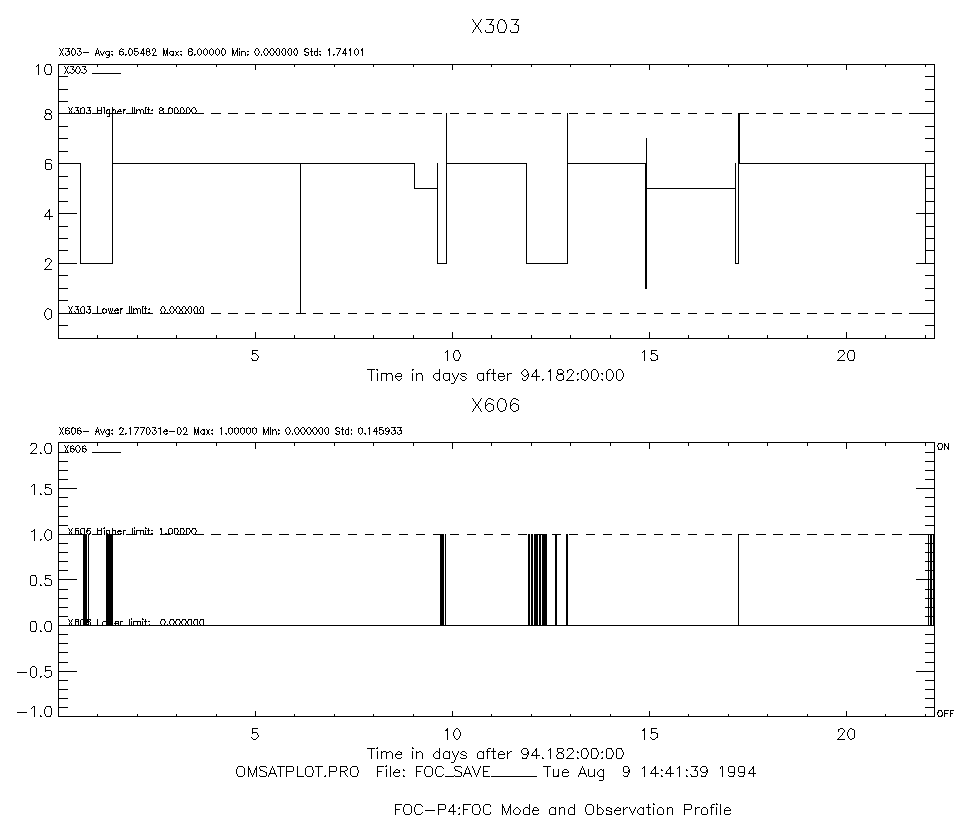
foc-p4:foc mode and observation profile shows the usage of the camera over the reporting period. A reading of the Thermal Control Table Number of "2" flags the time the FOC has been in the High Voltage Mode using the f/96 relay. The value of "1" indicates a reactivation of the F/48 Camera section.
Several Tables are inserted to keep track of operational statistics in particular of limited lifetime items: Table foc-t1 illustrates the statistics of the HV cycles and the hours the FOC was operated in the High Voltage Operate Mode. The same table foc-t1 shows the MIN/MAX/AVERAGE values grouped into the different operational modes: Safemode, Hold, and the High Voltage Operate Mode.
the foc-t2: mechanism cycle/usage table summarizes the usage of the mechanism during the reporting period and adds up the total number of cycles during Ground Testing and In-Orbit use.
A statistic on FOC f/96 Observations is given in Table
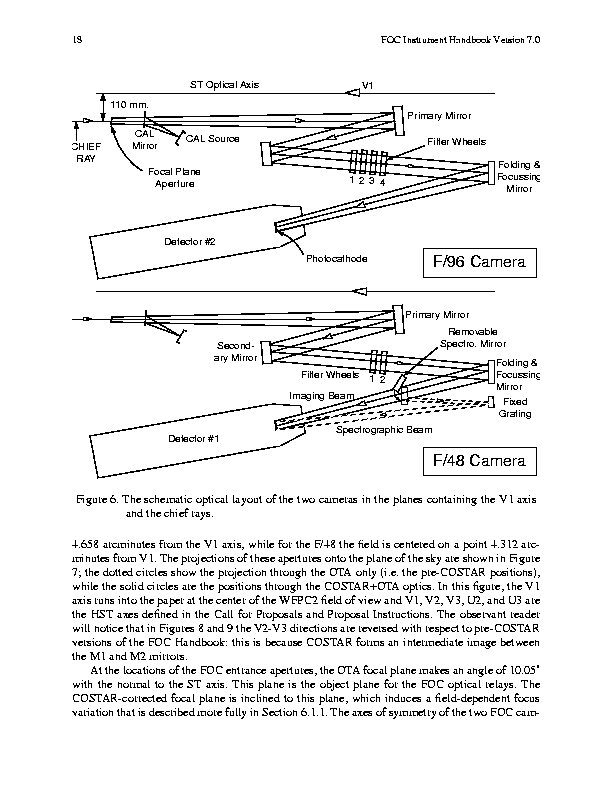
For a picture of the optical path and the FOC mechanism click
here.
3.5 FOS:
table fos-t1
shows the Cycle, Voltage and Miscellaneous summaries for the FOS for the month of July.
There were no health and safety or operational limit violations for the month. No additional diodes
were disabled during the month.
table fos-t2 shows the thermal summary for the month.
There were no health and safety or operational limit violations for the month.
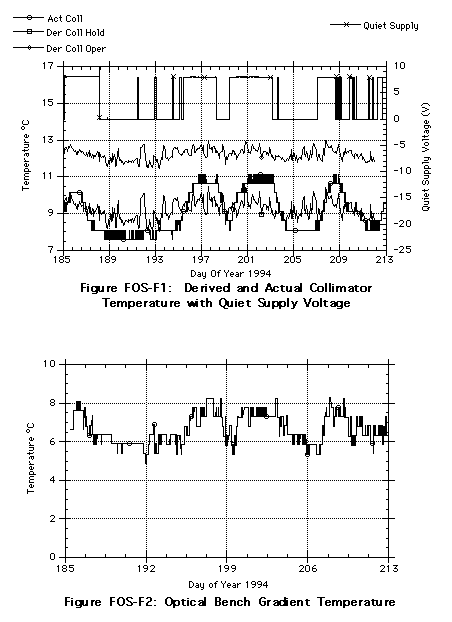
figure fos-f1
is the standard plot of Collimator (predicted and actual) temperature (Y302)
as a function of time. The predicted temperatures are based on algorithms for both the Operate
(LVON) state and the Hold (LVOFF) states as a function of FOS aft shroud sink temperatures.
The optical bench reacts
in such a way as to be within +/- 1 deg C of equilibrium 24 hours after a transition. This plot suggests
nominal thermal behavior for the detector as a whole even during these periods of continuous LVON.
Figure
fos-f2
shows a nominal optical bench gradient temperature for the month.
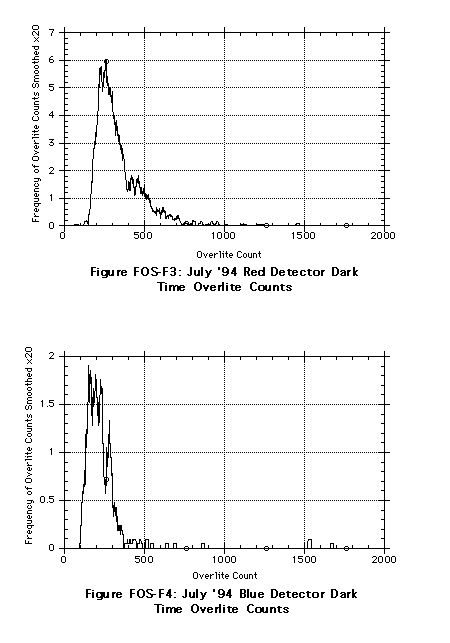
Figures
fos-f3 and fos-f4
show the Red and Blue detector dark count data for the month. (See
the Sept 91 report for a description of these plots.)
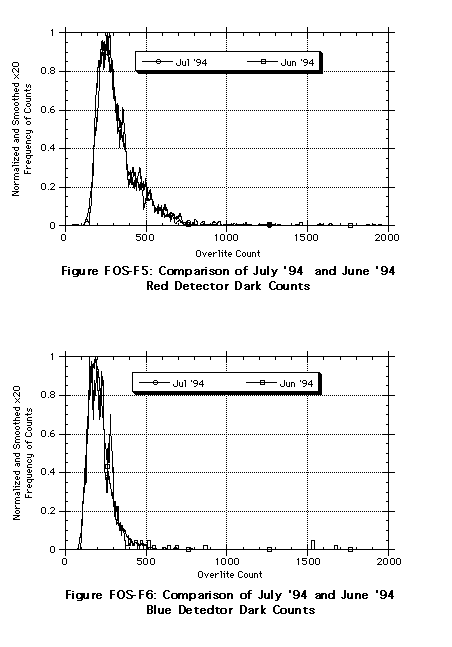
Figures
fos-f5 and fos-f6
show the comparison of July's dark count data to June's. July's dark count
data represent nominal performance.
3.6 GHRS:
All trended monitors appeared normal for this reporting period. The following
tables and figures summarize activity of selected areas of the instrument.
Table
ghrs-t1
is a cycle and use summary of the instrument mechanisms as well as
a statistical analysis of main bus voltages and currents.
Table
ghrs-t2
is a statistical summary of key instrument temperatures. All
temperatures are within their normal range.
Numbers are included for the HOLD
and Side 1 OPERATE columns as these modes are now defined. HOLD is defined as
side 1 in Hold, side 2 in Low Voltage Ready. Side 1 OPERATE is defined as side
1 in Operate, side 2 in Low Voltage Ready. These new mode definitions reflect
the fact that the side 2 low voltage remains on when side 2 transitions to
Hold mode.
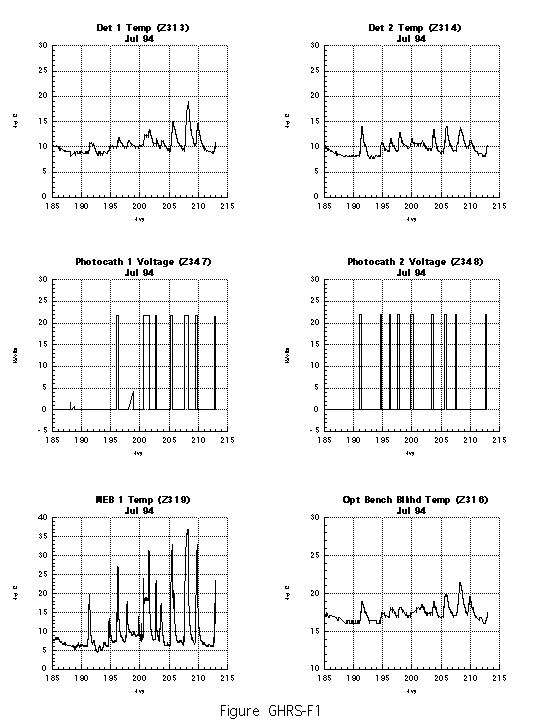
Figure
ghrs-f1
contains plots of the detector temperatures and voltages for the
month, as well as plots of the optical bench and MEB 1 temperatures.
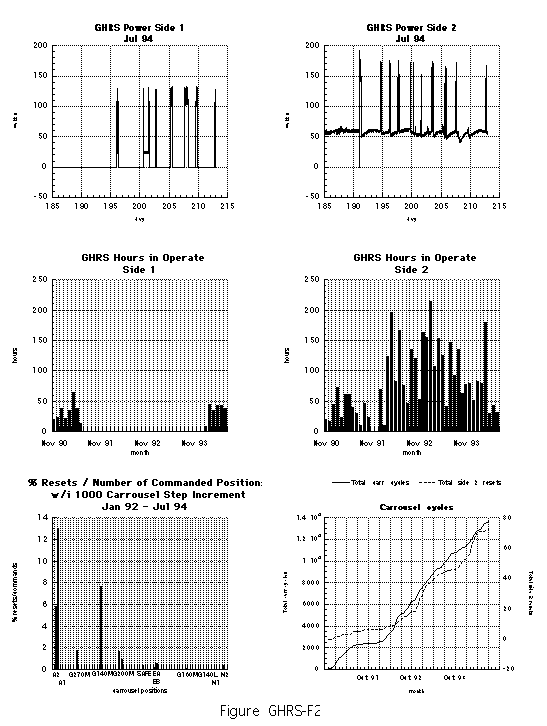
Figure
ghrs-f2
contains monthly power profiles for each side of the instrument
as well as historical summaries of hours spent in OPERATE mode and carrousel
commanding and reset activity.