Monthly Observatory Report
                                          for
                                   August 1994
COSTAR:
Adjustments were made to the FOC X-Tilt and Focus mechanism positions to compensate for a degradation of the FOC image quality. Operation of the COSTAR was nominal.
WFPCII:
WFPCII continues to operate nominally throughout the month of August. The UV Calibration system remained Off during this period.
The decontamination on day 239 restored UV to nominal values (~1 normalized).
Science and Calibration observations continue to proceed successfully.
FOC:
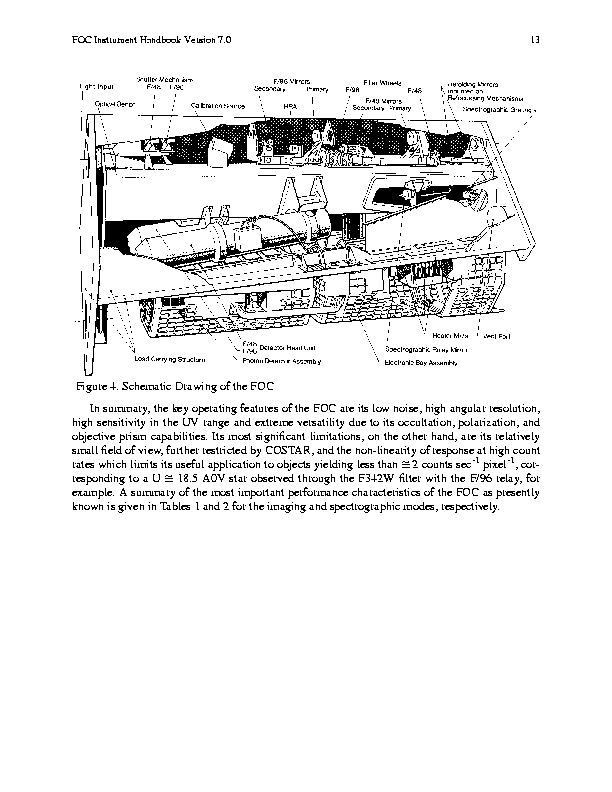
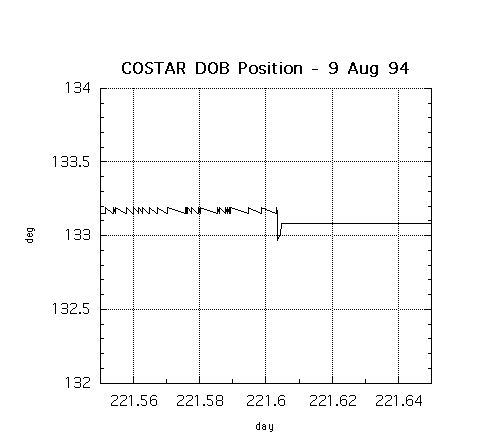
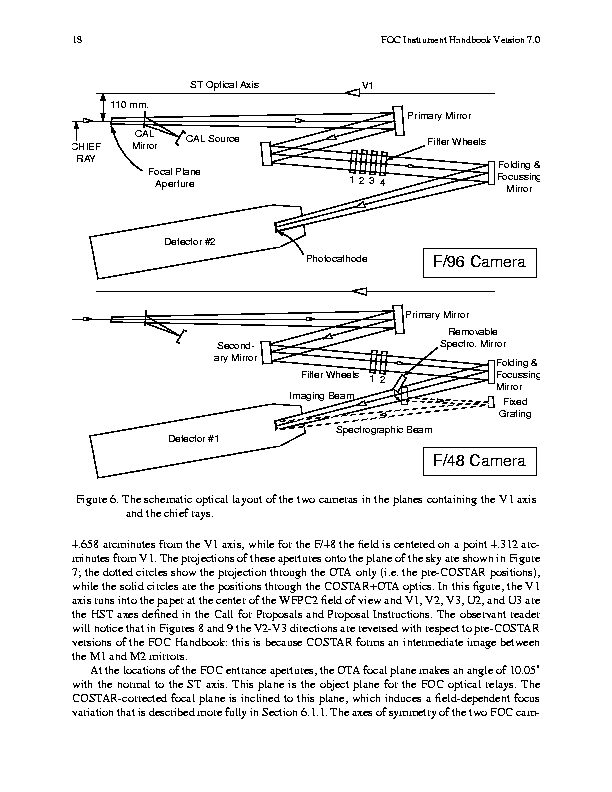
FOC is continuing the normal science program with GO and GTO cycle 4 proposals using the f/96 relay without problems. for a picture of the faint object camera click here. On day 221 (9-AUG-94) the COSTAR DOB was moved by -12 steps for a fine adjustment of FOC focus. The actual move was executed as -27 steps followed by +15 steps to minimize hysteresis effects. As a consequence of the DOB move the FOC PSF has been restored to near optimum.
FOS:
The FOS continued to execute a variety of GO, GTO, and CAL proposals during the month of August.
GHRS:
Both side 1 and side 2 of the GHRS are running without problems.
1.2 Summary of major problems
COSTAR:
Since SMOV, the quality of the FOC image had degraded to the point where slight adjustments to the COSTAR optics were required. Two mechanism moves were requested.
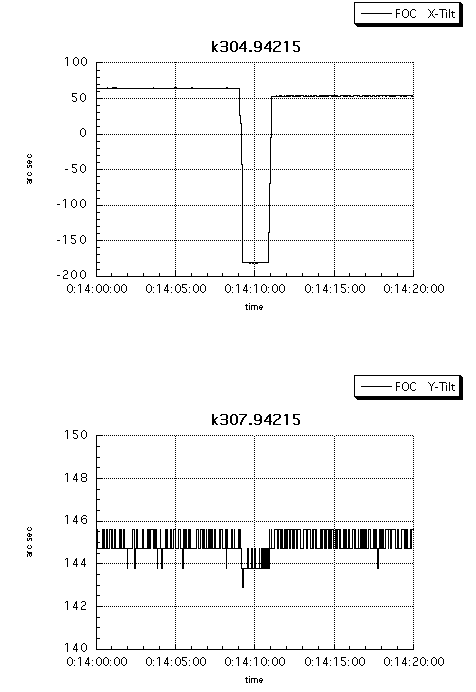
To remove a slight degree of coma which had developed, a -1 step motion of the FOC X-Tilt mechanism was requested. Since the preferred direction of this mechanism is positive, a negitive overshoot was required. Also, the target position is within the mechanism dead zone, so the overshoot needed to be large enough to clear the dead zone before reversing direction. A -46 step followed by +45 step adjustment was uplinked. This sequence resulted in a position change from 64.10 arcsec to 52.80 arcsec. A telemetry plot of this change can be seen in figure costar-f1.
After the coma was successfully removed, a slight focus adjustment was needed. A -12 step change in the DOB position was commanded. Again, we were moving against the preferred direction so an overshoot was required. A -27 step followed by a +15 step position adjustment was commanded which resulted in a position change from 0.707 mm to 0.453 mm. A telemetry plot of this activity can be seen in figure costar-f2.
FOC:
In general: No major problems with FOC operations during the reporting period. Electrical and thermal monitors of the Instrument continue to show nominal values after the Servicing Mission.
Due to a scheduling problem FOC proposal 5138 "Color-Magnitude Array of NGC6397" was executed at a wrong roll angle.
No HSTAR were filed against the Instrument hardware or its operational software.
FOS:
On day 94.235 during FOS proposal 5531, a series of Exec 20 Status Buffer messages occurred. This error message is issued when a PIT slew request is rejected by the DF224. A review of what was occurring at the time of the errors showed that the FOS was executing a new Target Acquisition Peakup Algorithm which was implemented in stored commanding and build 5.3 of the NSSC-I flight software. Analysis of the associated science data, engineering telemetry and commanding has shown that an error in the DF224 management of the Take-data flag can result in a timing error in the stored commanding. A fix to the DF224 software in being developed.
During the past month the FOS experienced several microprocessor speed check errors. This is an error which is seen occasionally when the microprocessor is under a heavy load. No other FOS errors were caused by the speed check errors.
GHRS:
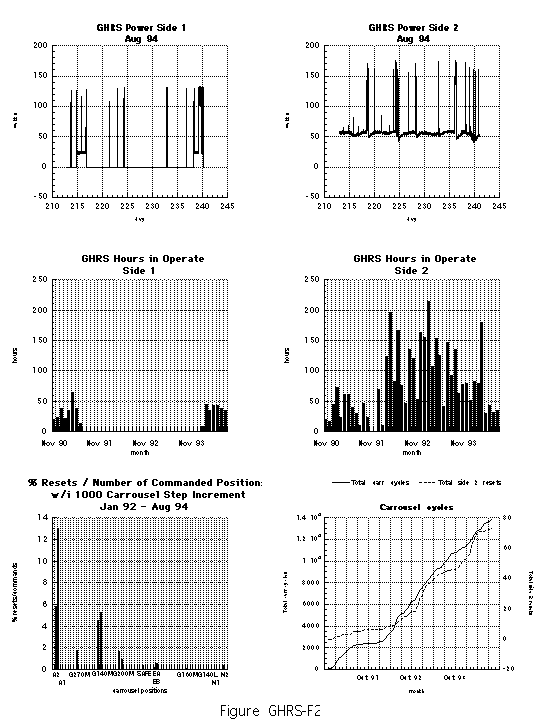
1.2.1 Monitoring of GHRS carrousel reset activity is continuing. During the month of August there was one reset event for 203 commanded positions.
1.2.2 A fix for the GHRS observation timeout flight software error has been developed. Testing of this fix will proceed at a low priority with delivery expected by the end of the year.
1.2.3 On day 94236, 24-Aug-94, an error was reported when the calibration lamp did not turn on for series of internal GHRS exposures. The proposal running at the time was 5598 - GHRS Side 2 Aperture Offsets. This error was caused by a proposal error and did not reflect any problem with the hardware. For each exposure, the large science aperture was specified instead of the calibration lamp.
WFPCII:
The thermal math model for the UV lamp window and diffuser has been completed. A 30 to 60 minutes of VIS (incandescent) lamps usage is predicted to raise the UV window temperature by 4.7 to 9.0 degrees C, and the diffuser by 2 to 3 degrees C. The proposed idea of preheating the UV window has been dropped due to new contamination information. The RTV seal (Corning 6-1104) around the UV window has recently been identified as a likely source of UV contamination. Preheating with the VIS lamps (prior to turning the UV lamp On) would increase the contamination emission rate from the RTV. This would result in a higher UV polymerization rate of the contamination onto the UV window when the UV lamp is turned On. The recommended procedure is to turn the UV lamp On only when the optical path is clear of volatized material i.e. when the calibration system temperature is at equilibrium (~10 C). The UV lamp will be treated as a limited life item, and its operation will be incorporated into a new Constraint and Restriction Document (CARD). The UV lamp will be turned On on day 295 (last activation was on day 163) following the monthly decontamination. The UV internal flats in the 160, 170, 218, 255 and 336 nm will determine the current UV throughput levels. The results will also indicate whether the UV decline is a function of lamp On time or total time on orbit.
On day 215 at 04:28 UT the CU/SDF sent an error message indicating that the CU/SDF disabled the WFPCII SDF interface. The problem was due to a conflict between the EUBLADE instruction to preposition the shutter blades during a readout, and the fact that this interruption caused the WFPCII firmware logic to delay the succeeding readout by 1MF (OLD 2.4.6.13). As a result the following readout began when the STR was 2 seconds from the end of its allocated time (total 62s). At 17:50 to 18:03 several real time PROCs were uplinked to reset the AP control, SDF, and clear the WFPCII microprocessor/logic flags. The SDF and SDFI were successfully reset and configured. A similar procedure was used for the same proposal on day 217. A second problem occurred in which the EUBLADE qesiparm in the PMDB was incorrectly populated. This caused the exposures to be treated as externals instead of internals. The VIS lamps would not have been turned On, and the shutters would have responded to TDF. The EUBLADE command instruction was corrected via OPR 27159. wfpcii-rpt1 gives a full description of the problem.
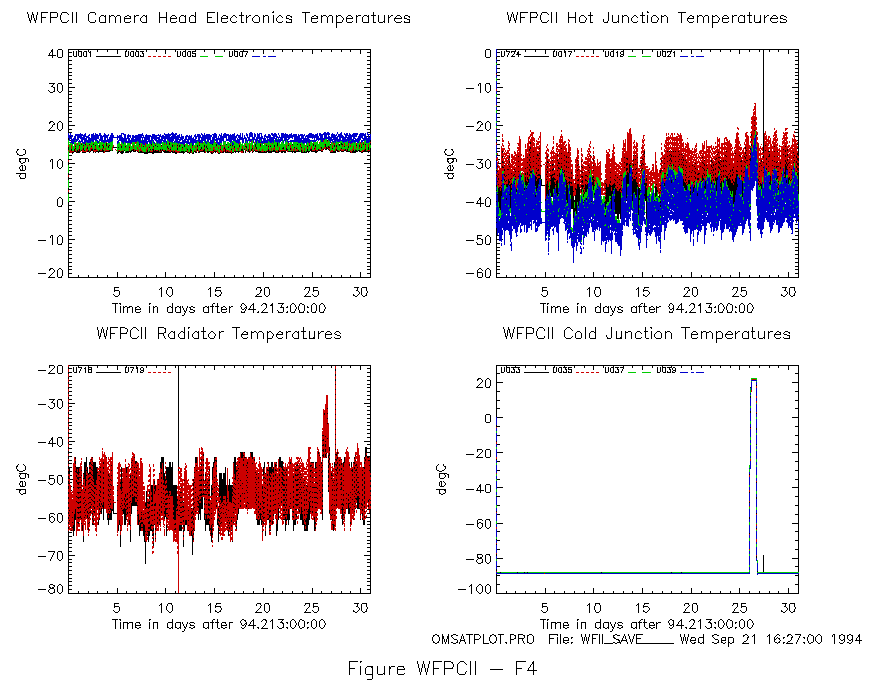
The WFPCII radiator temperature has cooled to -72 C on five separate occasions including one in August (day 220). In the event the radiator should reach -75 C the TECs would be turned Off to prevent damage to the TECs due to the possible freezing of the ammonia in the heat pipes. A thermal model is being developed to predict the temperature effects for long cold orientations.
11 out of 19 of degraded guide star acquisitions were on the same pair of guide stars. The other 8 involved 6 different pairs of guide stars.
On day 94.235, FGS servo 1B torque error saturated at -10V at 23:01:13, shortly after the beginning of a type 3 slew. This anomaly resulted in a loss of lock. When the type 3 slew was over, a reacquisition of the guide stars failed because the FGS1 was not at the commanded position. This servo torque anomaly and similar ones are still under investigation.
The angular separation between the dominant FGS (#3) and roll FGS (#1) during the CVZ observation from 230:06:10 to 231:04:41 had a continuous drift of 40 milli-arcseconds while the star selector temperatures were 0.1 and 0.3 deg_C higher than the upper limits for FGS #1 and FGS #3, respectively. This separation drift is believed to be due to the selector temperature violation. A detail memo analyzing this anomaly will be issued in the near future.
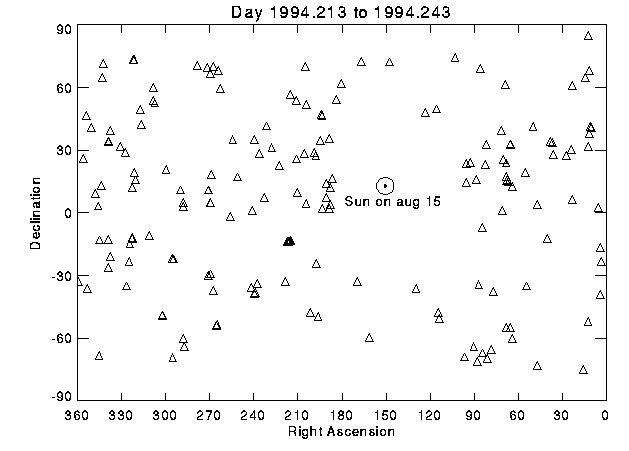
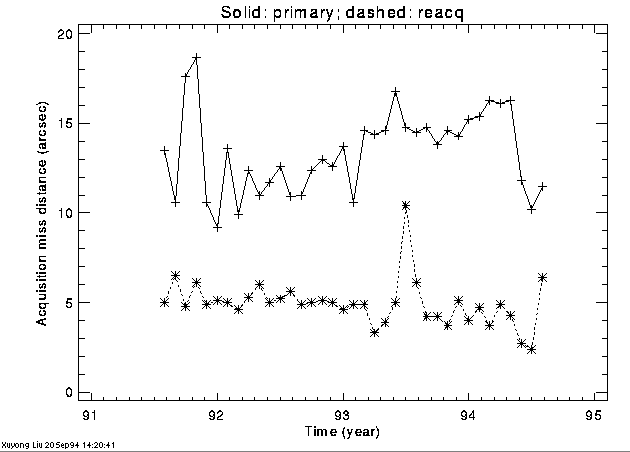
The sky distribution of pointings in this month is shown in Fig. 2.1. Fig. 2.2 shows the monthly average pointing miss for primary guide start acquisitions and reacquisitions. The pointing miss is measured from the location of the guide star found during search compared to the predicted position (start of the search). table 2.1 describes the statistics of guide star acquisitions. It takes into account both primary acquisitions and reacquisitions. "No lock" means that coarse track cannot be established or maintained. "Degraded mode" refers to the cases where the guiding mode falls back to coarse track when the commanded mode of the find lock cannot be established or maintained. "Search rad exc" refers to cases where the guide stars are not found.
The distribution of guiding modes by Science Instrument during scheduled exposures is given in table 2.2. for each scheduled exposure, the actual guiding mode is obtained from the engineering telemetry. The scheduled exposure time is subsequently summed up by guding mode for each SI to produce the distribution.
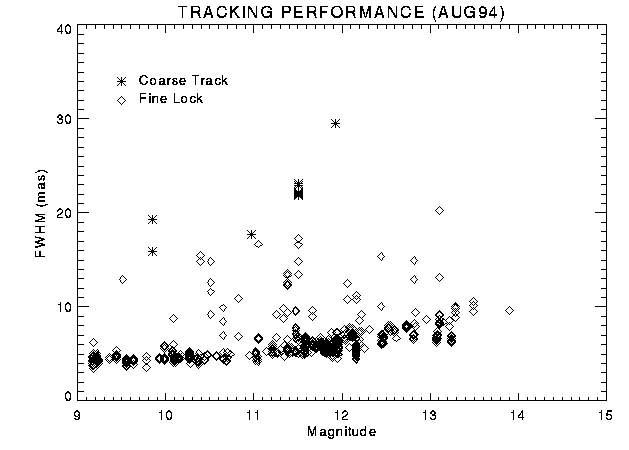
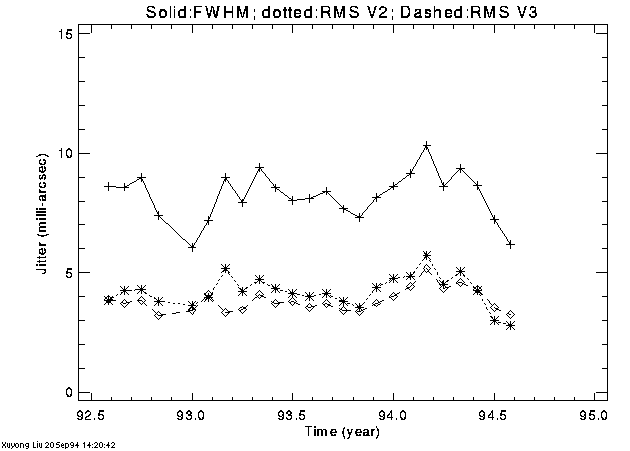
The full-width at half-max (FWHM) of jitter during observations are plotted as a function of the magnitude of the dominant guide stars in Fig. 2.4. the jitter is obtained from the motion of the dominant guide stars in the FGS. The rms of jitter along V2 and V3 axes is also calculated for each observation. The average of FWHM and rms of jitter over all observations in each month is given in Fig. 2.3 and shows no obvious trend.
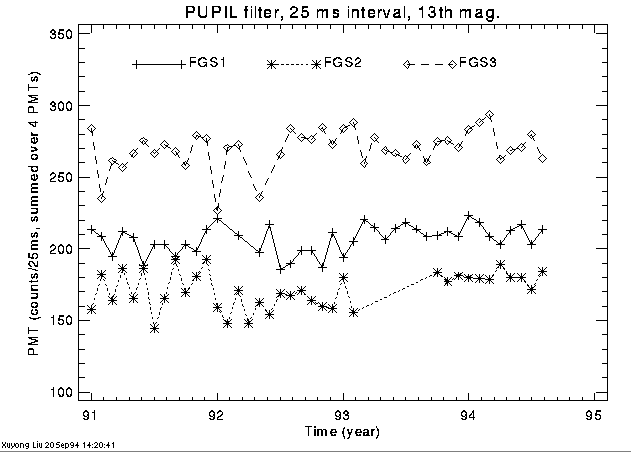
For each observation, the PMT sensitivity is calculated for each FGS in fine lock based on the PMT count rates and magnitude of the guide stars. The sensitivity is expressed in total counts of the 4 PMTs per 25 milli-seconds normalized for a 13th magnitude star with the FGS filter in pupil position. Fig. 2.5 shows the average sensitivities of each month since Janurary, 1991. The is no obvious trend. The variation of the sensitivities appears compatible to the error of the guide star magnitude.
2.2 Observations
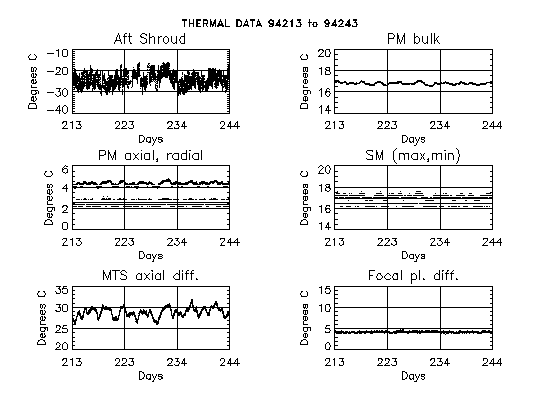
The temperature fluctuations of critical spacecraft components are shown in Figure 3.1. All temperatures are nominal.
3.2 Costar:
the costar trending program is being developed. Table costar-t1 has been included to document current mechanism positions associated with the costar mirrors.
3.3 WFPCII:
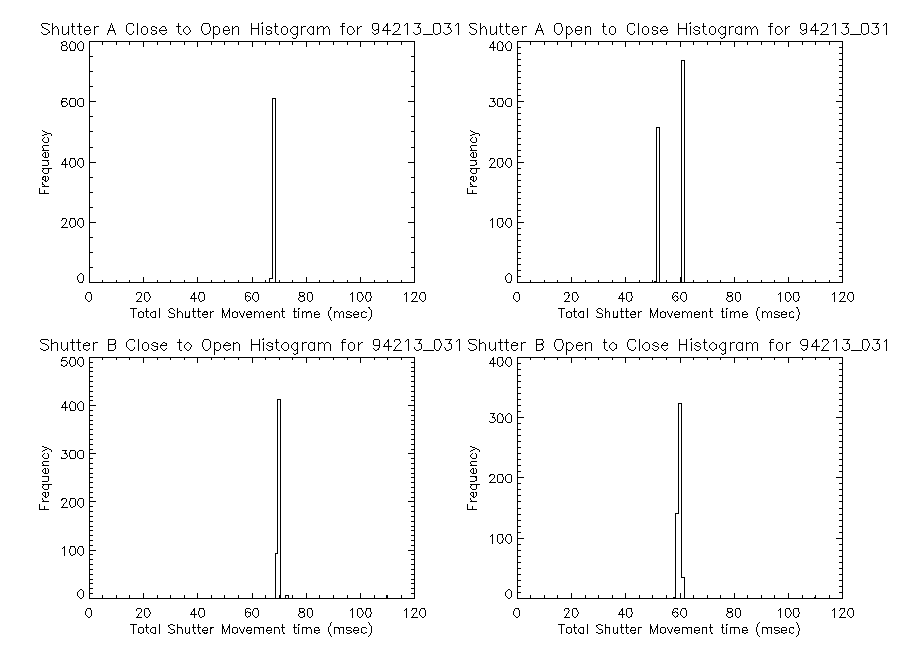
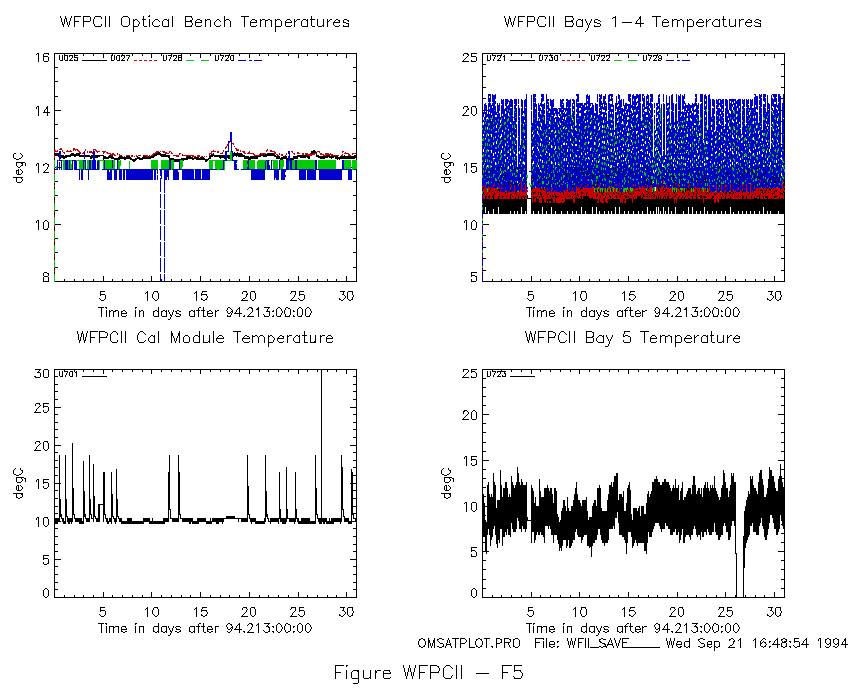
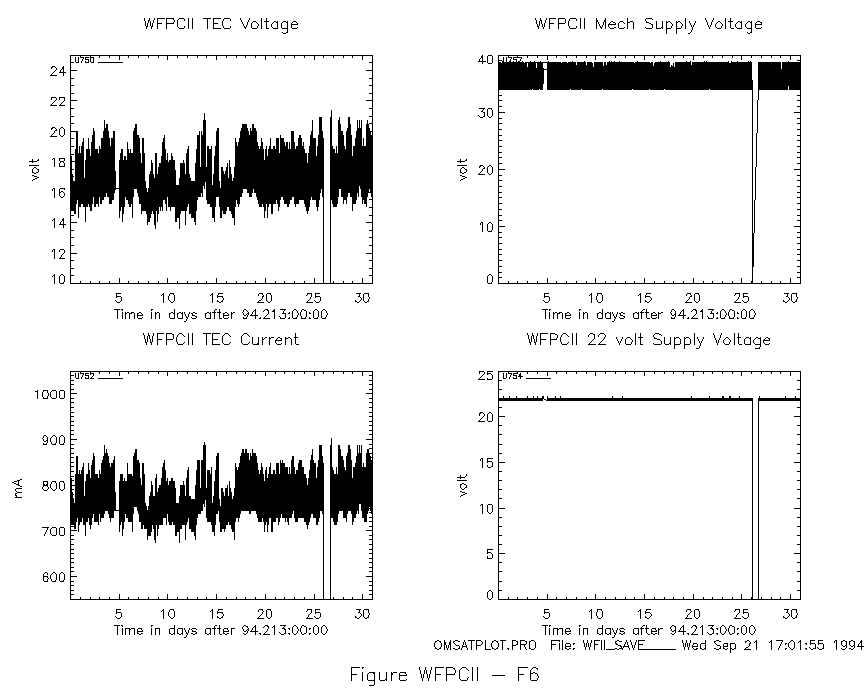
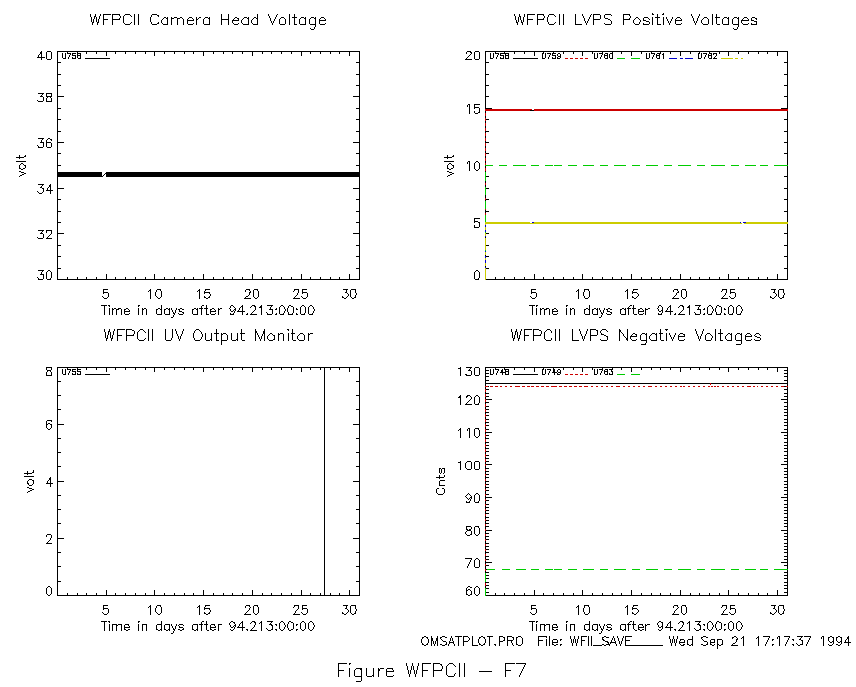
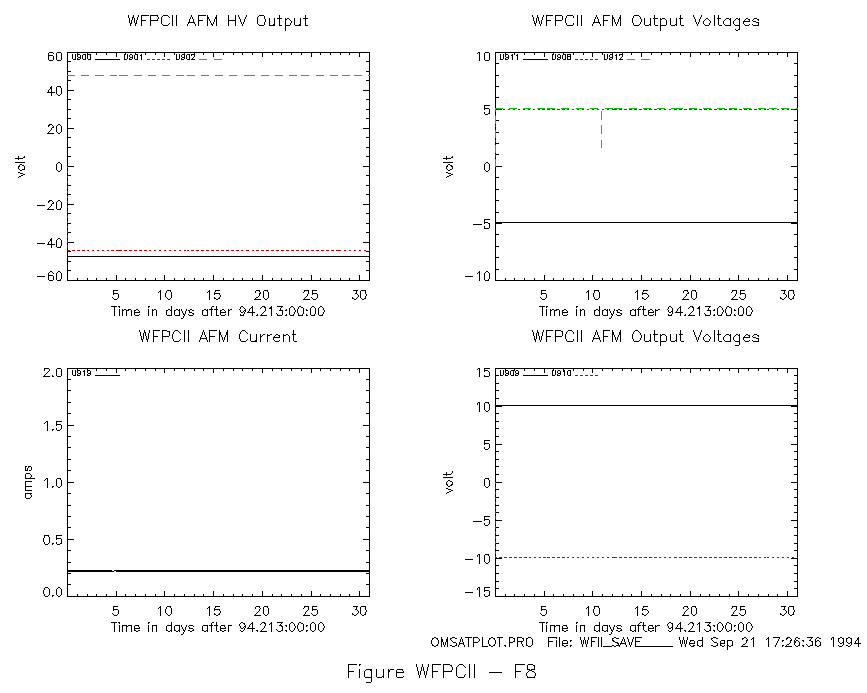
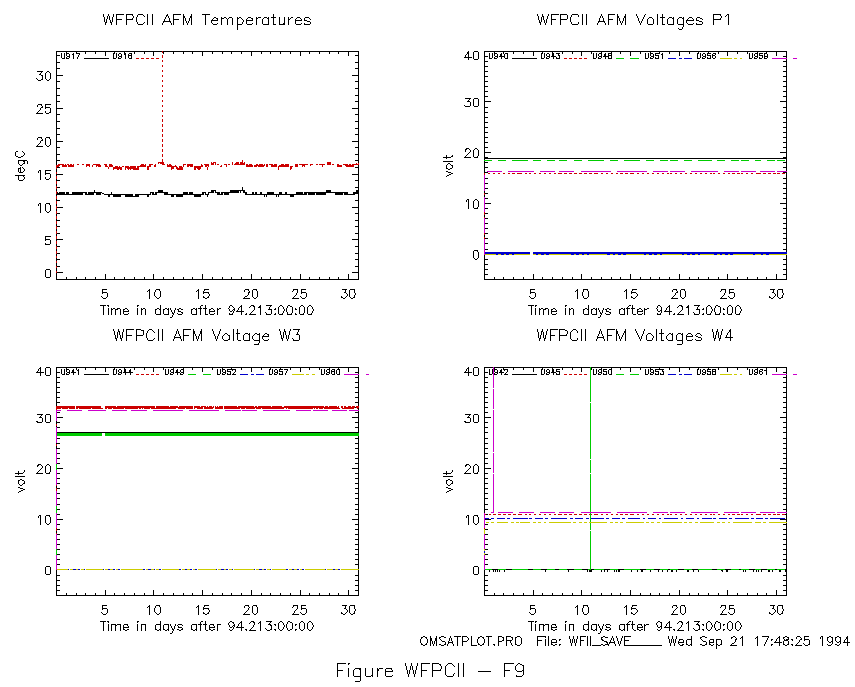
tables wfpc-ii t1, t2, t3 and Figures WFPC-II F3-F9 show the August instrument statistics and profiles for cycle usage, power and temperature. All values are nominal and within limits unless otherwise noted.
table t1 shows the cycles of various mechanisms and power supplies.
table t2 shows the lvps, mechanism, and tec voltage and current outputs.
table t3 shows the bays, optical bench, Bulkheads, Cold and Hot junctions, Camera Heads, Attach points, AFM, and Radiator temperature values.
Figure f3 shows the frequency for various shutter close/open and open/close flight times.
Figure f4 shows the cold and hot junctions, Camera Head, and Radiator temperatures. The -72C reached by the radiator may be attributed to a cold HST pointing (with respect to -V3 axis).
Figure f5 shows the bays, optical bench and Cal Module temperatures.
Figure f6 shows the mechanism, tec and 22 lvps voltages and current.
Figure f7 shows the lvps, camera head, and UV Output Monitor voltages.
Figure f8 and Figure f9 shows the afm voltages and current
3.4 FOC:
The f/96 relay of the Instrument continues to operate without problems after the installation of COSTAR: Evaluation of Error Logs show all voltages, currents, and temperatures within their nominal limits.
Serveral plots of selected monitor points critical to the performance of the Instrument are an integral part of this report:
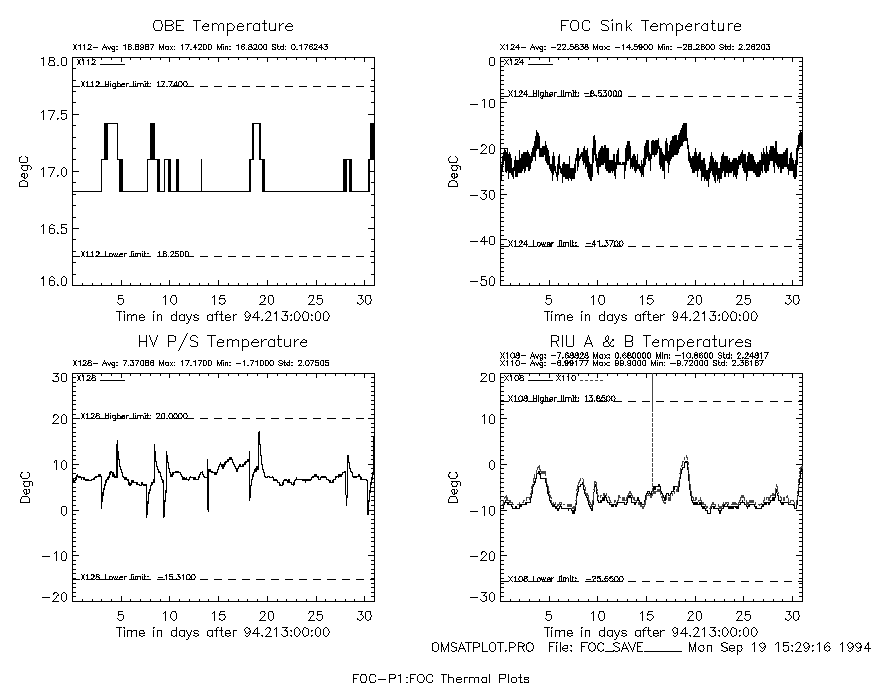
Four critical temperatures are shown foc-p1:foc thermal plots reflecting the thermal profile during the reporting period. The unsusual high sink temperature on day 231 is a result of a spacecraft attitude with a sun angle that warms up the section of the aftshroud in which the FOC is mounted.
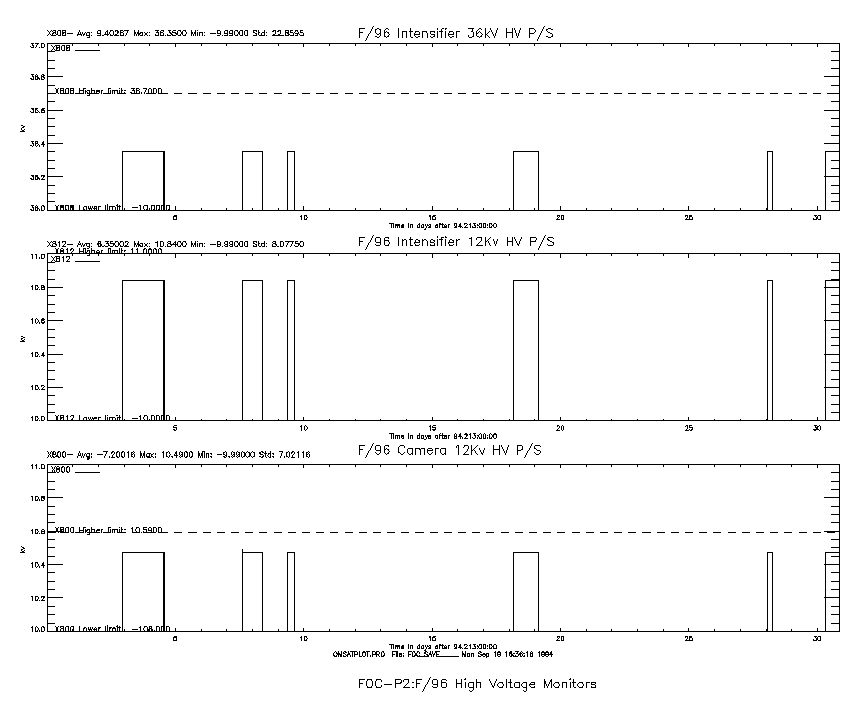
A set of three plots foc-p2:foc high voltage monitors illustrate the profile of the output voltages of the critical High Voltage Power Supplies for the FOC detectors. For a picture of the FOC Dectectors click here.
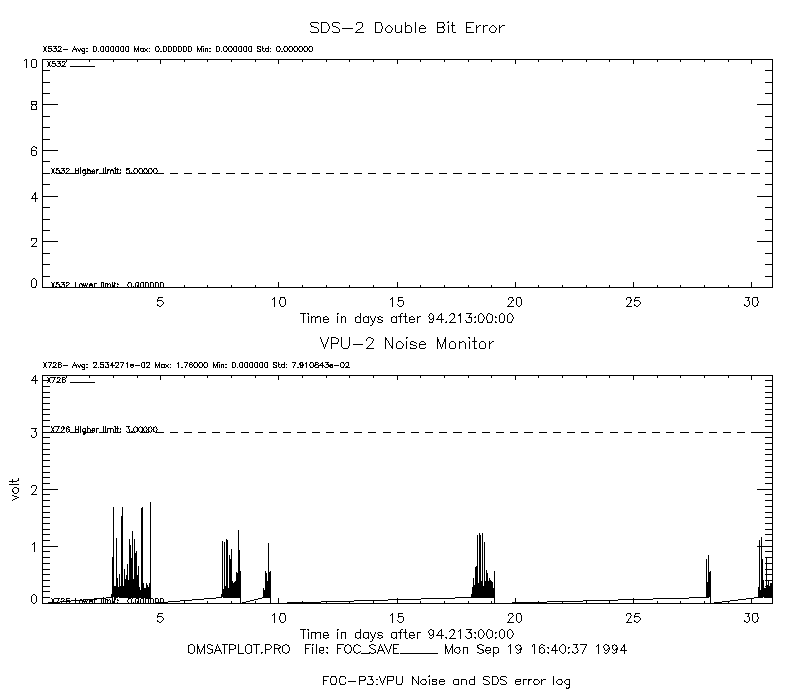
foc-p3:foc vpu noise and sds error log Both plots are focused on the health and safety of the Instrument. The Video Processing Unit (VPU) Noise level indicator summarizes the input signal as detected by the VPU. The peaks typically indicate passages throught the South Atlantic Anomaly (SAA).
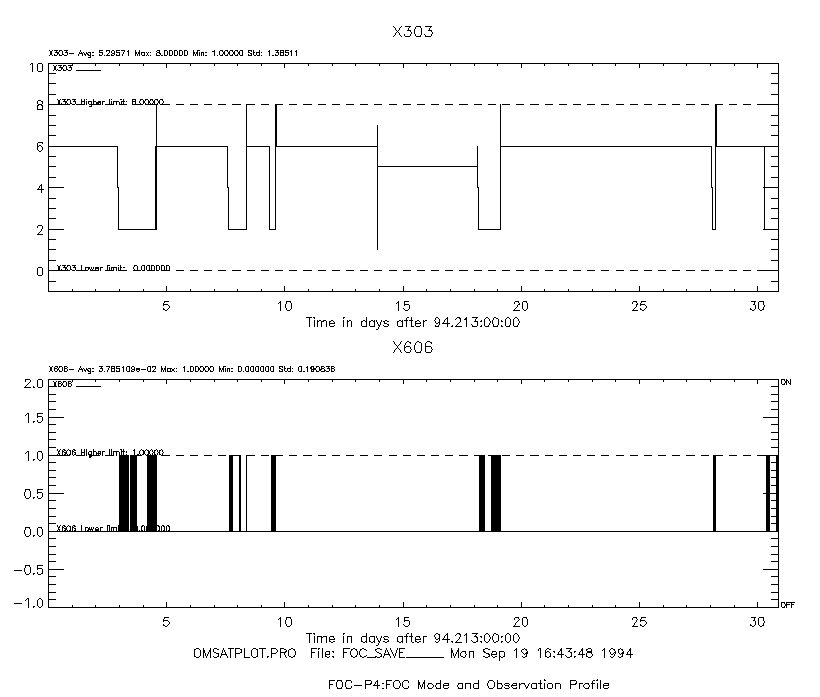
foc-p4:foc mode and observation profile shows the usage of the camera over the reporting period. A reading of the Thermal Control Table Number of "2" flags the time the FOC has been in the High Voltage Mode using the f/96 relay. The value of "1" indicates a reactivation of the F/48 Camera section.
Several Tables are inserted to keep track of operational statistics in particular of limited lifetime items: Table foc-t1 illustrates the statistics of the HV cycles and the hours the FOC was operated in the High Voltage Operate Mode. The same table foc-t1 shows the MIN/MAX/AVERAGE values grouped into the different operational modes: Safemode, Hold, and the High Voltage Operate Mode.
the foc-t2: mechanism cycle/usage table summarizes the usage of the mechanism during the reporting period and adds up the total number of cycles during Ground Testing and In-Orbit use.
A statistic on FOC f/96 Observations is given in Table foc-t2: mechanism cycle/usage table This table also keeps track of the number of loss of lock that occurred during a scheduled FOC observation time and adds up the time lost on target.
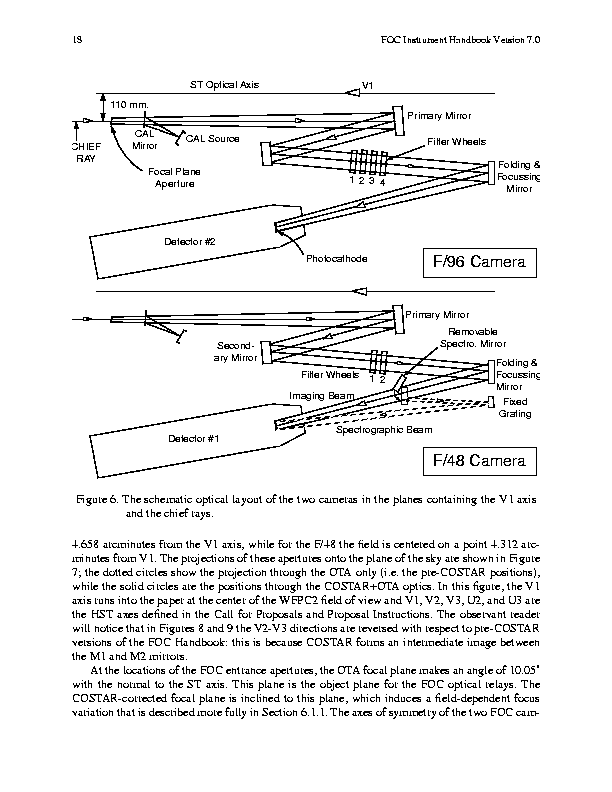
For a picture of the optical path and the FOC mechanism click here.
3.5 FOS:
Table fos-t1 shows the Cycle, Voltage and Miscellaneous summaries for the FOS for the month of August. There were no health and safety of operational limit violations for the month. No additional diodes were disabled during the month.
Table fos-t2 shows the thermal summary for the month. There were no health and safety or operational limit violations for the month.
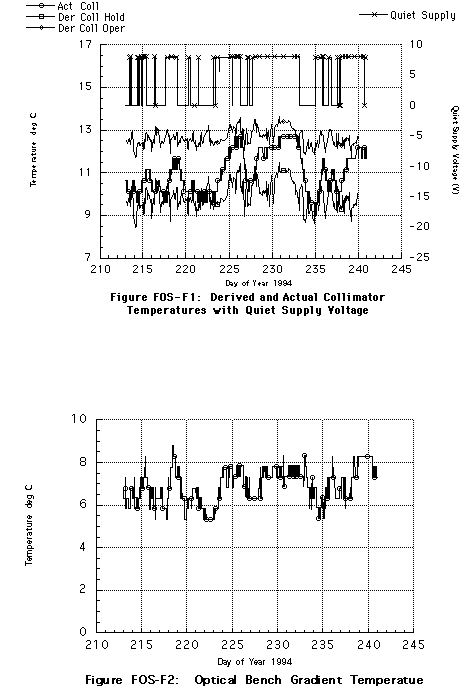
Figure fos-f1 is the standard plot of Collimator (predicted and actual) temperature (Y302) as a function of time. The predicted temperatures are based on algorithms for both the Operate (LVON) state and the Hold (LVOFF) states as a function of FOS aft shroud sink temperatures. The optical bench reacts in such a way as to be within +/- 1 deg C of equilibrium 24 hours after a transition. This plot suggests nominal thermal behavior for the detector as a whole even during the periods of continuous LVON.
Figure fos-f2 shows a nominal optical bench gradient temperature for the month.
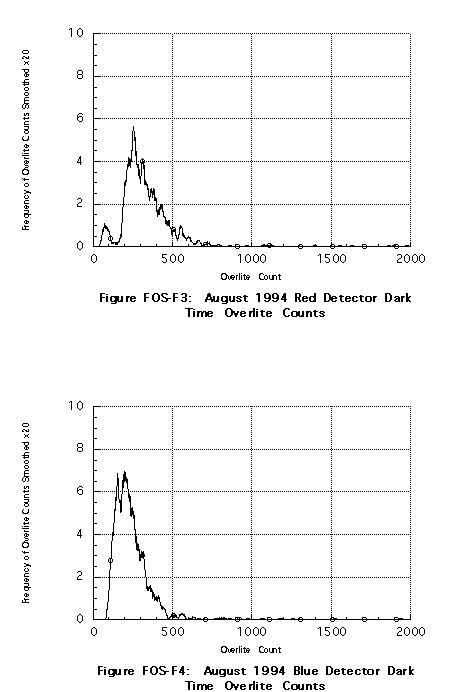
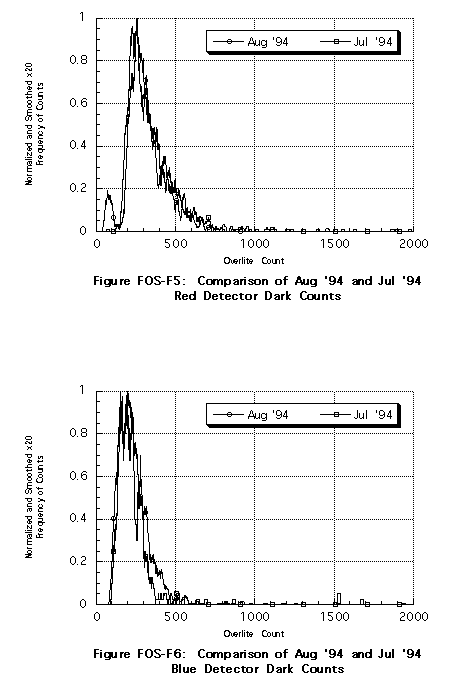
Figures fos-f3 and f4 show the Red and Blue detector dark count data for the month. These plots are a representation of the Overlite counts from the FOS at all times that the detector is in Operate mode. Overlite is an engineering telemetry monitor of the total counts on the active detector array for the last 60 seconds. The data represented here occured after HV stabilization, after dead/noisy diode disabling, outside the SAA, with the FOS aperture door shut, and all lamps off. The data are therefore total dark counts in a 60 second period for all enabled diodes.
Figures fos-f5 and f6 show the comparison of August's dark count data to July's. August's dark count data represent nominal performance.
3.6 GHRS:
All trended monitors appeared normal for this reporting period. The following tables and figures summarize activity of selected areas of the instrument.
Table ghrs-t1 is a cycle and use summary of the instrument mechanisms as well as a statistical analysis of main bus voltages and currents.
Table ghrs-t2 is a statistical summary of key instrument temperatures. All temperatures are within their normal range.
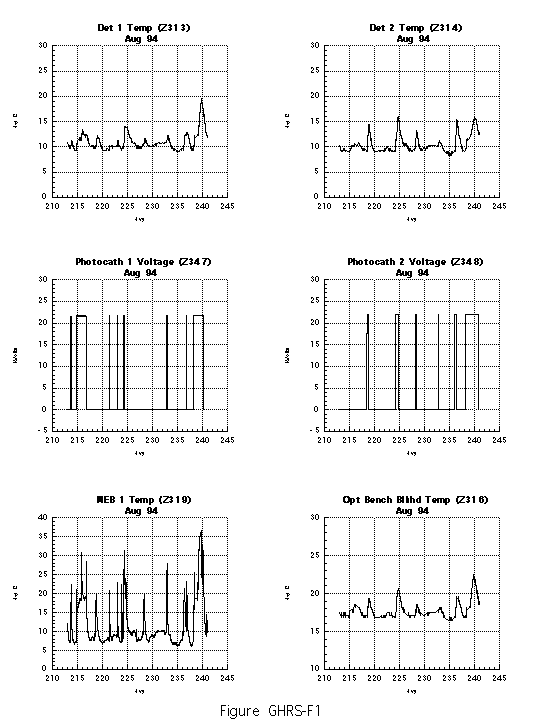
Figure ghrs-f1 contains plots of the detector temperatures and voltages for the month, as well as plots of the optical bench and MEB 1 temperatures.
Figure ghrs-f2 contains monthly power profiles for each side of the instrument as well as historical summaries of hours spent in OPERATE mode and carrousel commanding and reset activity.