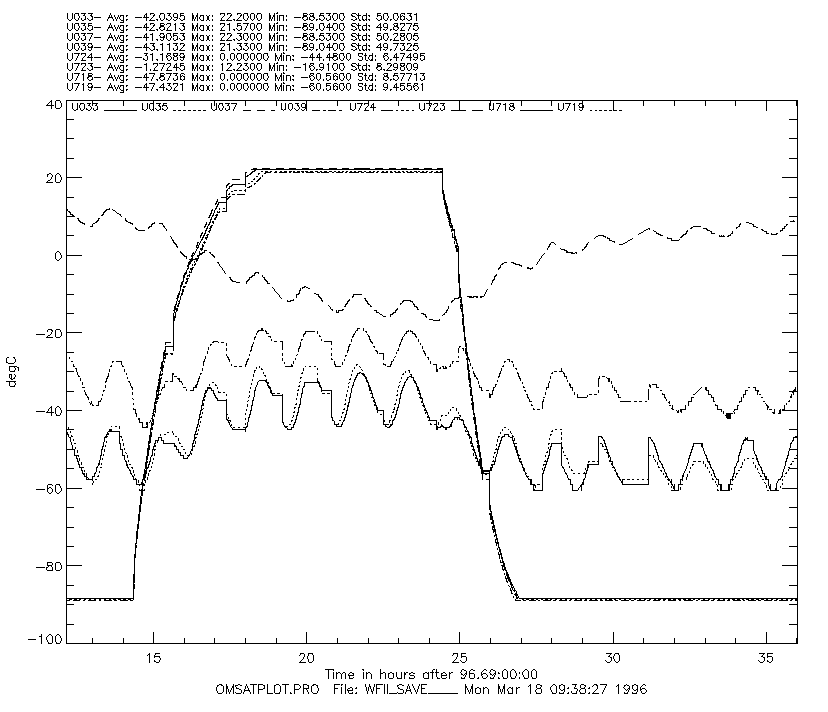
UV throughput was restored following the 6 hours CCD decontamination on day 11 (see Figure F2).
Science and Calibration observations continued to execute successfully.
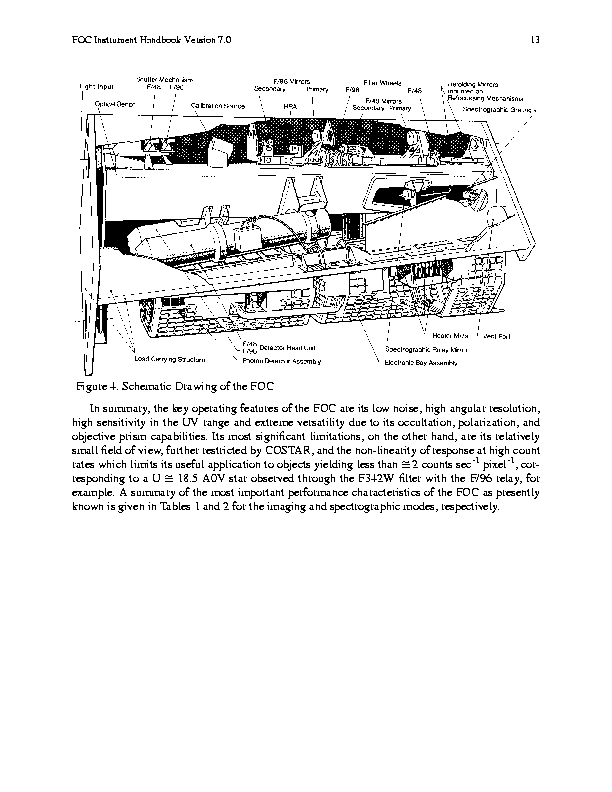
For a picture of the Faint Object Camera click here.
Two cycle 5 calibration proposals have been executed: FOC 6162, to verify the PSF and FOC 6160 to monitor the UV throughput.
1.2 Summary of major problems
On day 19 at 10:26:47 and 10:39:13 two FOS status buffer messages 290 with parameters '24500' O were issued by the NSSC-1. These status buffer messages (STB) were issued as a result of a LOL that occurred at 10:23:27. The RTCS YPKUP will issue the above stated STB if the TDF is down at the beginning of the target acquisition. The net result of this error was that the FOS exited the RTCS YPKUP without execution the dwell scan and the NSSC-I outputted its SHP. Because the LOL recovery didn't complete before the execution of the RTCS YSEPO at 10:35:16 (which checks the TDF and sets event flag 13 if it is down) all subsequent observations after 10:35:16 within this obs set were executed with the aperture door closed (flag13 was cleared at 19/13:35). Proposal = 05824 Prop ID = 2ZY Obs set = 06 (Occultation of GSC5249-01240 by Saturn: Atmospheric and Ring Studies) failed due to this FGS anomaly.
On day 319 at 01:39 FOS cycle-5 focus, x-pitch, and y-pitch engineering test was run. After warm-up to the nominal high voltage, the trim current was set to zero, and the HV was set to a lower value. Spectra were then obtained with the 0.1-PAIR aperture, G190H, and the Pt-Ne lamp. The high-voltage was then varied in 200 volt increments +/- 600 volts from the nominal setting with spectra taken at each setting. This will allow for optimal focus determination.
The initial analysis of this data has been completed. The result indicates that there has been no appreciable change from the May 95 analysis. The red side data still indicates that a drop of 200 volts is desirable. The blue side data looks OK except for what appears to be a bad data point on pixel 1107. It has been proposed by the FOS team that curve fits be applied to this data and historic data. The inflection points would then be plotted in an attempt to reveal a trend. The current position of the FOS team is not to act on the this data until the above described analysis has been completed.
FOS red diode 289 has been determined to be dead and was disabled in the 029 SMS.
1.2.2 During a recent observation, a series of exposures were repeated for several orbits. In this data is we see an orbital fluctuation in the accumulated counts. Each orbit shows a similar fluctuation. This affect is seen in both the internal and external observations, which rules out telescope breathing as the cause. This phenomena is under investigation.
1.2.3 Monitoring of GHRS carrousel reset activity is continuing. During the month of March there were 3 reset events for 356 commanded positions. Figure GHRS-F4 contains a plot which shows the accumulated number of times the carrousel is commanded to a new position and compares this rate to the accumulation of carrousel resets. This plot shows that the rate of resets was proportional to the number of times the carrousel was moved for the first few years of the mission. More recently, however, we see the rate of carrousel resets increasing. While the rate of reset events is still small, this trend represents a deterioration of the carrousel mechanism. Figure GHRS-F4 also includes a bar chart which associates reset activity to specific locations on the carrousel. This chart shows that the rate of reset events is higher at the lower region of the carrousel step scale. The rates shown in the region of the G140M grating are mis-leading since this is a little used optical element. A single reset in this region is rated higher than it would be in a more commonly used region.
HSTAR 5436 were Data Dropouts in WFPCII Observation 206 Through 210.
2. Observatory Performance
1) For acquisitions on single GS:
The acq will fail to gyro mode.
2) For acquisitions on an GS pair:
a) Attempt to achieve coarse track on both guide stars in order to perform a coarse angle check. If coarse track cannot be achieved, the acq will fail to gyro mode.
b) If the above coarse angle check passes, try to go to fine lock mode on single GS. The primary GS will be tried first. If fail to achieve FL on the primary GS, the secondary GS will be tried. If fail to achieve FL on the secondary GS, the acq will fail to gyro mode.
c) If the above coarse angle check fails, the acq will fail to gyro mode.
No acquisitions in coarse track or fallback to coarse track will be allowed.
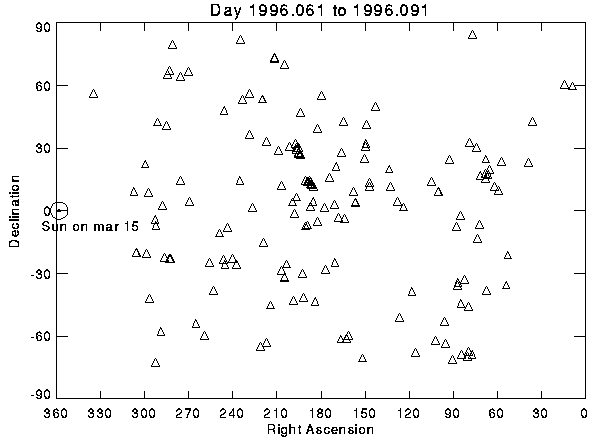
The sky distribution of pointings in this month is shown in Fig. 2.1.
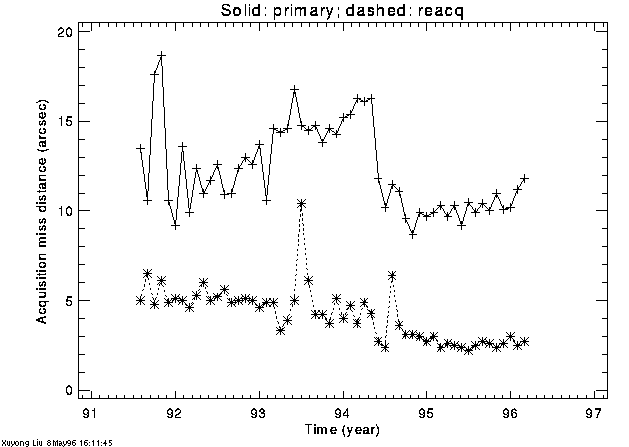
Fig. 2.2 shows the monthly average pointing miss for primary guide start acquisitions and reacquisitions. The pointing miss is measured from the location of the guide star found during search compared to the predicted position (start of the search). Table 2.1 describes the statistics of guide star acquisitions. It takes into account both primary acquisitions and reacquisitions. "No lock" means that coarse track cannot be established or maintained. "Degraded mode" refers to the cases where the guiding mode falls back to coarse track when the commanded mode of the find lock cannot be established or maintained. "Search rad exc" refers to cases where the guide stars are not found.
The distribution of guiding modes by Science Instrument during scheduled exposures is given in table 2.2. For each scheduled exposure, the actual guiding mode is obtained from the engineering telemetry. The scheduled exposure time is subsequently summed up by guding mode for each SI to produce the distribution.
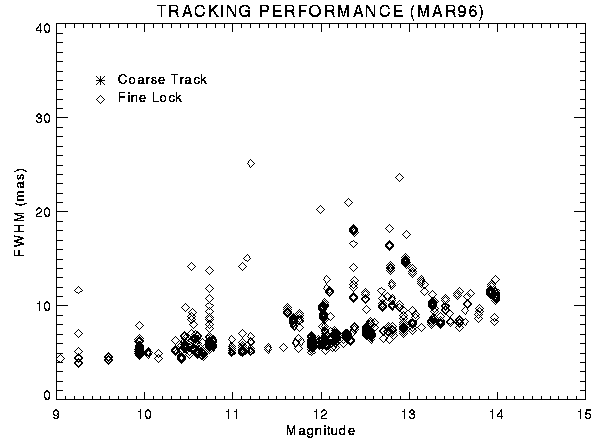
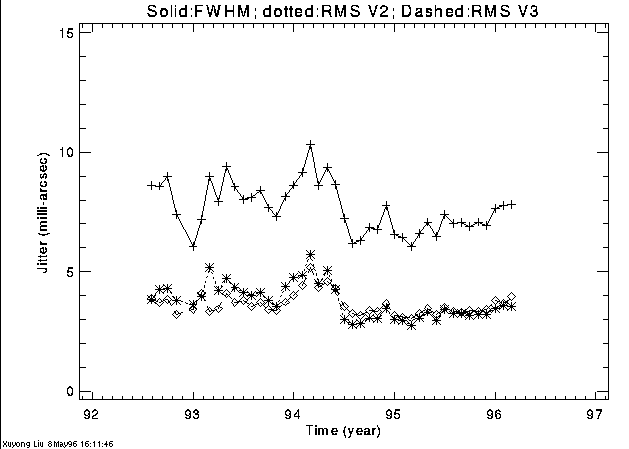
The full-width at half-max (FWHM) of jitter during observations are plotted as a function of the magnitude of the dominant guide stars in Fig. 2.4. the jitter is obtained from the motion of the dominant guide stars in the FGS. The rms of jitter along V2 and V3 axes is also calculated for each observation. The average of FWHM and rms of jitter over all observations in each month is given in Fig. 2.3 and shows no obvious trend.
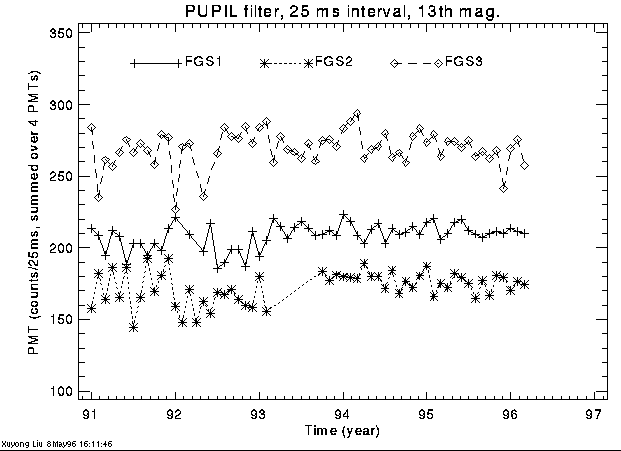
For each observation, the PMT sensitivity is calculated for each FGS in fine lock based on the PMT count rates and magnitude of the guide stars. The sensitivity is expressed in total counts of the 4 PMTs per 25 milli-seconds normalized for a 13th magnitude star with the FGS filter in pupil position. Fig. 2.5 shows the average sensitivities of each month since March, 1996. The is no obvious trend. The variation of the sensitivities appears compatible to the error of the guide star magnitude.
3. Observatory Trending
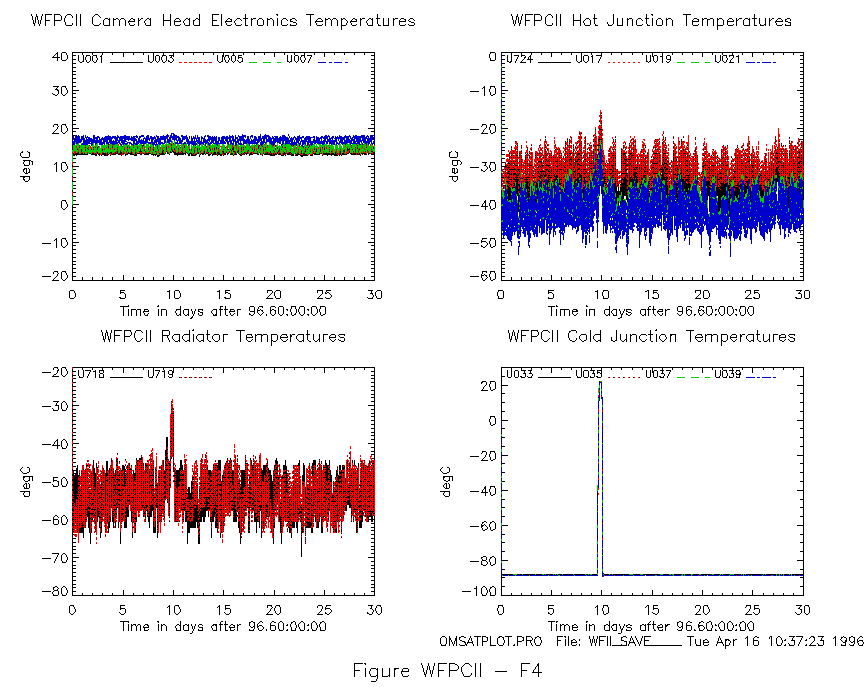
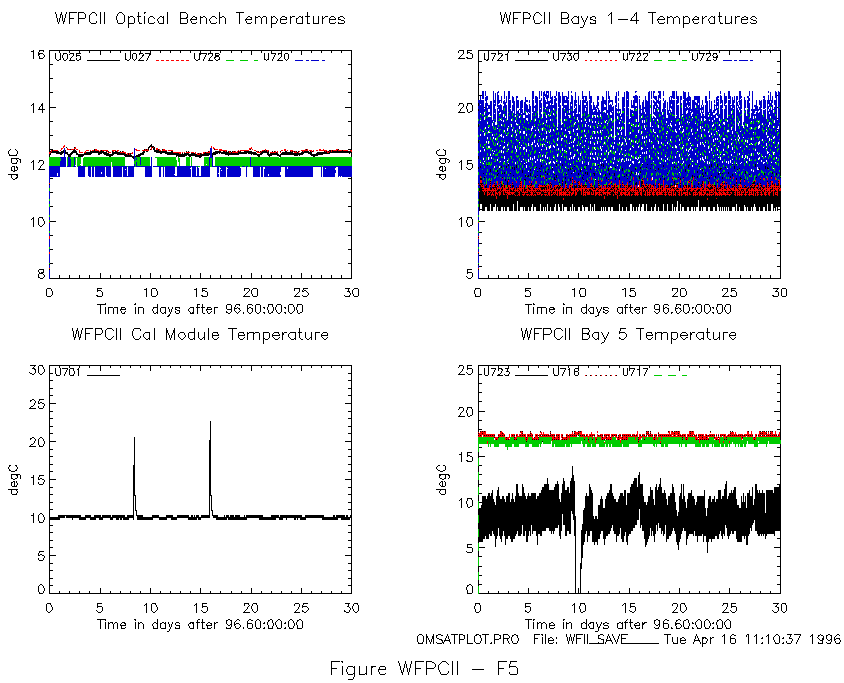
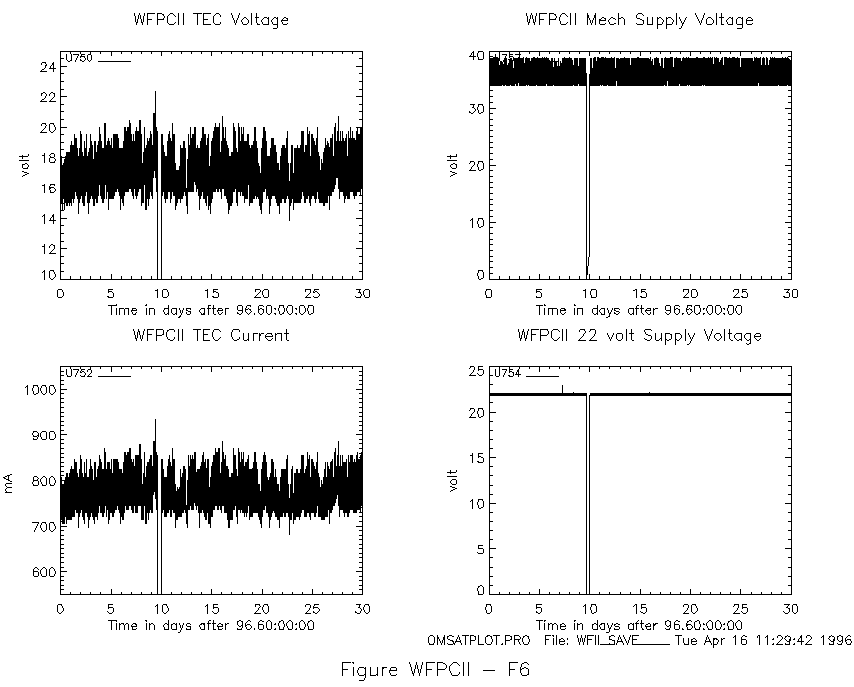
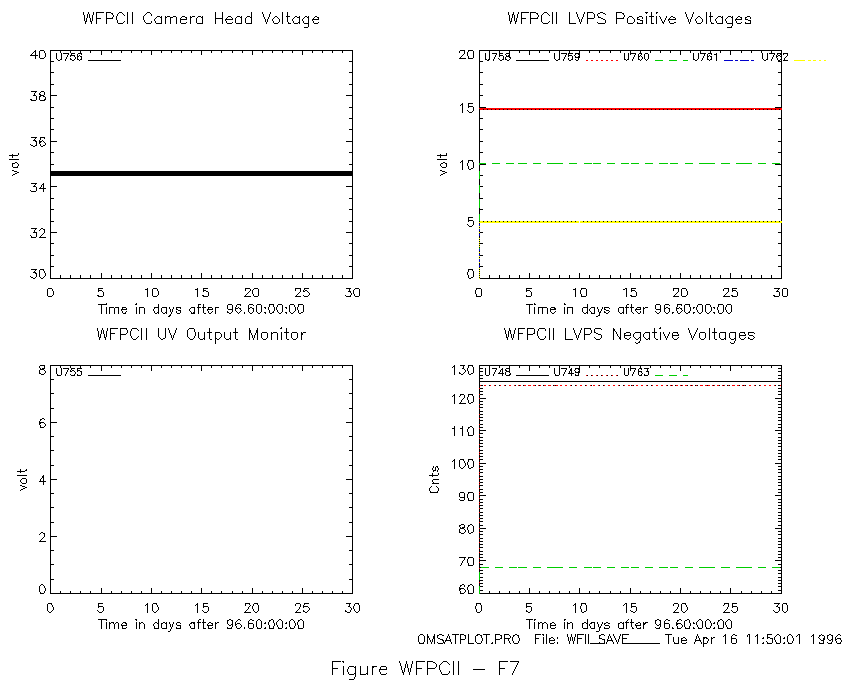
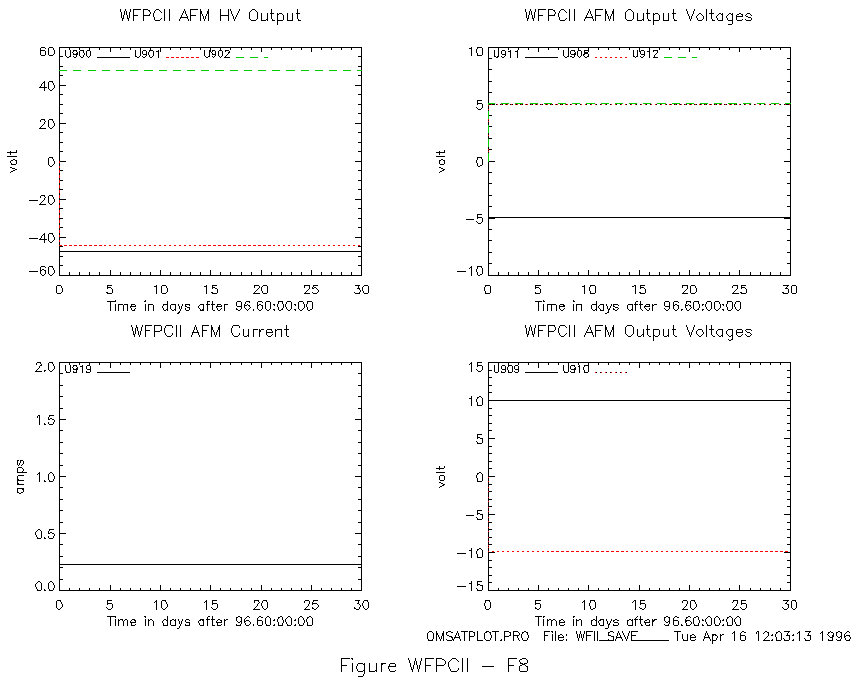
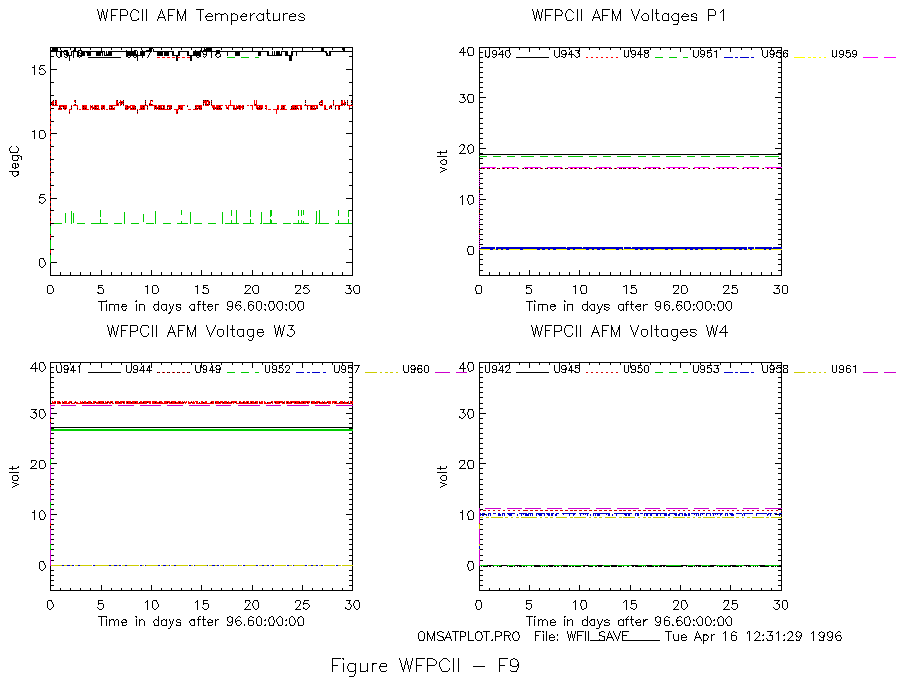
WFPCII Tables: T1, T2, T3 and Figures: F3-F9 show the March instrument statistics and profiles for cycle usage, power and temperature. All values are nominal and within limits unless otherwise noted.
table t1 shows the cycles of various mechanisms and power supplies.
table t2 shows the lvps, mechanism, and TEC voltage and current outputs.
t3 shows the bays, optical bench, Bulkheads, Cold and Hot junctions, Camera Heads, Attach points, AFM, and Radiator temperature values.
The f/48 relay is considered to be operational restriced use to the use of long slit spectrometer observations; e.g. FOC proposal 6255 executed this month.
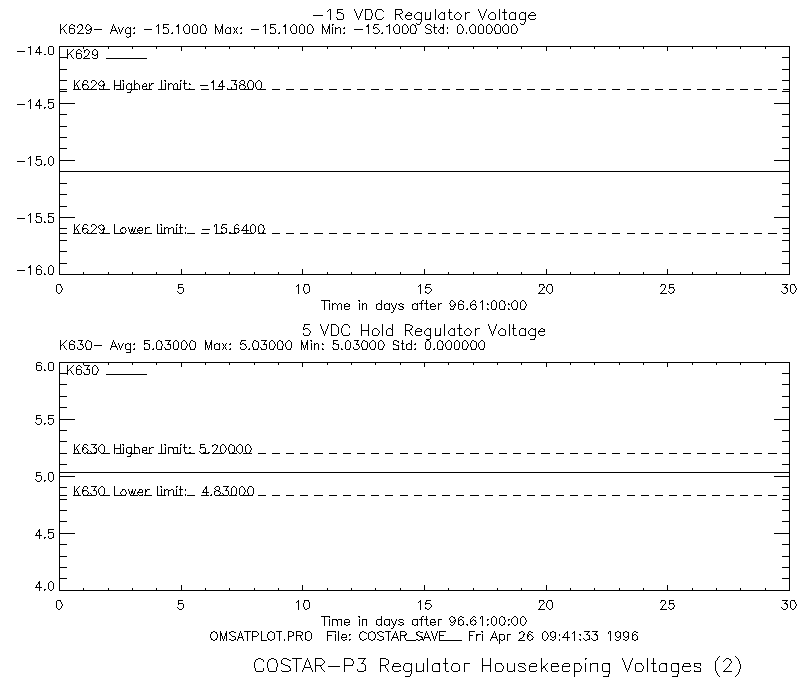
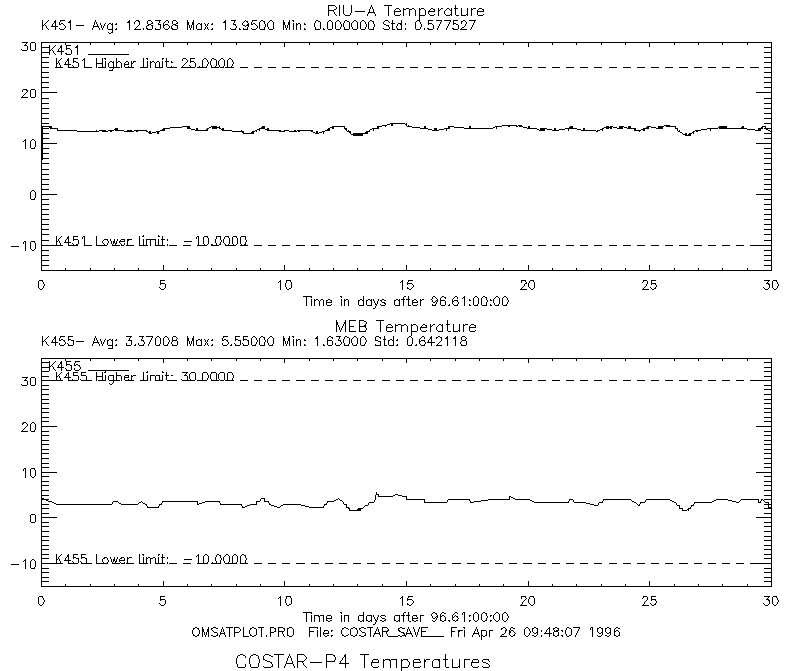
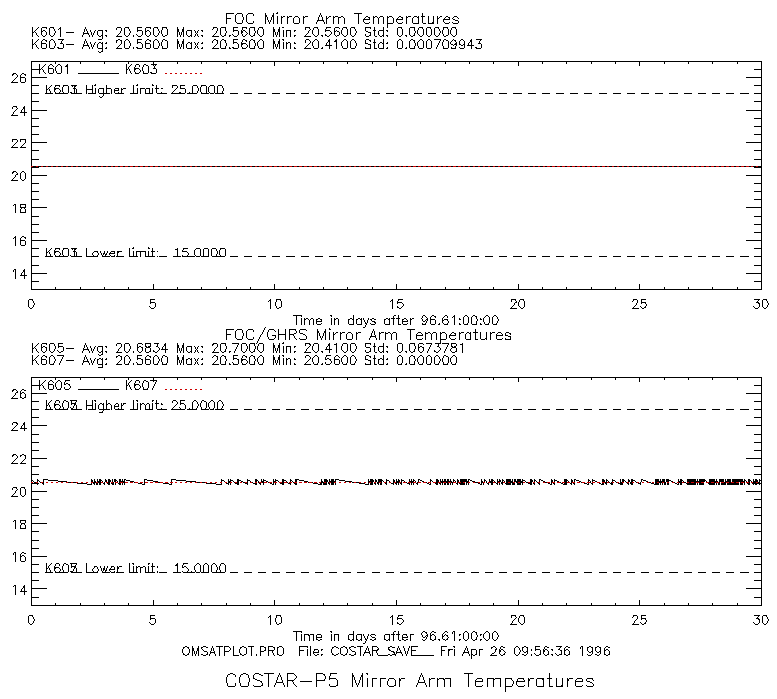
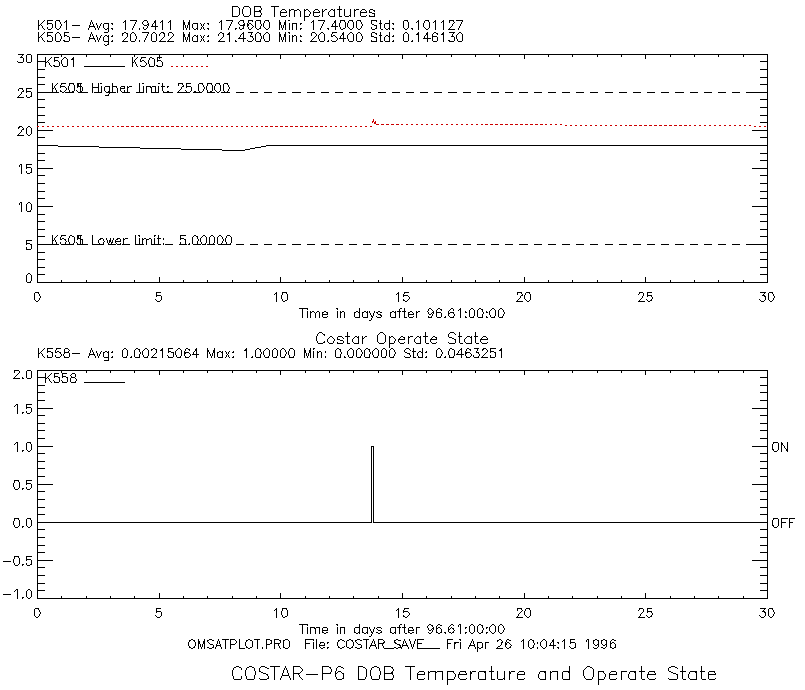
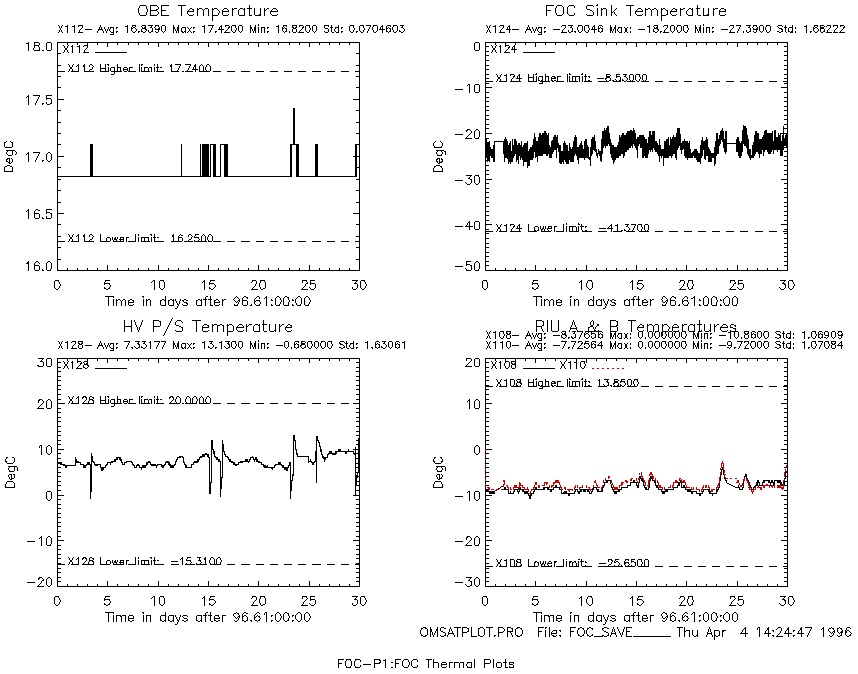
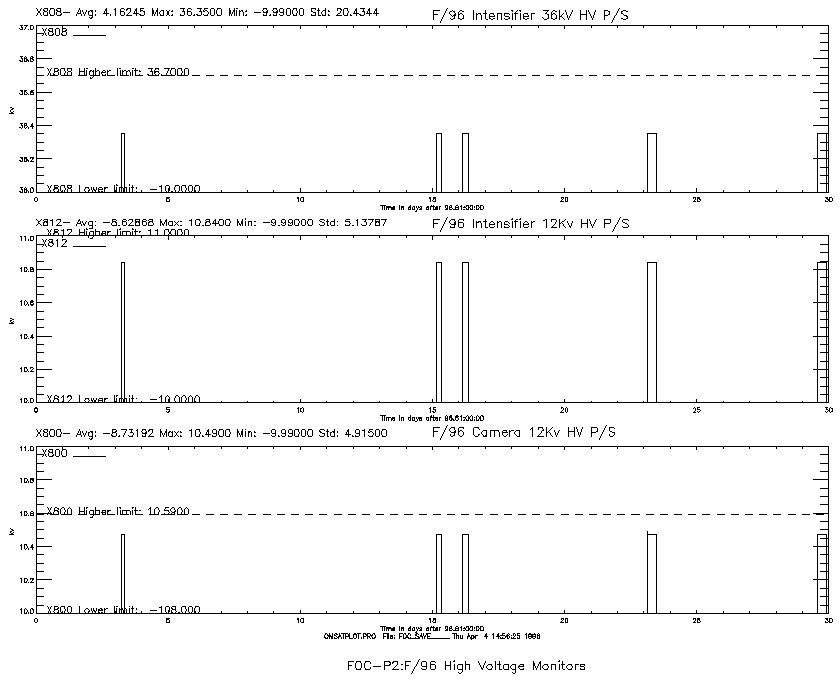
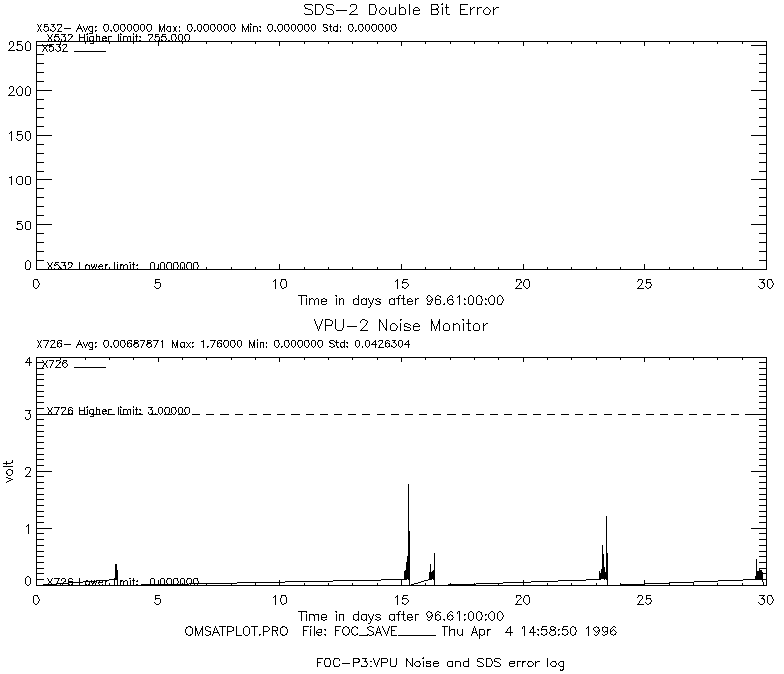
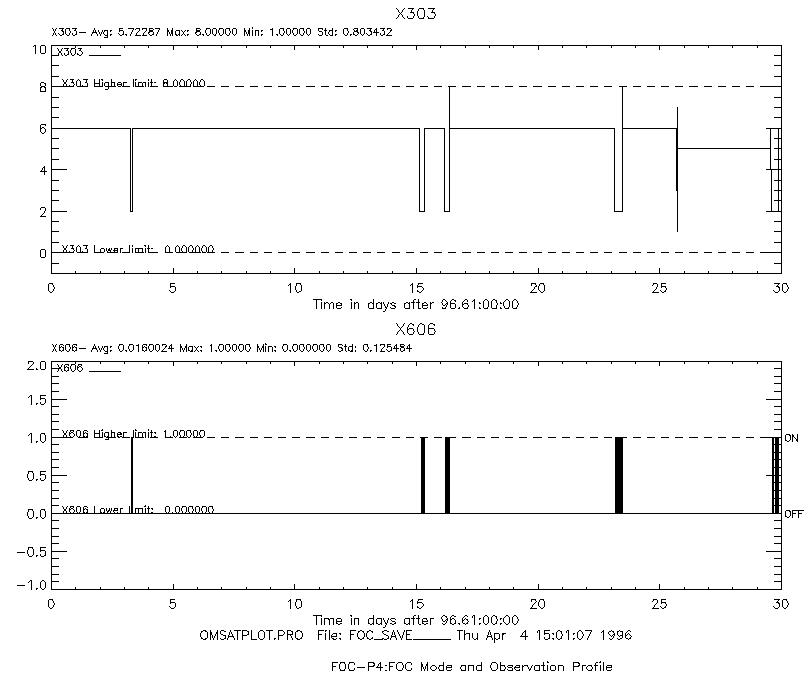
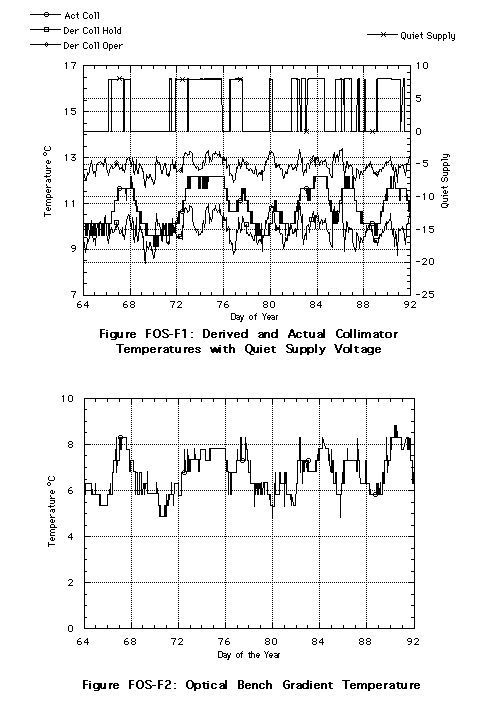
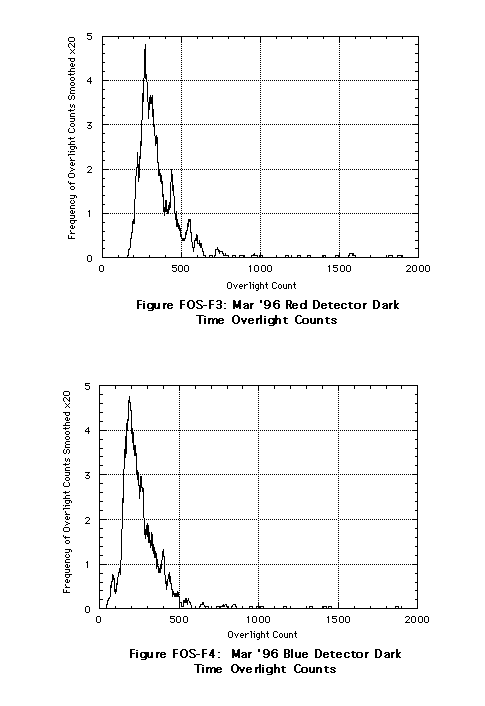
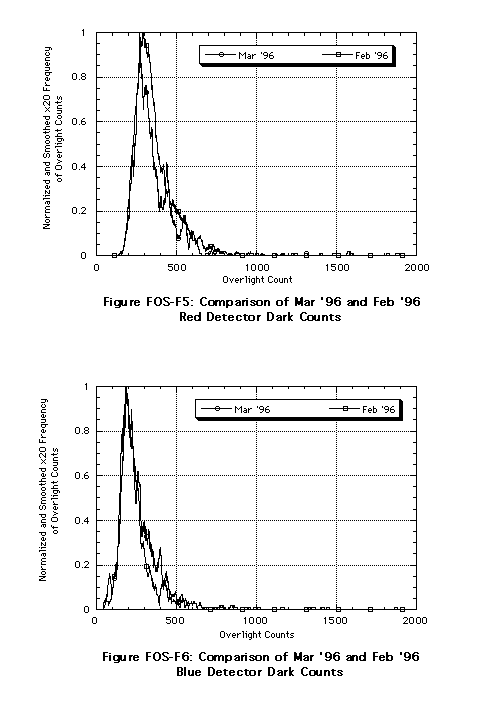
Serveral plots of selected monitor points critical to the performance of the Instrument are an integral part of this report:
Several Tables are inserted to keep track of operational statistics in particular of limited lifetime items:
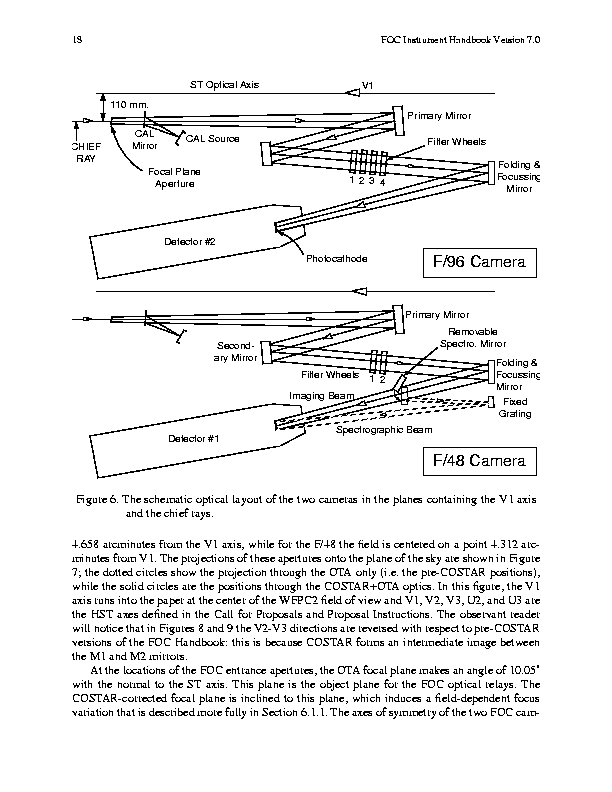
For a picture of the optical path and the FOC mechanism click here.