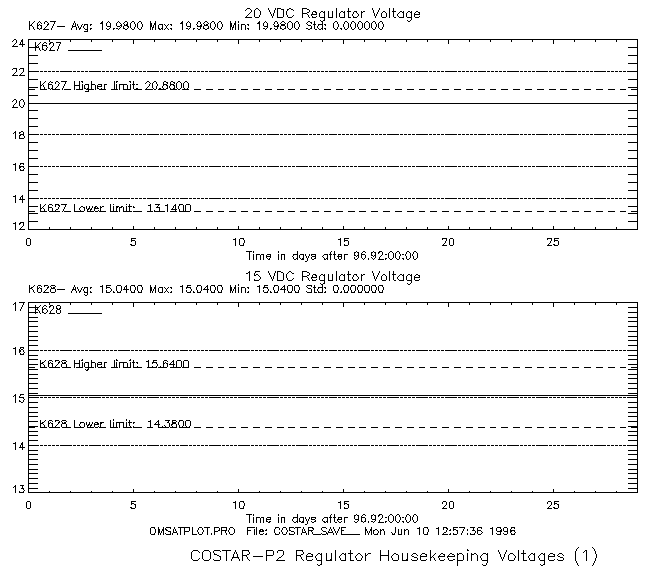
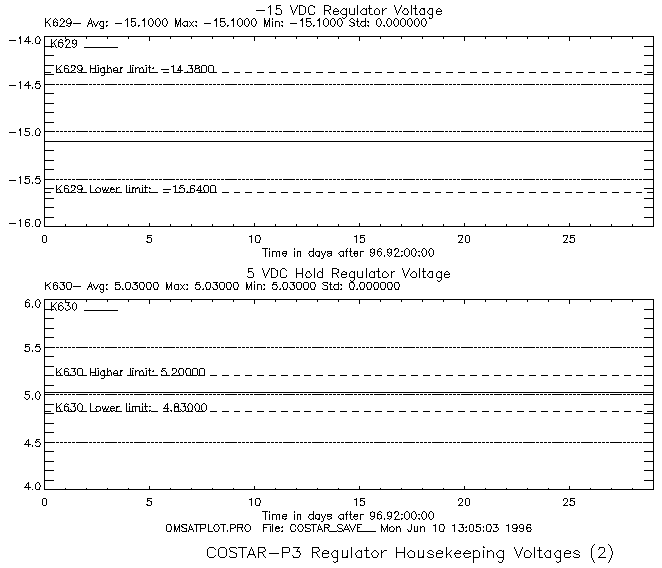
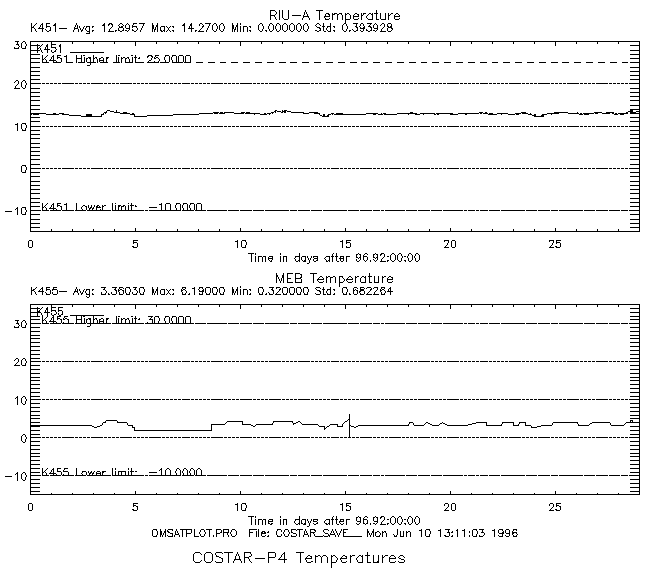
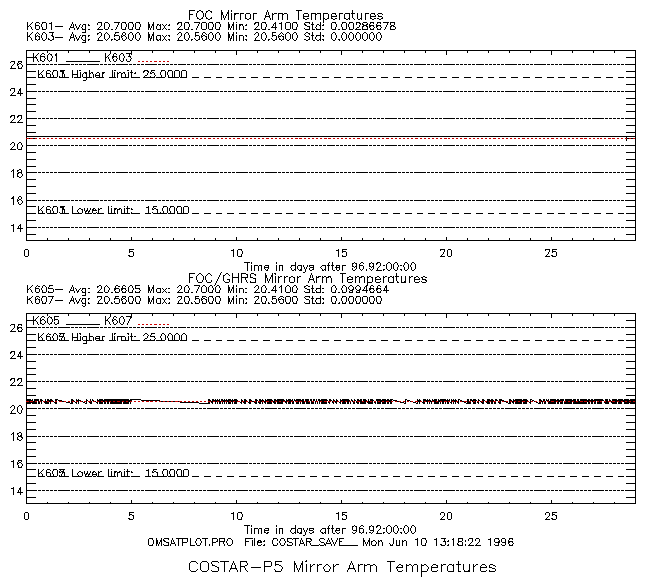
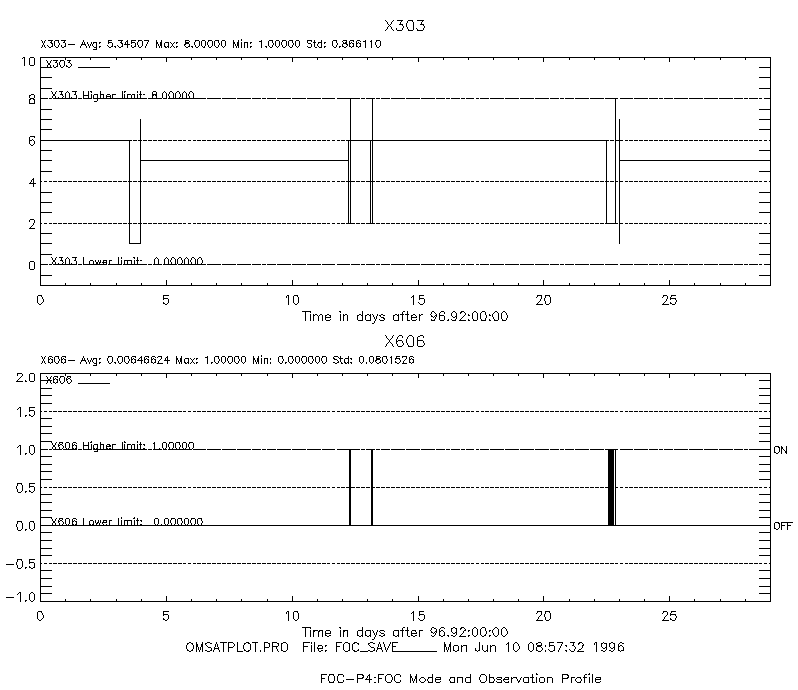
The monthly 6 hours decontamination was performed on day 92.
Science and Calibration observations continued to execute successfully.
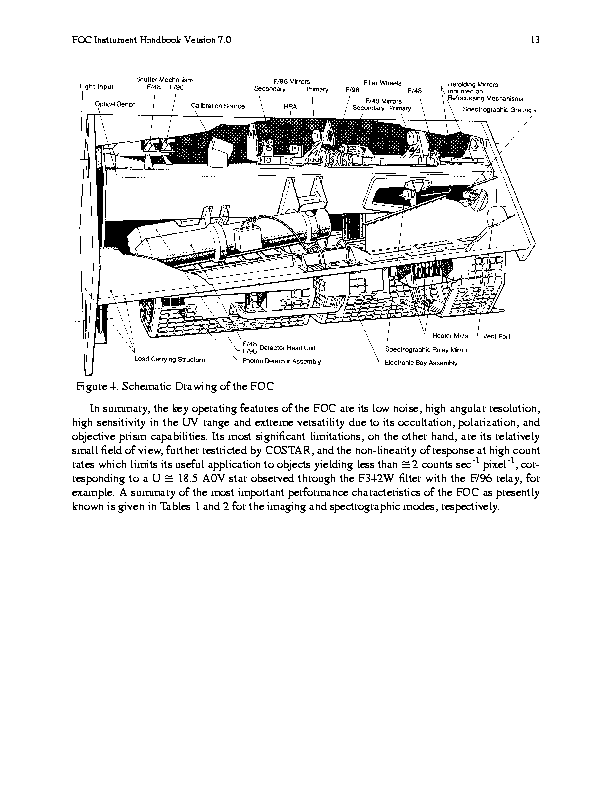
For a picture of the Faint Object Camera click here.
A cycle 5 calibration proposals has been executed: FOC 6200, to determine Geometric Correction and Plate Scale for the F/48 Relay.
1.2 Summary of major problems
On day 92 at approximately 22:32, the guide star acquisition failed to single FGS fine lock backup. The execution of observation set Y35Z5N of proposal 6613 (THE ORIGIN OF C_2 IN COMETS) was affected.
The WFPCII moving target comet observation, U2XC3302J, proposal 5844 (HST INVESTIGATION OF A BRIGHT, NEW COMET), was taken during a loss of lock. This observation was used to determine the target offset for the FOS portion of this proposal. The image, Y2XC0401, taken on day 98 at 11:40 showed the comet was in the aperture, but not well centered.
On day 103 at 18:38, a BSTA failed for proposal 6044 (THE EVOLUTION OF CARBON ABUNDANCES IN THE ISM OF SPIRAL GALAXIES).
On day 105 at 03:05, the Red side BSTA failed for proposal 6848 (1996 SPRING HEPTATHLON). The FHSTs measured an error of 500 arcsec in roll. Nevertheless, the final ACQ-IMAGE showed the star at the very edge of the aperture. Subsequently, the FOS Blue BSTA side succeeded and observations were executed, without problems.
On day 110 at 15:08:40, the BSTA failed for proposal 6096 (NGC 2363: ANATOMY OF A TWO-STAGE STARBURST). The target could not be located.
A failed guide star acquisition on day 113 at 02:31 affected FOS proposal 6202 (CYCLE 5 FOS SPECTRAL FLAT FIELD CALIBRATION). Half of the obsets for this proposal use the same guide stars. The reacquisitions succeeded.
On day 116 at 19:14, a second guide star acquisition failed resulting in FOS Statbuf #290 for Proposal 6202 The target acquisitions occurred while the FOS door was closed. The reacquisition for FOS proposal 6202 at 20:33 UT succeeded. FOS event flag 13 was set as expected. MOSES personnel cleared flag 13 at 23:04 UT after the first orbit of science observations. The next reacquisition was successful and the shutter opened for the science observations. The parameter YOVRLTDM indicated that some light was entering the aperture. The first set of observations with the shutter open used the 0.3 arcsec aperture and had values around 400 for YOVRLTDM, while the observations in the following two orbits used the 1.0 and 4.3 arcsec apertures and had YOVRLTDM values of around 5,000 and 140,000, respectively.
On day 117 at 10:26, a third failed guide star acquisition resulted in FOS Statbuf #290 for Proposal 6202. The target acquisitions occurred while the FOS door was closed, exposures 1-5 were affected. OPS Request 11949 was executed to open the door for the science. Degraded data was obtained for exposures, 6-G
FOS HSTARS (new):
        5563  BSTA failure @ 103/18:38
                        Open
        5565  BSTA failure @ 105/05:28
                        Open
        5566  Failed the Speed test twice in row @ 105/12:12
                        Open
        5570  BSTA failed @ 110/15:08:40
                        Open
        5599  Failed BSTA Failure @123/21:27
                        Open

FOS HSTARS (old):
        4803 - FOS Obs failure (GS acquisition late)
                        Open
        4830, 4915, 5009, 5074, 5137, 5272, 5341, 5406, 5499, 5537,  5550 -
        Binary Acq failure
                        Open
        4822, 4770, 4909, 4910, 4980, 5135 - Onboard Acquisition failed
                        Open
        4696, 5513 - Aperture door closed during observations
                        Open
        4965 - FOS safed due to an anomalous micro processor reset
                        Open
        4890 - Noise on 8 volt quiet supply voltage
                        Open
        5025 - 5 volt logic supply low for one sample
                        Open
        5191 - High over-light readings when aperture door was closed
                        Open
        5533 - FOS micro speed check failure
                        Open
1.2.2 On day 123 the GHRS Cycle 5 calibration prop CONDENSED-REGIMEN INTEGRATED MONITORING PROGRAM FOR SIDE 1 OF THE GHRS was run. This was proposal 6171. This calibration is normally run four times a year. Its primary purpose is to map out the edges of GHRS's diode array. This proposal uses the GHRS side 1 Flat field lamp extensively. Last year when this proposal was run, high anti-coincidence events were observed causing greater than 10 consecutive lines of SD to be flagged as bad, thus the FSW responded with ending the observation early, and the status buffer error HRS 105 was issued. A change in the commanding to reducing the integration time for each line of science was implemented and the proposal was rerun without an error. On day 123 at 00:08:55 an executive status buffer message 309 was issued during prop 6171. Several minutes later, during a subsequent observation, a GHRS status buffer message 105 was issued. Review of the engineering telemetry revealed multiply anti-coincidence events during the 1st observation, thus pushing the observation long and causing the time-out (exec 309). During the second observation the anticoincidence counts were extensive enough to cause 12 consecutive lines of SD to be flagged bad thus the FSW aborted the observation with a HRS 105. A noisy flat field 1 lamp is the suspected cause. An increase in the side 1 anti-coincidence threshold is the current proposed solution.
No new HSTAR was reported during this month.
2. Observatory Performance
1) For acquisitions on single GS:
The acq will fail to gyro mode.
2) For acquisitions on an GS pair:
a) Attempt to achieve coarse track on both guide stars in order to perform a coarse angle check. If coarse track cannot be achieved, the acq will fail to gyro mode.
b) If the above coarse angle check passes, try to go to fine lock mode on single GS. The primary GS will be tried first. If fail to achieve FL on the primary GS, the secondary GS will be tried. If fail to achieve FL on the secondary GS, the acq will fail to gyro mode.
c) If the above coarse angle check fails, the acq will fail to gyro mode.
No acquisitions in coarse track or fallback to coarse track will be allowed.
Centerlined and non-centerlined acquisitions --------------------------------------------
With the start of the 96.099 SMS we have implemented some new acquisition scenarios that are meant to help eliminate the problems that we have been seeing with the FGS#1B reversal bump. These new scenarios are called
                        BASE1REN
                        BASE1REC
                        BASE2REN
                        BASE2REC
                        ONEB1RE
These scenarios start with a normal acquisition, but once the acquisition
is over, a reacquisition is immediately done. The scenarios ending in "N"
are non-centerlined scenarios, while the scenarios ending in "C" are
centerlined scenarios (the ONEB1RE is also centerlined). In the new
scenarios, an acquisition occurs and then is immediately followed by a
reacquisition.
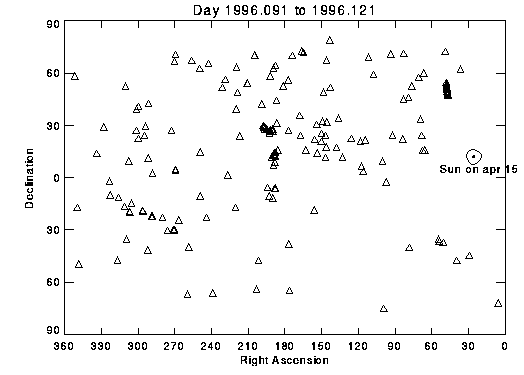
The sky distribution of pointings in this month is shown in Fig. 2.1.
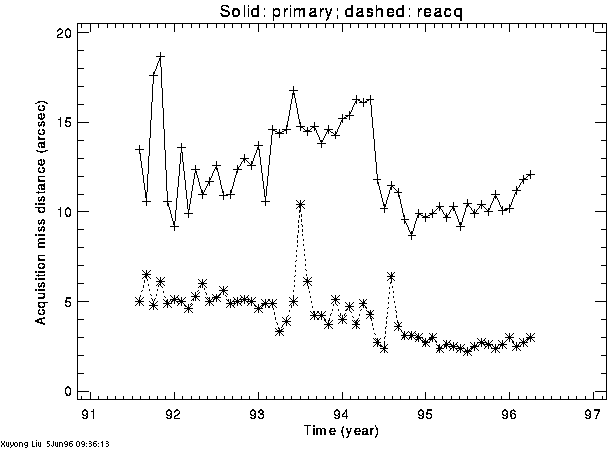
Fig. 2.2 shows the monthly average pointing miss for primary guide start acquisitions and reacquisitions. The pointing miss is measured from the location of the guide star found during search compared to the predicted position (start of the search). Table 2.1 describes the statistics of guide star acquisitions. It takes into account both primary acquisitions and reacquisitions. "No lock" means that coarse track cannot be established or maintained. "Degraded mode" refers to the cases where the guiding mode falls back to coarse track when the commanded mode of the find lock cannot be established or maintained. "Search rad exc" refers to cases where the guide stars are not found.
The distribution of guiding modes by Science Instrument during scheduled exposures is given in table 2.2. For each scheduled exposure, the actual guiding mode is obtained from the engineering telemetry. The scheduled exposure time is subsequently summed up by guding mode for each SI to produce the distribution.
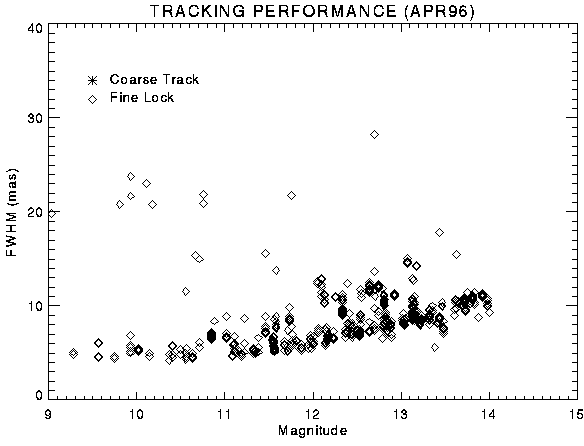
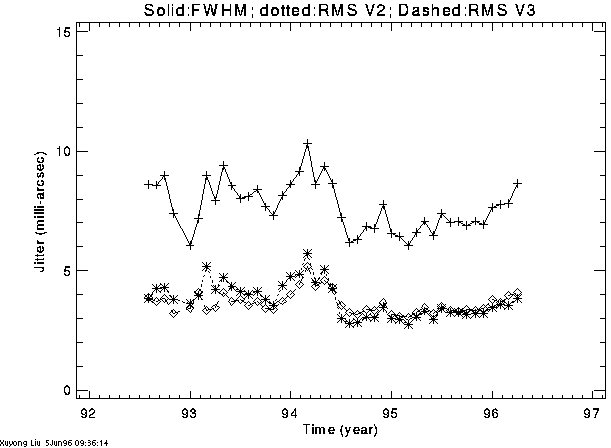
The full-width at half-max (FWHM) of jitter during observations are plotted as a function of the magnitude of the dominant guide stars in Fig. 2.4. the jitter is obtained from the motion of the dominant guide stars in the FGS. The rms of jitter along V2 and V3 axes is also calculated for each observation. The average of FWHM and rms of jitter over all observations in each month is given in Fig. 2.3 and shows no obvious trend.
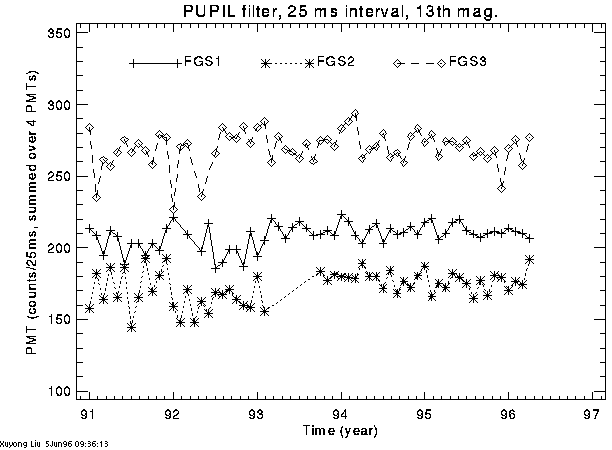
For each observation, the PMT sensitivity is calculated for each FGS in fine lock based on the PMT count rates and magnitude of the guide stars. The sensitivity is expressed in total counts of the 4 PMTs per 25 milli-seconds normalized for a 13th magnitude star with the FGS filter in pupil position. Fig. 2.5 shows the average sensitivities of each month since April, 1996. The is no obvious trend. The variation of the sensitivities appears compatible to the error of the guide star magnitude.
3. Observatory Trending
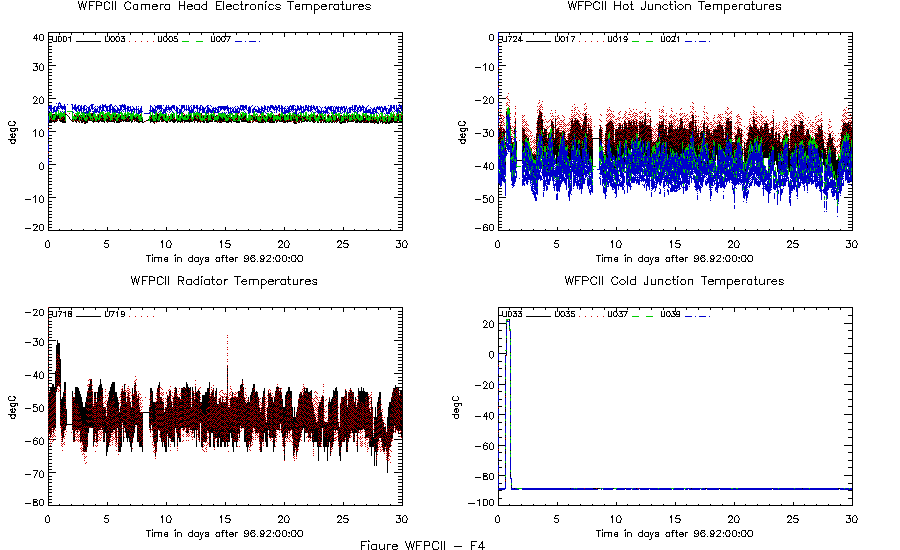
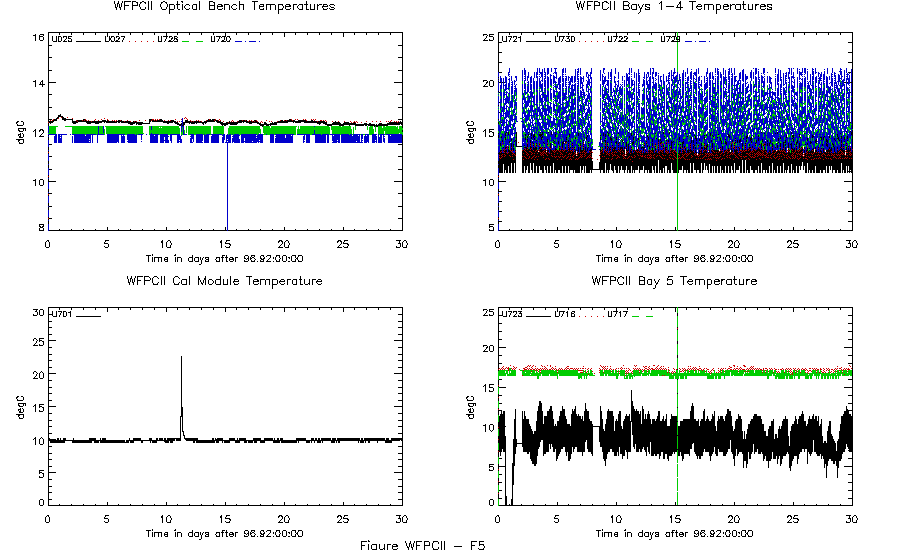
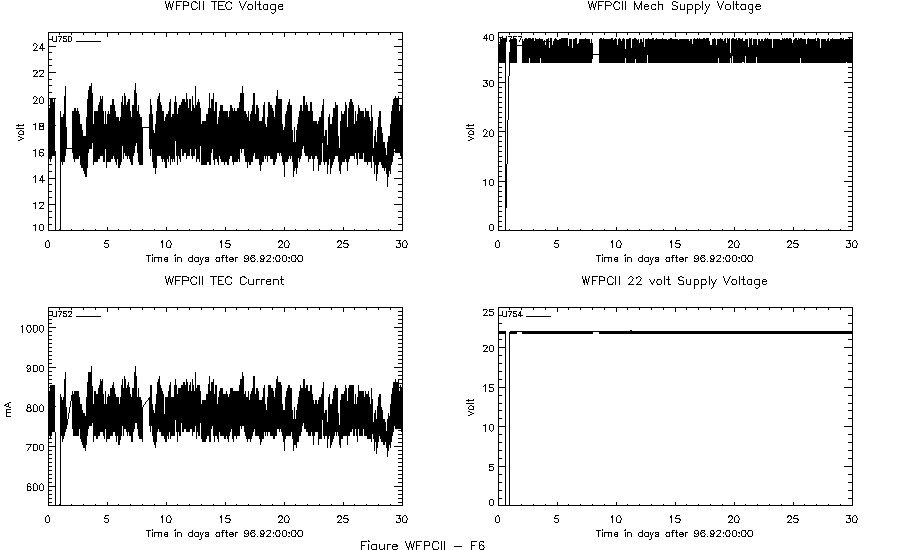
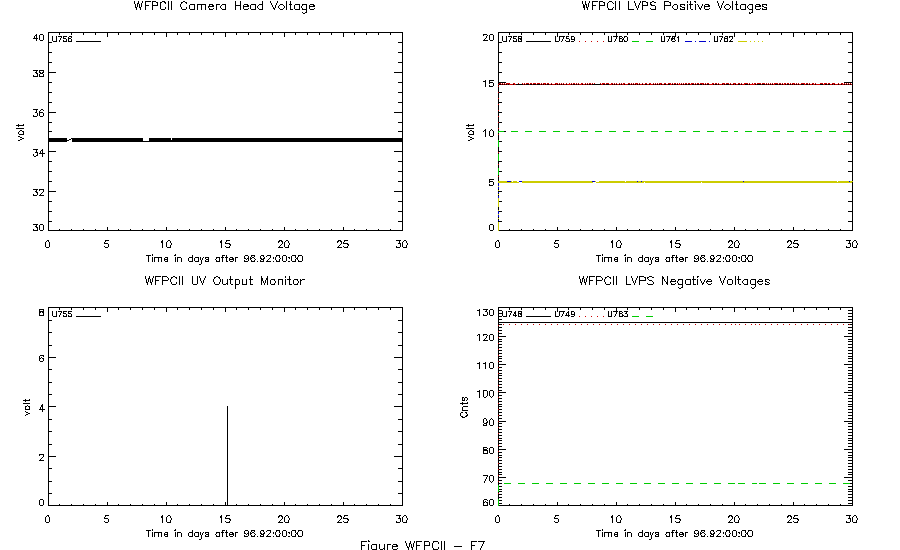
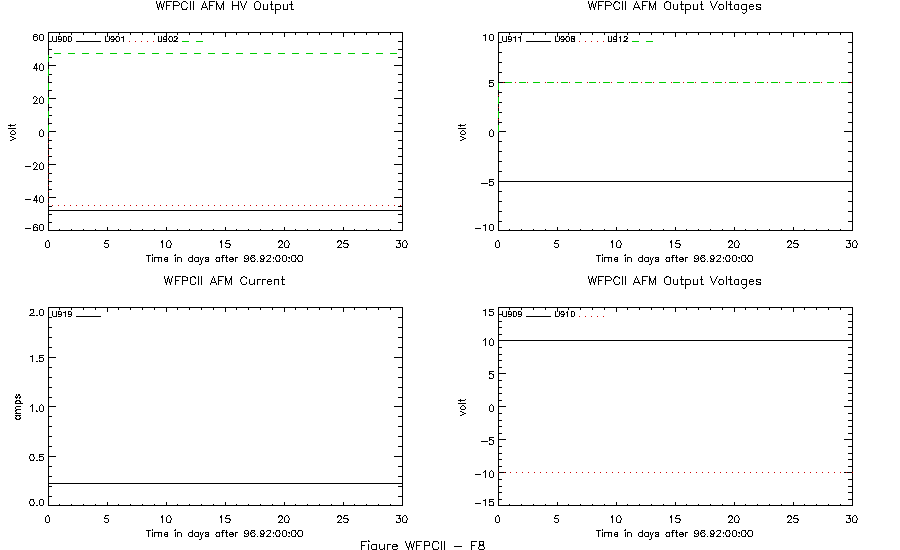
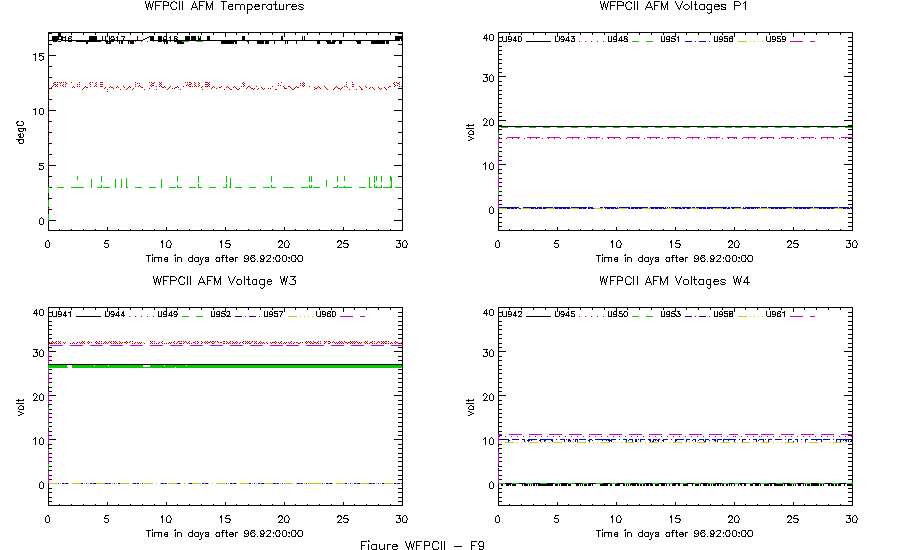
WFPCII Tables: T1, T2, T3 and Figures: F3-F9 show the April instrument statistics and profiles for cycle usage, power and temperature. All values are nominal and within limits unless otherwise noted.
table t1 shows the cycles of various mechanisms and power supplies.
table t2 shows the lvps, mechanism, and TEC voltage and current outputs.
t3 shows the bays, optical bench, Bulkheads, Cold and Hot junctions, Camera Heads, Attach points, AFM, and Radiator temperature values.
The f/48 relay is considered to be operational restriced use to the use of long slit spectrometer observations; e.g. FOC proposal 6255 executed this month.
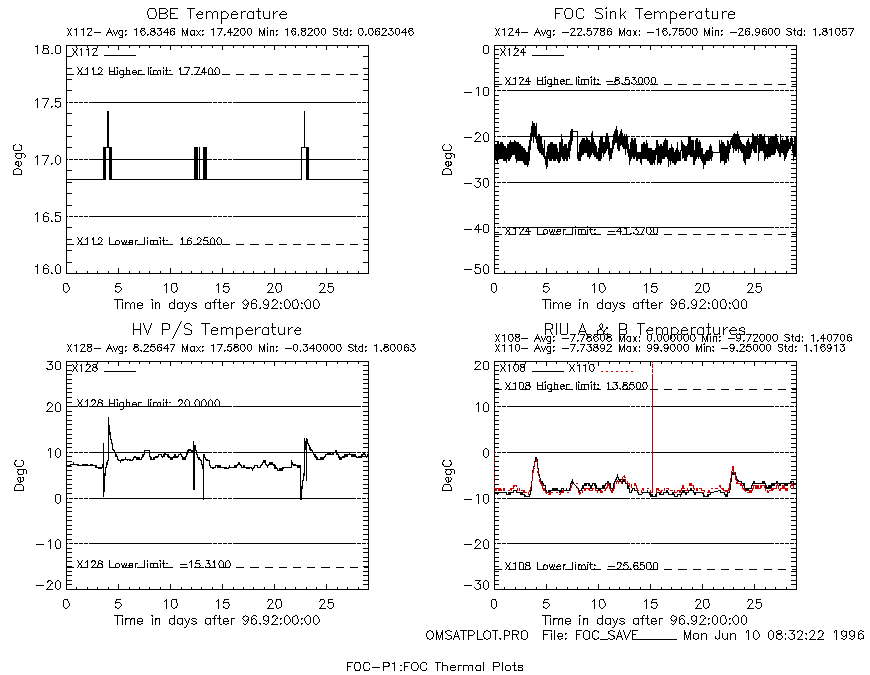
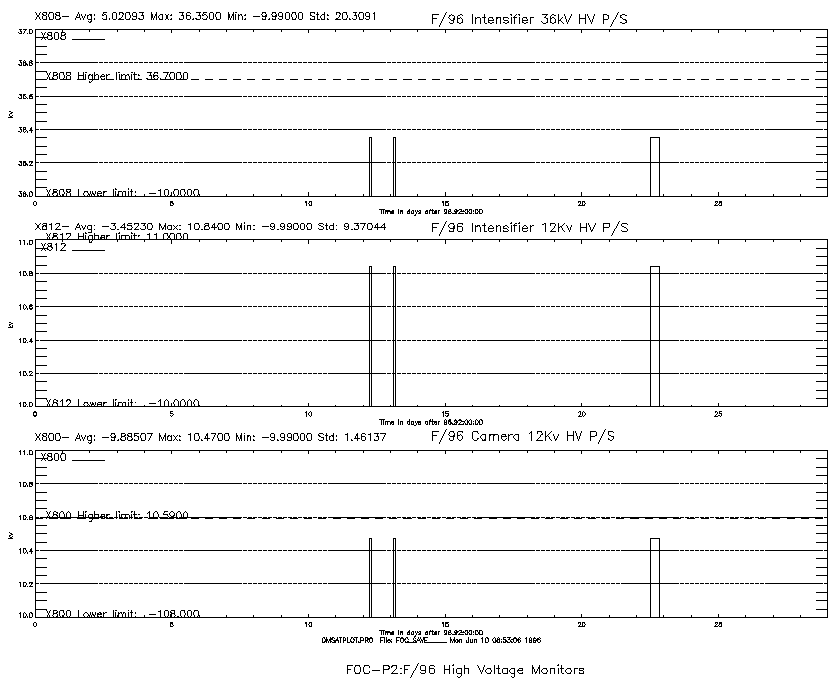
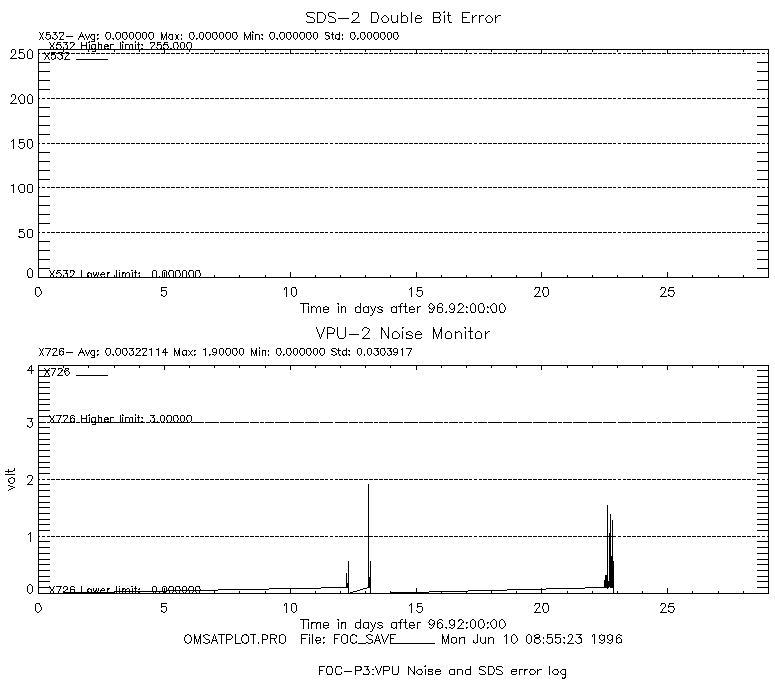
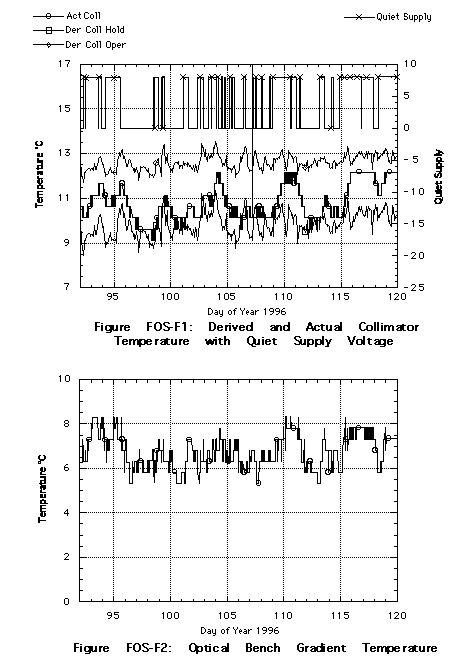
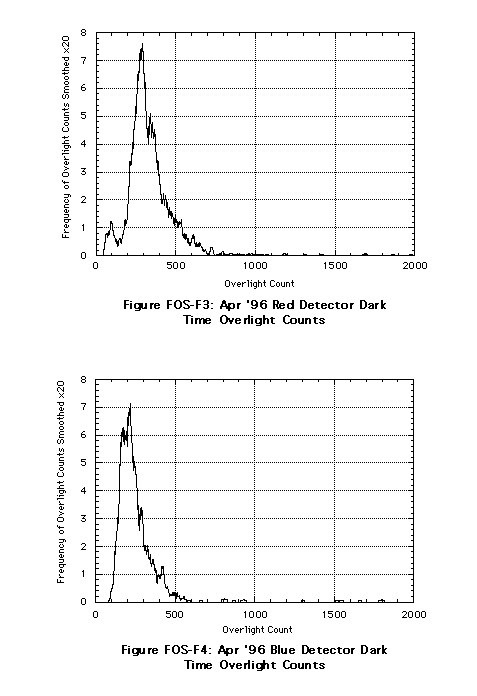
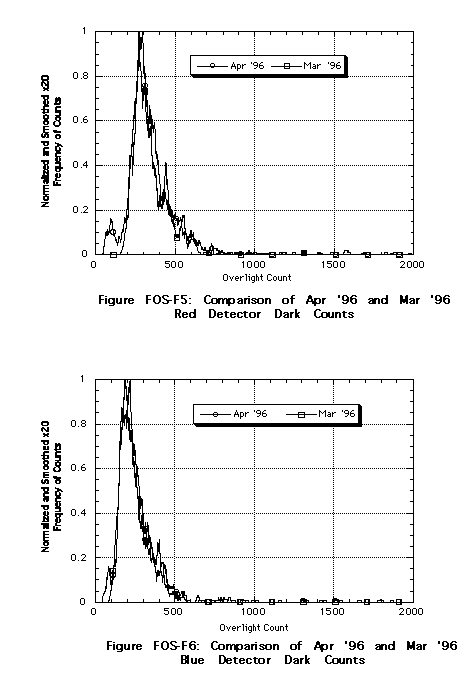
Serveral plots of selected monitor points critical to the performance of the Instrument are an integral part of this report:
Several Tables are inserted to keep track of operational statistics in particular of limited lifetime items:
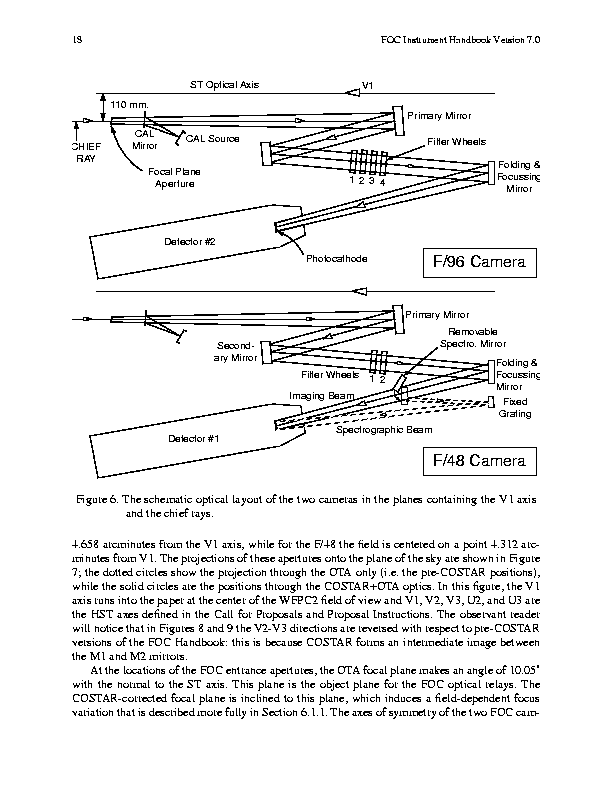
For a picture of the optical path and the FOC mechanism click here.